Archive for the 'Dirty Tricks' Category


Being An Asshole Abroad

I am one.

Not all the time. Not most of the time or even some of the time. But on ever so rare occasions (at least I like to think), I have been known to snap. I’d like to water it down, cushion the blow to the ego, but that doesn’t do anyone any good—I can be a big flaming asshole, and that’s just the truth of it.

That’s what my latest piece on World Hum “The Particular Anger of Powerlessness” was about. You guys might remember the piece—an earlier draft appeared on this blog around a year ago. It was a gamble publishing it for a couple reasons. One, it incriminates my parents for traveling illegally to Cuba. But the good news about having supportive parents is that they’re so stoked to see their kid get published, they’re willing to risk their own hides.

But the main gamble is that I was opening myself up to attack. It’s like going in for a knee in Muay Thai—better keep your hands by your face cause someone can clock you good at that proximity. Basically, I reveal myself to be an asshole in the piece. Or rather, I reveal myself at one of my asshole moments—one where I’m not the picture of cultural sensitivity or a deep, abiding sense of my own privilege. Instead, I’m the picture of An Ugly Westerner.

I knew I was doing it—leaving myself open. In fact, I knew I was doing it in the moment, when I acted that way, and it was mighty uncomfortable. It’s like I was watching myself do it and some other part of me was shaking my head—I knew how it looked. But I couldn’t help myself.

Why?

That’s the question I try to delve into in the piece. We all act like dicks sometimes, right? We’ve all flicked people off while driving; we’ve all snapped at grocery clerks; we’ve all been snippy at waitresses—whatever your version is, there’s been a moment when you’ve thought, “Fuck, did I really just do that?” There’s a certain vision one has of oneself and there’s moments that prove that vision, and there’s moments that contradict it. It’s easier to just push them aside and not think about them. It’s less easy to force yourself to go back and make amends. And it’s even less easy to delve into it, to look at it squarely—“This is not how I’d like to act, so why did I do it?”

My fifteen minutes on the Lao-Cambodian border last year was one of those moments. And the answer I came up with, after looking real hard at the situation, was powerlessness.

This may or may not be the right answer. But the point, at least I like to think, is that I wanted to look it. Cause travel pushes you beyond yourself, right? It pushes you out of your comfort zone; it exposes you to new things, some of which are exhilarating, some of which leave you fuming/confused/rushing for the bathroom. But the idea is that travel expands you, that you’re not the same after a trip, that you learn something—both about the world and yourself.

I knew some people would take up issue with it. And when the comments started to come in—“I thought we independent travelers were supposed to be culturally sensitive”; “Way to go, rubbing the guy’s poverty in his face, you definitely came out ahead there”—they didn’t really bother me. I mean, that was the shit I was saying to myself, in my own head. (I realize in retrospect that I should have worked that angle more explicitly in the piece, instead of leaving it hanging around in the subtext…)

The thing is, they’ve got a lot of valid points. The whole speaking-on-other-people’s-behalf thing makes me a wee uncomfortable, chimes itself of a kind of imperialist attitude—but yeah, you know, I get where they’re coming from. You do carry a certain amount of responsibility as an outsider in a someone else’s country, and there’s a certain level of respect one ought to conduct oneself with.

Which is a whole nuther rant for a whole nuther day. But what happens when you fall short of that? Or when you watch other people fall short of that?

It’s something I have ample opportunity to muse over, living here in the shitshow of Phnom Penh. I mean, fucking Cambodia—it’s Westerners Behaving Badly all over this MF. A lot of folks come here for the sole purpose of acting in ways they can’t get away with at home—sleeping with prostitutes, drinking all day, etc.

And believe me, I was way the fuck judgy at first. I remember standing in line at Lucky Supermarket, watching this guy in front of me totally berate the clerk for not wanting to accept a wrinkled $20. It was ugly. Being Cambodian, the clerk didn’t get back in the guy’s face, but instead apologized and groveled and looked real ashamed/embarrassed. Then I felt ashamed/embarrassed. I shot the guy dart-eyes and, after he left, apologized to the clerk on his behalf.

But you know what I’ve realized? Well, one, that apologizing for someone else’s behavior is not my job, regardless if we’re both Americans in another country. But more importantly, that milder versions of the same thing have happened to me. That—holy shit!—I’ve been on the other side of it. Maybe not that bad, but still. That afternoon on the Lao border was one of those times.

It’s humbling indeed to discover you have that in you. (As one friend says, “Cambodia reduces you to what you really are.”) I hate to say it, but I’ve snapped at tuk-tuk drivers, gotten mad at slow service, yelled at people in English when they’ve nearly run me over on the street. I’ve seen poor dudes from the countryside pissing on the sidewalk and blowing snot rockets and thought, “Ugh, poor people.” And I’ve been fucking horrified at myself.

I’ve talked to a lot of expats here about this and there’s always this cringy way we admit it. At least some of us admit it—that sometimes we snap and act like assholes. Maybe it’s the difference of living somewhere versus passing through on holiday—all the shit you could brush off in the moment becomes your life.

Whatever the reason, I realized I had to look at it. I mean, I’m here, this shit is happening, it’s not how I want to act, so I need to at least pretend to be a grown-up and deal with it.

There are some things I just don’t get. I mean, they can be explained to me and I can conceptualize some sort of understanding, but at it’s core it just seems wrong. Bribery and corruption are one of them. It’s a cultural difference, but guess what?—I’m culturally different. You will never convince me that bribery is okay, on any level, no matter how much it’s rationalized. (The same with pissing on the street. It just fucking smells.)

But here I am, in their country (which I can do, being privileged, and they by-and-large cannot)—so what do I do? Well, one is that I accept it bothers me. I don’t play the tape of oh-you-should-be-more-culturally-sensitive. Nope, I just accept that it doesn’t fucking seem right to me. The second is that I notice that it only reeeeally bothers me when my tolerance is down—when I’m stressed/tired/hungry/lonely/hot/dehydrated/whatever. So, in the interest of not being a raving asshole all the time, I do my best to not get stressed/tired/hungry/lonely/hot/dehydrated/whatever. When I’m taking care of myself, when I’m rested and full and happy, it’s a helluv a lot easier to shrug and say, “Well, that’s not how I roll, but so be it.”

It’s what I’d do now if I encountered the border situation today. I’ve grown a lot more comfortable with bribery—I don’t think it’s right, but I’m not gonna fucking fight it every day. And when I see dudes like the one at Lucky that day? Well, I don’t apologize for them but I also don’t really judge them anymore. Most times I honestly think, “Fuck, he must be having a real hard time, to be spreading that kind of negativity around.” It’s the kind of compassion I’d like for someone to look at me with, if they saw me acting like an asshole.

I get lots of great examples, living in this fine city, of how I don’t want to act. And the cool thing is, I’ve learned how to take them as just that: examples and nothing else. And then I try to be my own example of how I do wanna act.

All of which is to say, I’m a lot less bothered by other Westerners’ behavior. It’s kind of not my business. Of course, if you publish a piece about it, then you’re making it everyone’s business. But I did it cause I thought it was a productive thing to do, to come right out and say it. Like I said in my response, I’d love to see a piece by someone who really lost their shit—cussed out an old woman or some shit. Not for the shock value, but because I think looking at those uncomfortable parts of ourselves is really fucking important. Cause we all have them, right?

Or maybe it’s just me. Maybe the folks that left those comments really have never had their moment of entitled asshole total-melt-down-ness. Maybe they’re uber-PC and culturally sensitive every minute of the every day, every trip they’ve taken, every waitress they’ve encountered, every shit driver that’s been in the fast lane in front of them. If they have, though, I don’t really want to know them—I don’t trust them.

Maybe I’ve just grown a really thick skin from all these years of writing. Maybe it’s one in the same—people are gonna say what they’re gonna say and do what they’re gonna do and god bless em for it.

And if I do see people who piss me off? Well, I’ve got a jam for that:

Because Love Letters and Get Up From the War: Cambodian Teenagers Report on Gender Inequality

“Gender disparity”

I wrote the phrase in blue felt pen on the dingy white wipe board.

“What does this mean?” I asked, underlining the phrase for emphasis. Because it felt teacherly.

I looked out on a chorus of blank eyes.

Which is not actually what I looked out on, but what I’d like to think I did. Really, it was a chorus of chatter, back-of-the-classroom text messaging, shuffling, soda drinking, and probably only a half dozen eyes actually looking at me, the teacher, in the front of the class in my button-down shirt and skinny pants that haven’t been cleaned since Oakland.

This is teaching in Cambodia.

I haven’t written about it much, since I plan to write (and sell) funny disheartening funny pieces about the whole fiasco that is applying for, interviewing for and teaching in Cambodian schools. It’s a complete and total farce. Given that neighboring countries pay double, you really get the dregs of Western society over here. Reminders at the all-staff meeting for the university where I teach evening classes for high school students included: 1) come to class on time, 2) don’t tell your students dirty jokes, and 3) don’t come smelling like alcohol.

Note: Not “don’t come to school drunk.”

“Don’t come smelling like alcohol.”

Are we beginning to get the picture?

So I teach in this rundown ramshackle-ass classroom with trash in the corners and a door that won’t close all the way, that some industrious student wedges a plastic straw in the doorframe to keep it shut. The majority of class arrive late, play on their phones and cheat on tests—all of which I’d been warned of and told was best not to fight against—it’s a losing battle.

But I can’t get myself to totally not give a shit. Especially cause there’s those five kids that sit up near the front and actually appear to somewhat give a fuck. You know, the kind of kids whose eyes light up a bit, whose voices raise timidly after the dead silence of my glaringly obvious reading comp questions.

And as it turns out, they like to write. Well, they don’t actually like to write, they bitch and moan about it, but the class goes real quiet when I make them write paragraphs and when I read them, they’re grammatical bloodbaths but at least they’re original, ie not copied.

And, as a bonus for me, I make them write about shit in Cambodia, so that I can learn a thing or two. The first assignment was to write about how Cambodians celebrate Chinese New Year (cause they do). One kid wrote: “We burn the ghost money.” And if that’s not a goddamn beautiful line, I don’t know what is.

So tomorrow’s International Women’s Day. It’s a public holiday over in these parts, which baffled the shit out of me last year when I was here. Really? In a country with a fucking 80% domestic violence rate, endemic prostitution, fainting garment-factory employees and expatriated domestic help who live like slaves in neighboring countries?

There’s not a lot of irony going on in this country, so yes, really. But, you know, okay—at least we get a day off, right?

I’m supposed to do these listening exercises with them—I read aloud and check their comprehension. If you think reading comprehension is painful in this country, try listening comprehension. It’s painful stuff, and just to make it more painful (for me), I pick stuff not in their boring-ass American textbook that they can’t relate to (ie: the lesson on the NYC subway, to which I opened by asking, “Who’s been on a train before?” No hands raised. Now how the fuck do you teach that??). Noooo, there I go giving a shit again, and I bring in one of the English-language newspapers and read that shit aloud, stopping every few words to explain terms like “gender disparity.”

The gist of the article is that Cambodia ranks lower than any other country in the Southeast Asian region when it comes to gender equality, as measured by literacy, economic participation and empowerment. Of course, the government is disputing this, because disputing stone-cold facts is something they do.

Which I’m not dumb enough to begin a debate around. It’s in my contract that I can’t teach “controversial” material, which given the aforementioned propensity to deny inconvenient facts pretty much includes anything you’d read in the English-language newspapers. So I’m already pushing the envelope. I mean, this article’s got a quote from the (female) opposition party leader. (Should I be writing this on my blog?) That, and it took fifteen minutes to drag the above summary out of them.

So we focus on access to education, since “the Kingdom’s low ranking could largely be explained by social pressures that push women out of the education system.”

“What’s a ‘social pressure’?” I ask. I write the phrase on the boar beneath “gender disparity.”

More blank looks.

We hash it out, and come up with a good little list. A lot of the expected “a woman’s place is in the home” kind of stuff, but I’m surprised by “girls can’t study at the pagoda.” Boys can become monks and study for free; girls can’t become monks. That hadn’t occurred to me.

But I’m most surprised by how quickly some of them say “because the war.”

I just leave it there, on the board beside a bullet point: “war.”

I know better than to ask.

I point to our list. I inhale, “Now, what you’re going to do—” They groan. They know what’s coming. “—is write a paragraph telling me about why you think girls don’t go to school as much as boys in Cambodia. For those of you that have been listening,” I stare not at the kids who’ve been listening but at the ones in the back, “it’ll be easy.

“Oh, and this is how I’m going to take roll today. So you’d all better write something.”

They shuffle around and pass each other sheets of paper, and pretty soon they’re writing, scribbling, and it’s not quiet in the room, but as quiet as it gets—which is kind of like a jungle-quiet, with a constant buzz of insects and the occasional strange what-the-fuck animal call. (It’s usually a ringtone.)

I should say here that these are patently not the population the article is referring to. These girls are the privileged—they have iPhones and bedazzled purses and platform wedge sandals that remind me of Boogie Nights. They’re pursuing higher education, and their families have the means to send them to what is sadly considered one of the better schools in the city.

But still.

The “social pressure.”

“Pressure’s like a hand pushing on you,” I told them, demonstrating on my arm. “It’s what you feel whens something’s pushing on you.”

After fifteen minutes I collect the papers. We review some vocab and I let them go early, their eyes are so glazed.

I read the papers later, over dinner. Some gems:

“Because Khmer old culture they thought that women can’t go to school because if the women get high education they can write love letter to men and it not good for Khmer culture.”

“They think if the girls go to study, girls can go outside and have boyfriends, that is not the culture in Cambodia.”

“I think Cambodia is the small country that get up from war in 1993 and it’s stay from colonial a lot too. Long time Cambodia have one culture that unfair for girl is the boy can go to study but the girl cannot.”

“Some women in countryside [read: poor people] have low knowledge because the parents didn’t bring them to school. And the schools are far from the house. Some students in Phnom Penh didn’t study because they are allowed the foreiner [sic] tradition.”

“They think if women get high education or not is not important because they will become a housewife and only work in chicken and look after the child.”

“They’re think that if they agree the girl go to study, the girl can meet a lot of boy can write letter love and don’t listen parents advice.”

“Because the girl is 15 year old – 18 year old they alway get marries.” [We’ve reviewed “always” like 800 times, so this especially broke my heart.]

Those were from my more stellar students, most of whom are sit-at-fronters and girls to boot. As you can see, I’ve got my work cut out for me, when it comes to correcting and editing this stuff. Guess that’s what you get for giving a shit and trying to go all Dangerous Minds on these kids.

But strangely, it was the half-assed papers that got to me the most—the ones from the boys in the back of the room, who spent the whole class dicking off and then furiously scribbled shotty sentences, or even bulleted lists (NOT sentences, minus points!).

There’s an almost haiku-like starkness to them:

“We don’t have enough schools for students.
A lot of families are poor.
We just finish the war in 1979.”

“Because:
– don’t have money for them.
– Family don’t have enough money.
– Tranditional.
– War along time in the country
– Girl can help housework.”

“Because parents don’t have money to study. Some women is the countryside have low knowledge because the parents didn’t bring them to school. Cambodia have war.”

Or this one, the worst one, in terms of effort, information and sentence structure:

“Because Cambodia just get up from the war.”

Oh, there’s a sentimental old poet still knocking around inside me.

Screw it, I’ll give him the points for it.

Surviving Sunset, And My First Motorbike Accident

So, so much for that New Year’s Resolution.

To be fair, I was on my friend’s motorbike, so I was still acting in accordance with the half-assed guidelines I’d set for myself. But that’s not really the point, now is it? The point of not riding a motorbike was to avoid accidents, to avoid getting injured and thus avoid medical treatment and having to deal with open wounds in a swampy climate in which I am unaccustomed to dealing with open wounds.

As far as accidents go, it was pretty uneventful. We were on a dusty highway outside of town—though “highway” isn’t quite the right word. It’s a big road with a gravel-and-dirt shoulder, filled with wheezing trucks and swerving motorbikes and minivans full of black-eyed workers heading home, the unlucky of whom were relegated to sitting on the roof. It’s one of the big roads outside of town, lined with garment factories and gas stations and bakeries and endless rows of roadside markets selling t-shirts and produce and weird smoldering meats, from beneath endless rows of beach umbrellas displaying names of cell phone companies.

It’s one of those roads that make you realize how big this city actually is, how little of it you actually know, living in the expat bubble of the inner-city. Which is why we’d headed out there—my friend’s company put him up in a housing division out there and he’d kept telling me I had to see it: “It’s totally different out there. Makes the riverside look fancy.”

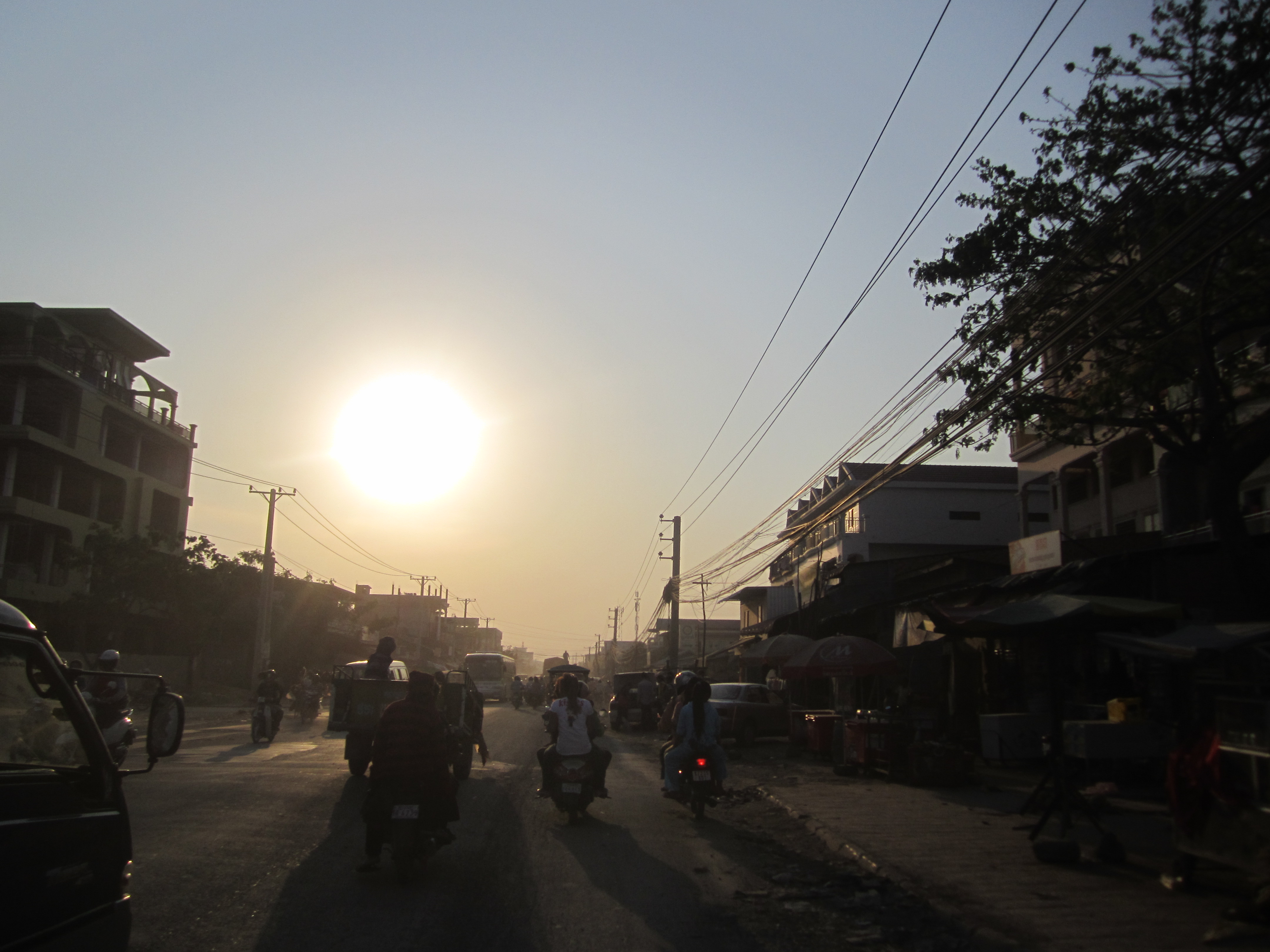
That and we were chasing the dusk—wanted photos of smoldering sunsets, red as a wound behind a horizon of dust and exhaust, this particular breed of humanity all cast in silhouette. Everything’s more beautiful as a silhouette; anything can be beautiful as a silhouette.

So we were weaving and rolling through the bottlenecks and break-necks, me on the back snapping photos and trying not to slide in too close to the driver, but knowing that each time we narrowly missed another bike, I’d reflexively squeeze my legs. You’re never sure if that’s the kind of message you want to send, or if you want to send a message at all. Sometime you do.

So I was only half paying attention when an old man wobbled slowly on a motorbike in front of us. He moved out from the shoulder suddenly, and we couldn’t slow down in time. We probably wouldn’t have fallen over if it hadn’t been for all the dust—the same dust that was making the sunset so damn pretty.

We fell, I skidded and it was over before I realized it happened. It didn’t hurt, because most things don’t hurt till later, unless they’re really bad. We stood up, shook off the dust and I laughed as the blood blossomed from my knee.

People from the storefronts and markets came out, stood along the dirt that passed as a sidewalk, and stared. “White girl bleeding on the side of the highway,” I thought and laughed. I waved.

They smiled and waved back.

Blurry, but still...

We cruised back towards my friend’s apartment, stopped at a pharmacy that was really just a medicine cabinet in the front of a family’s living room. The woman tsked at me in a motherly way, stroked my shoulder and disappeared; a smiley guy I took to be her husband tenderly cleaned me up.

The wound foamed under the hydrogen peroxide, and the Betadine was drippy and the color of old blood, rusty blood, and it stung but in a clean way. The smiley guy cut up gauze and taped my wound shut as my friend looked sheepishly on and apologized.

“Don’t apologize, it’s not your fault,” I said. Then, with a smile, “But if I’d been driving, I’d probably be apologizing too.”

Smiley charged us $2 and my friend insisted on paying, which I didn’t argue about. Then we headed back into the city center, everything blacker than night behind my sunglasses, which I still wore to keep the dirt out of my contacts. But he was right—the city center seemed fancy after that, developed and paved and rich.

So now I’ve got this knee to attend to. Three days and thrice-daily cleanings, and it’s still raw in spots. I’m waiting for the scab to form, cringing each time I look at it, wincing each time I rinse it in disinfectants. I always hate tending to wounds. It’s the same with getting tattooed—it’s not the thing itself that bothers me, it’s the healing, the dealing with it. Which is a metaphor, of course.

But before I’d gotten back on the bike—while I stood on that dusty roadside dripping fresh blood down my leg and feeling the stares on my body like sticky insects—I’d looked out and noticed the sunset.

It was goddamn beautiful.

So I hobbled over and snapped a photo.

Because everything is beautiful at sunset.

Going To The Bathroom Abroad: The Butt Hose Edition

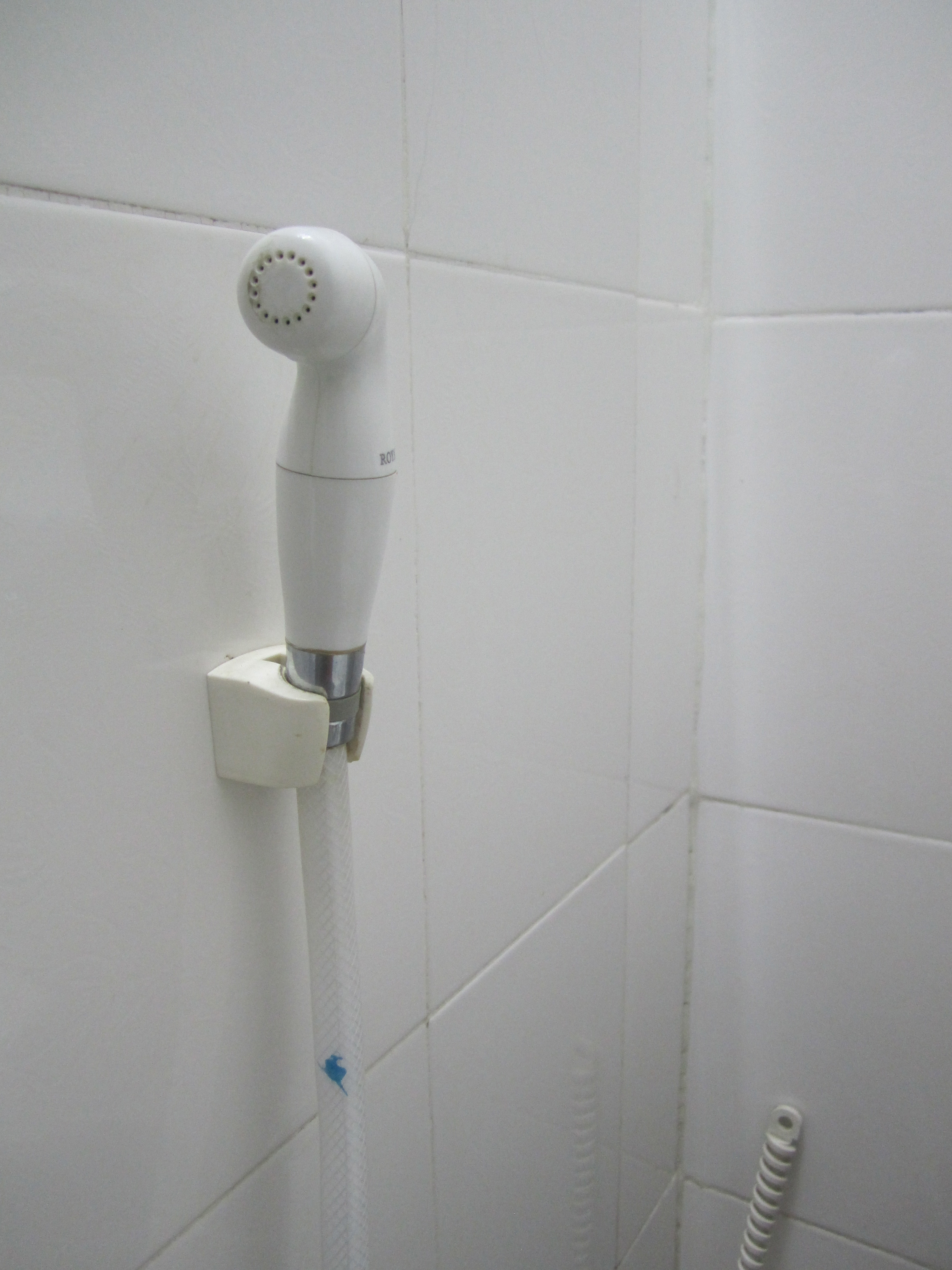
This is my bathroom. As you can see, it’s nothing special (aside from how clean it is). It’s actually nicer than my last bathroom back in the States, with its black mold and peeling linoleum. Because contrary to what some folks back home have envisioned, I’m actually not living in a straw hut. Nor am I not taking dumps crouched down over a squat toilet. Using the bathroom is a totally Western affair.

Except.

Look closer—what’s that thing snaking out from the wall and resting perkily in its holster?

Why, it’s a butt hose.

I don’t know if that’s what it’s actually called, but that’s what I call it. Maybe I haven’t been looking closely, but I haven’t seen butt hoses outside of Asia.

At first they confounded me. What the fuck were you supposed to do with that thing? I thought it might be for cleaning and admittedly used it as such once—got a real good angle on those hard-to-reach tiles behind the toilet. But that couldn’t really explain why I’d see the butt hoses around town, in fairly squalid bathrooms where toilets were either missing seats or were of the squat variety, and where toilet paper was a laughably far-fetched wish.

You know those little old ladies that sit outside bus station bathrooms in Latin America and charge you to enter? You know how they give you one painstaking square of toilet paper? I was thinking that Southeast Asia could really stand to learn from that jam. I mean, the pay-to-stand-on-a-scale hustle appears to be worldwide, so why not the charge-for-toilet-paper hustle?

Haha---these signs are reeeeal funny, until you go into a bathroom with muddy foot prints on the toilet seat

Cause they don’t use it.

Word?

Word.

Well, not everyone doesn’t use it. But from what I hear, the butt hose is the Southeast Asian answer to toilet paper. When you think about it, it makes a lot of sense: instead of smearing a dry piece of paper around there, you give the area a refreshing little spritz. It’s kind of genius, and far less intrusive and intimidating than a bidet, with its cranks and levers that strike fear and worries of cultural inadequacy into the hearts of Americans.

The butt hose takes up a lot less space too—just sits there innocuously against the wall, as if to say, “Use me if you’d like, madame.” It doesn’t stare at you from beside the toilet, in that way that makes you comfortable and unable to look away while you’re dropping one, wondering if you’re a less evolved human being because you can never figure out how to spell, much less use, that European contraption of ass-refinement. It’s a metaphor, really, when you think about it.

I’ve become a big fucking fan of the butt hose. Once it was explained to me, I began to work it in to my shit-taking repertoire—cautiously at first, perfecting my preferred angle and pressure. Now I’m a convert. A missionary, actually, since I felt the need to carry the good news to a friend over lunch yesterday:

“Dude, have you gotten into the butt hose?”

“The what?”

“You know, that hose you see in all the bathrooms?”

“Yeah, what’s up with that?”

[Insert semi-graphic demo and staring eyes from the neighboring tables.]

It’s really taken my dump-taking to a new level. But, because I’m so fucking international and can’t be confined to any one culture, I’ve taken to doubling up—using both the butt hose, then toilet paper to dry. It’s like a mini-shower for my nethers. And considering how much you sweat here, any extra freshening is a welcome affair.

So hello there, new friend. You’re looking fresh today. What’s that you say? Well, don’t mind if I do…

Vaguely Familiar Dude Reports on Phnom Penh Nightlife

shitty flickr photo, not going all undercover yet...

The pub is dark and grimy and does not smell like meat.

I look up the bar and down the bar. I turn to a red-faced old dude clutching a glass of beer. “Hey, there’s not a roast here, is there?”

He shakes his head long and slow.

It’s Sunday and we’re feeling indulgent—indulgent enough to have just spent two hours at the FCC rooftop, drinking happy hour drinks and staring into the maze of foot traffic on the riverside below, and indulgent enough to top it off with a massive $9 plate of meat and potatoes and veggies and Yorkshire pudding, all drenched in gravy and butter.

There’s Sunday Roasts all over this city, and I’ve been waiting for the week when I was in both the company and the mood for one. Which is tonight—a friend in from Vietnam, with money to burn and time to kill. But I have to remember where the supposed best one is. The Something Pub on Street 17something. Which is not this place.

The old dude takes a deep breath, then unleashes the knowledge: a string of roasts and reviews, both popular and personal, as well as directions to the nearest ones. It’s as though he’s been waiting for someone to ask.

They say that the sexpats are some of the most knowledgeable folks around—for whatever you think of them, they’ve been here the longest and know the city, the culture, the language the best. Whether or not it’s true, this dude is obviously the Roast Master.

He speaks for a few consecutive minutes. He doesn’t make eye contact once.

Which leaves me to survey the scene. I don’t go out much here—there’s not much other than bars and the vibe gets mega-seedy. So I feel like a bit of a voyeur, peeking into the other side: pool tables and bad rock music and men slouched in the corners, along the bar, and thin women—impossibly thin women, with sharp faces and short skirts—moving around them like hungry insects.

I see a dude at the end of the bar. He looks vaguely familiar—some kind of ambiguous Latino, in a Neurosis shirt, pulled-up white socks and black Vans, long metal dreads bound together by another dread, tied on a knot. Not a style the expats rock here—an Oakland breed. I eye him.

When Roast Master finishes his litany, I nod and thank him.

He still doesn’t look up from his beer.

We walk past Vaguely Familiar Dude. “Hey,” I call out, over heads and between shoulders, “you from the Bay?”

Glassy pupils pin at me. “Yeah.”

I nod. “I’ve seen you around. You’re friends with Georgina and Adam.”

A slow, sloppy recognition spills over his face. “Hey! I’ve seen you!”

The truth is, I’ve been seeing him for years—at shows and parties, across crowded rooms, one of those people permanently on the periphery of your life, fixtures of vague features and forgotten names, “the extras in the movie of me,” a friend once called them.

“What brings you here?” I ask. “Just traveling around?”

He nods. “Yeah, man, shit, just traveling. I been in Thailand and Laos, I met this dude—” slaps another guy on the shoulder, who grins bashfully—“at the airport, and we’ve just been cruisin.” He launches into a haphazard travelogue, rattling off an orderless list of places; there’s a slurry undercurrent moving beneath his words, an intonation of long nights and jig-saw days.

It’s like he’s been waiting for someone to ask.

“So, where’s the party at?” he asks me when he’s done.

“Ha!” I let a wry laugh burst out of me. “I’m the last person to ask. I’m grandma in this town.” Really, I’m grandma in every town, but I let it seem like it’s just Phnom Penh.

“You been here a long time or something?”

I shrug. “Well, I live here.”

He gives me a funny look. “You don’t go out none?”

“Not really, it’s…” I trail off. “Well, we gotta grab this roast before it runs out,” I motioned to my friend.

“What’s a roast?”

“It’s a British thing.” I shrug again. “Meat and potatoes.”

“Oh, right on. Well, fuckin cool seeing you.”

“For sure,” I smile. We turn to leave.

I glance back down the bar. Roast Master is a little redder, but still hasn’t moved.

**

We’re walking down the riverside again the next day, plastic bags of produce peeking out of my tote bag and tickling the back of my arm. At one of the restaurants, I see Vaguely Familiar Dude and his friend sitting in a pair of big wicker chairs.

We laugh. “What’s up, what’s up!” I say.

They look dim and yellow and worse for the wear—two pm but my guess is that this is breakfast. “How was your night?”

Vaguely Familiar Dude shakes his head. “Man, what’s up with this city?”

I smile. “What do you mean?”

“It’s like,” he looks back and forth, doesn’t bother to lower his voice, “it’s kinda trippy. Everywhere we went was just gross, man. Like, we’d sit down and bam!—hella girls would be all over us.”

I let another wry laugh come out of me. I’m not sure where it comes from, or what it’s supposed to mean. “Yeah, that’s kinda the jam here.” I don’t bother to lower my voice either.

We’d missed the roast the night before; by the time we arrived at the other pub, they’d sold out and most of the seats were empty. We ordered shepherd’s pies and talked lowly to each other, a wiry guy with blurred tattoos rolling a joint at the bar. We declined when he offered a toke, our friendly smiles mirroring his.

“So, like, everywhere?” Vaguely Familiar Dude asks.

“Kinda.” I tell him about the one spot I like, where a grumpy old Taiwanese dude with arguably the best vinyl collection in the country sits in a corner, plays weird records and scowls at people. “But sometimes there’s girls there too,” I add.

Vaguely Familiar Dude shakes his head. “It’s kinda trippy, man,” he repeats.

I don’t know him. Not really. But I’ve seen him for years, in shitty warehouses in shitty neighborhoods in our shitty hometown, and he doesn’t seem like the type to get skeezed out by nothing.

It was weird to me at first too, I want to say; I wanted to puke whenever I’d see those crispy old sexpats with their arms around skinny waists. But I’ve gotten used to it. It’s not that I don’t see it, but that it’s sunk into the background, become part of the visual noise of the city. I avoid it, but you can’t avoid it, and it doesn’t creep me out anymore. I take their roast recommendations.

But I don’t tell Vaguely Familiar Dude any of this. I’m not sure why. I’m embarrassed, in a funny way—that I’ve let it become normal.

He takes a handful of fries, smears them in ketchup and mashes them in his mouth. “You want one?” he asks from between the mush.

I smile. “Nah, I’m cool.”

5 Expat New Year’s Resolutions

New Year’s resolutions: I never make them.

In the States, they just annoy me. Invariably, in the first few weeks of January, the gym will be crowded with people stuffed into fresh Spandex, clutching water bottles and looking confused. They’ll clog the machines, fill the classes and then, by Valentine’s, all be gone. And I’ll think to myself—Why?

An exercise having your good intentions crushed by the reality of your laziness and an inherent disregard for your own welfare—what’s about that is fun?

But this year is different. Maybe it’s because the world is ending and all that, or maybe it’s because, here in Cambodia, the stakes are different: the consequences for poor life management are that much more dire. So, for the first time in years, I’ve made five New Year’s resolutions. They aren’t the self-care activities I know I’ll do—go running, eat my veggies, keep a clean apartment, go to meetings. But these resolutions offer a challenge. They’re all simple and totally attainable, but require the spending of a little more money in the face of cheaper alternatives. Which is one of my greatest spiritual challenges.

Here’s what they are, and how I’m faring:

1. A coconut a day

“No one in your generation gets thirsty,” my dad once remarked. “They get dehydrated.”

It’s funny cause it’s true—“this isn’t merely a dry mouth, this is a medical condition!” But you know what I’ve learned in Cambodia? There is actually is a difference between thirst and dehydration, and the latter is really fucking serious.

I’ll walk around the city. Because the weather is nice now and I’m not yet sick of it and I’m cheap, and motos and tuk-tuks add up (see below). I won’t feel thirsty, so I’ll forget to drink water. Then I’ll feel dizzy and nauseous, and think I need to eat. I’ll grab something at a food stall, but I’ll still feel crappy.

Finally it occurred to me: I need to hydrate.

Luckily, coconuts are cheap and plentiful here. Vita Coco, aka “hipster juice,” may be all the rage in the States right now, but the coconut juice is actually pretty important here. Coconuts provide a lot of electrolytes; they’re kind of like nature’s Gatorade, minus all the food coloring and sugar.

So: a coconut a day. So far I’ve missed one day.

2. Not taking motos

Without public buses or (haha) a metro system, the cheapest way to get around town without your own transport is taking motos. You ride on the back of them, and they’re driven by weathered men in busted rubber sandals who smile a lot but usually have no idea where you’re going. A ride costs about $1, while a tuk-tuk is around $1.50-$3, depending on your destination.

But Cambodia lacks a few things that keep motos from being an ideal form of transit. #1: No helmet laws for passengers. #2: No safety regulations on helmets sold here anyway, so most helmets aren’t much more than glorified pieces of tin foil. #3: Cambodia has one of the worst traffic-related death tolls in the region. Really. Heads are busted open on the regular. #4: On the back of a moto, you’re an easy target for bag-snathcers. #5: When someone snatches the bag of someone on a moto, their body is often dragged off the moto as well, creating the opportunity for hard-core injuries (ie: a friend smacked her head on the street, had brain swelling and lost her sense of taste). #6: Cambodia lacks modern health care facilities, and should you find yourself in need of emergency skull-stitching, you’ll need to be evacuated to Bangkok asap.

I’ve heard enough stories. I was already not taking motos at night, when people are drunker and drive faster. But I’ve resolved that it’s tuk-tuks all the way now.

I should be transparent, and admit that I’m working the Freegan version of road safety—I’ll still accept rides from friends on their motos. This doesn’t make a whole lot of sense, but I rationalize it by saying my friends are better and more sober drivers than the moto dudes. (Yeah, it’s a lil flimsy…)

So far, I haven’t taken a ride on a single moto. Other than my friends’.

3. Buying real sunblock

You can tell if a commodity is only used by foreigners by how expensive it is. Valium: cheap. Dental floss: expensive. Bootleg DVDs: cheap. Sunblock: very expensive.

It’s been pointed out to me that sunblock is expensive in the States. That’s true, but it’s still a few dollars more expensive here. And $14 feels even more expensive when you’re living on $23/day.

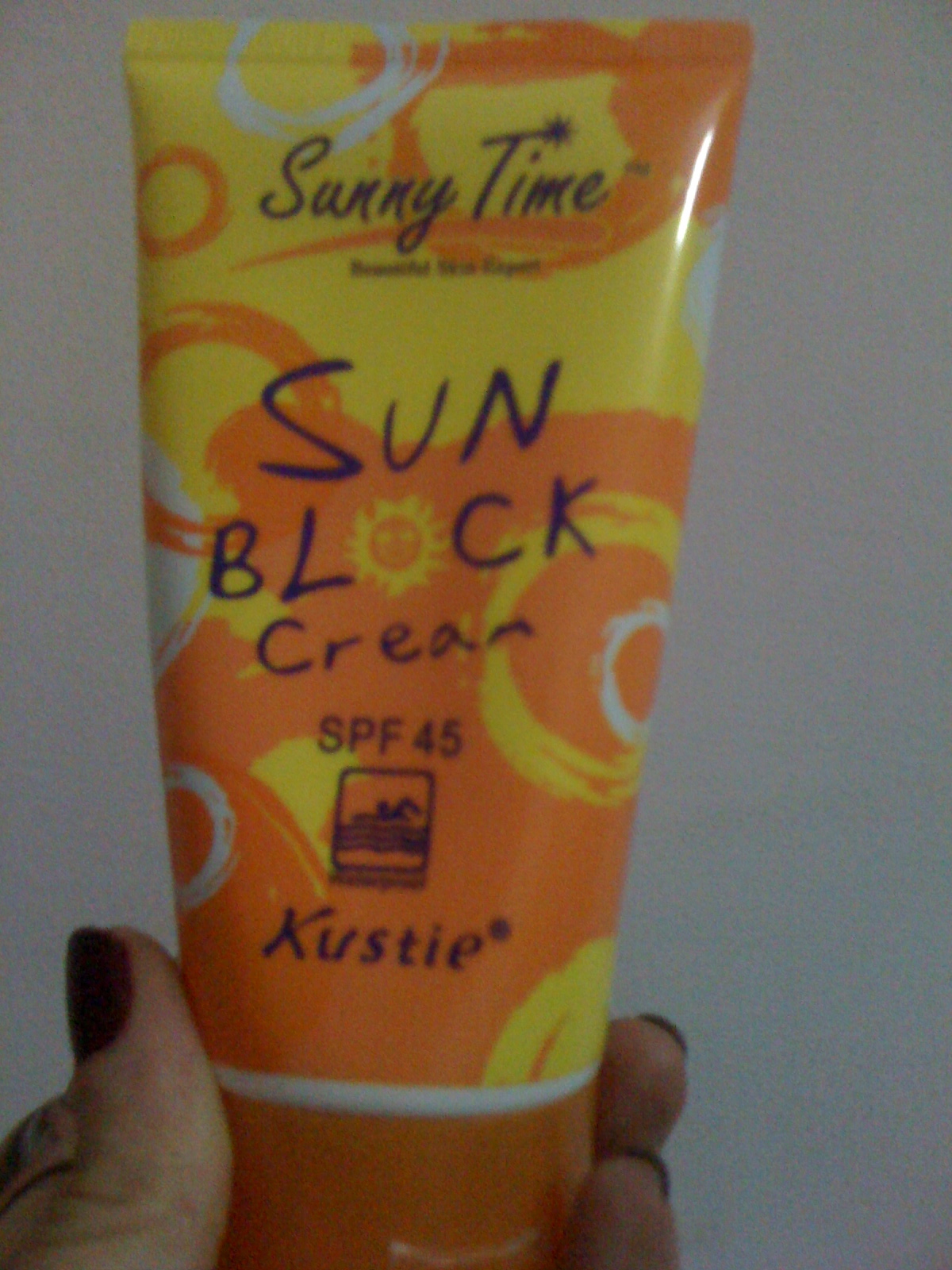
So I’ve been buying this $3.30 Chinese sunblock. I went to the company’s website, and it seems more or less legit. But the sunblock feels weird, too thin and slimy, and it’s real hit or miss: sometimes it’ll work just fine, other times I’ll get burnt despite frequent reapplications.

It’s not so much the cancer I’m worried about as the aging (cause I’m vain, and as previously noted, have a less-than-stellar regard for my health and safety). But I’ve recently discovered that I’m in the early stages of getting what I call White Person Neck—you know, those deep, leathery creases old dudes have in the back of their necks. Ugh.

So I’ve resolved to bite the bullet and shell out the big bucks for the Nivea. Just, you know, as soon as I finish this last Kustie bottle…

4. Real health insurance

You can fib it a bit in some places, but as previously noted, the chances of accidents are high here, and the access to modern emergency care low. And, I’ve learned, once you’ve been in a destination for more than six months, World Nomads considers you a resident and not a traveler. So if you submit a $10,000 I-had-to-be-flown-to-Thailand bill, they’re probably gonna deny it.

So, in the interest of not bankrupting yourself or your relatives, you gotta go for the real deal. My Aetna estimate for just evacuation and hospitalization insurance was over $1200 for a year policy. Which sucks, but I suppose that’s what credit cards were made for, right?

I’ve got until April on my traveler’s insurance, so I haven’t crossed this bridge yet. But of all the resolutions, I’d argue that this is the most vital and, though also the most painfully expensive, the one I won’t cheat on.

5. Regular pedicures

Hahaha—no! It’s not a joke. This is a dirty fucking city—dust and trash and stagnant puddles of water/piss—and your feet get gnarly quick. Why do you think the Southeast Asians are so big on taking their shoes off in their houses? At the end of the day, my feet look like blackened gremlin claws.

The good news is that pedicures are cheap as shit here. You can go to the market and get a quick job with non-sanitized tools for a couple bucks. Or you can go somewhere niiiiice and clean and get the layers of grime scrubbed off for under $10.

I’m shooting for a minimum of two a month. This is probably my most fun resolution and because it involves primping and indulgence, one I’m more likely to keep. I mean, can you say no to these toes?

A Morning Ride Through The City

The morning is cold.

Well, not cold, but cool—breezy and clouded, which for here is Arctic. It’s 8am and I’m getting in a tuk-tuk a friend had arranged. He’s waiting outside of the French restaurant on the corner, holding a piece of paper with my name on it, and it reminds me of leaving an airport’s gates, all the men in cheap suits holding signs of tourists’ names, and how I’ve always kind of wanted to be one of the names, to be Arriving, instead of just wandering off with my too-heavy backpack towards the local bus.

I step in my ballet flats into the tuk-tuk, smoothe my blouse as I sit down. I hold the plastic file case, filed with copies of my resume, down in my lap. We start off.

My friend arranged for a tuk-tuk to take me to 10 different schools, where I’m going to drop off 10 resumes and hopefully get called back—a kind of carpet-bombing, I’m-out-money-and-a-need-a-quick-job technique. The tuk-tuk driver knows the route; he’s done it often, for foreigners like myself. Or not like myself—I imagine them younger, in nicer clothes, with a TEFL certificate on their resumes or at least some teaching experience.

We move through streets fresh with bustle: children in school uniforms, people in baby blue shirts driving their motorbikes to work, old men eating pork and rice at the food stalls. The monks are out, doing their barefoot rounds, and when they chant it sounds like bees buzzing.

Mornings are kind of magical in Phnom Penh—cool and alive, cleaner feeling, not yet bogged down in the heat or exhaustation. I don’t usually get to experience them, since they start at dawn; by the time I’m usually out of the house around 10am, it’s mid-afternoon by local standards, and the pork and rice stalls are shutting up shop.

And it’s cold this morning—the sun is hidden and there’s a cool breeze. It’s exciting, to feel chilly here, and I suddenly remember my dream: that I was somewhere cold and drizzly, like London, and that the air felt crisp on my cheeks, almost stinging to breathe. It’s funny—I’ve been homesick for fog, for foggy mornings, when the dense mist rushes past and the world feels quiet and still and small.

And it doesn’t feel that way this morning, but it feels close. Close-ish. There’s something almost Italian in the weather—the way the clouds sit in the sky, a feel to the air—crisp but twinged with exhaust—that reminds me, not of an ancient quarter, but of the industrial outskirts of a Italian town—Grottaglie, or that cheap hotel we stayed out way outside of Venice, with its gravely road and teenagers and 40-minute bus to the tourist canals and massive train station.

Which is ridiculous—there is absolutely nothing Italian about Phnom Penh. The smells are of fermented fish sauce and trash, steam buns instead of fresh-baked bread; the old women wear pajama suits instead of dresses, the men loose button-up shirts that hang off their sharp limbs, instead of sweaters over their big bellies and those old-school newsie caps. There’s a chaos to the street—welding shops and electric lights and women in face masks weaving between SUVs—that you wouldn’t find anywhere in Europe, even in Italy.

But there’s something in the morning that makes me nostalgic for something I can’t quite name, that reminds me of a place that isn’t quite here. We stop in front of schools—big broad buildings with mounted emblems and security guards, receptionists who take my resume disinterestedly—and I’m in and out in under 2 minutes, in most cases.

We crawl out of the city center—past gas stations and narrow pitted roads, shops with rows of potted plants—and I think of how big this city is, and how I only ever see a very small part of it. I watch, observe the sort of dance of it all that I can’t see when I’m walking in it, or snared in traffic, or sweating in the mid-day sun. And I’m kind of in awe, I realize. It occurs to me that I haven’t been in awe at all, this whole time—been so focused on not being fazed, being blasé and un-culture-shocked, that I haven’t just sat back and reveled in it.

I Skyped with a friend the day before, the familiar posters on the wall, flannel shirts and winter coats scattered across the room. I was telling him some ridiculous story—something about a chicken and a street dog and a hand-tractor full of staring eyes—and he laughed and said, “Yo, do you realize how cool that is? That you just get to be there, and have these experiences?”

And it didn’t strike me in that moment as naive; it didn’t strike me as something said by someone who hasn’t gotten to travel much, hasn’t ever left the Western world, someone who’s easily impressed by my stories, for whom even the mundane details of my daily life seem like adventure. His comment struck me in that moment as true.

I sit back in the tuk-tuk, as we bounce through the city, and I just watch. I smile. I don’t worry about being the Tough Traveler; I just let myself revel.

It’s 11am by the time I get back to my apartment. I pay the driver and step out of the tuk-tuk. The fresh breeze is gone; the clouds are heavy; the air is swampy.

The morning is gone and the spell is broken.

They’re Not Rat Turds, They’re Gecko Turds!

So, I’d been finding these on my terrace every morning:

Turds. Little fucking turds, a sprinkling of them. Festive, really, and one of the many reasons that sweeping one’s apartment is an activity that should occur on a daily basis (it doesn’t).

But I was willing to roll with it as long as the feces-confetti was contained to outer premises. I mean, there’s not a lot you can do about creatures crawling up on your balcony. The inside was where I drew the line.

But then finally, one morning, I walked into the kitchen, lit on the burner on my little camper stove, reached for some coffee and… they were there. Two little turds, right there on the counter.

I didn’t freak out, per se, but I was severely bummed. There’s a lot of “wildlife” that makes it into my life here, even in the city: ants and mosquitoes and insects and these fucking flying beetles that dive-bomb your face at night like miniature fighter jets. It’s why you get an apartment with screens on every single window (which I failed to do). It’s why I drew anti-ant chalk lines around every corner of every room, and why I finally forwent my eco-consciousness and purchased a can of Raid, which I now spray with zeal and frequency usually reserved for air freshenesr. Whatever, I’m adjusting—I’m from the Bay Area, and we don’t have this kind of shit there.

But we do have rodents: mice and rats. I’ve lived in houses and apartments with them, and they are no fucking fun. (An old boyfriend, living in one of Oakland’s more notorious punk houses, would sit up in the middle of the night and hiss like a cat when the rats in his room got too loud.) Putting out traps, removing the splattered bodies from the traps, opting for sticky paper, removing the little feet the desperate rats have tried to gnaw off in an attempt to escape—there’s no fun way to deal with them. And that morning, presented with two pristine specimens, I felt like I was looking upon two tiny calls to arms.

I scoured my kitchen, but couldn’t find any other evidence of them: no nibbled remains, no entry points. All my food was either in the fridge or in tightly sealed glass jars, and there were no holes in the walls or floors—the little fuckers would have had to crawl through window. It seemed rather dexterous, but possible.

After stalking around, eating my cereal, watering my plants and sweeping up the outside turds, I went down to the market to buy produce. There’s a soup stall I like, where massive metal bowls of different concoctions sit on cement blocks, above smoldering coals. I like the pumpkin fish soup, and it’s only 25 cents for serving, so I’m there all the time.

I was waiting amid the motorbikes and waving limbs of the other customers when I saw a friend walk by. We stood in the street, squinting and using our hands as sun visors, and chatted. I told her my story of woe.

She grinned. “I’ve got good news for you.”

I gave her a suspicious look.

“No, really. Was there a little white tip on the turds?”

“Yeah.”

She nodded. “They’re not rat turds. They’re gecko turds.”

“Thank God!” I exclaimed. Geckos are totally clean, they eat bugs, they make cute little squeaky noises (or big bellowing noises, if they’re larger) and they look damn cool, posted on the walls like those sticky toys we used to get from the quarter-prize machines.

I bought my soup, thanked my friend for yet another valuable insight, and trundled home to my apartment—NOT infested with rodents.

A small victory, but a victory nonetheless. Would rather, you know, they didn’t shit all over my counters and floors, but I’ll take what I can get.

A Christmas Miracle: Cambodian Yankee Doo Rag and Why Giving Is Better Than Receiving

So, remember that photo in the last post of the baby in a doo rag? Well, thanks to technology, a keen sense of irony and a friend willing to tote a shopping bag of presents back to the States of me, this was able to happen:

This is my youngest nephew Ethan, back in San Francisco, sporting the latest in Cambodian infant fashion. The photo appeared in my Inbox this morning. It was a nice Christmas treat, seeing as though the previous day’s attempt the Skype into Christmas Eve was foiled by a faulty wifi connection.

But how, you may wonder, did this fine piece of headwear reach young Ethan? The more savvy among you will know that Cambodia has a woeful postal system—as in, there basically isn’t one. There’s no mailmen; I’ve been told all the city’s PO Boxes are currently full; even so, you frequently receive other people’s letters in your PO Box, and vice versa; and, fun tidbit, private postal companies will only track packages until they reach Cambodia—at which point parcels enter a literal black hole and arrive 2 months later, at a rate of 50/50. While sending packages tends to be more successful than receiving them, you’ve still gotta go through a private company like DHL or UPS, whose rates for letters begin at $50.

So much finagling was done to bring Ethan this small slice of patriotism. Let’s retrace the journey together:

1. Meet up with a friend earlier this month at a “Christmas Village Craft Sale”—because it sounds like a hoot and what else are you up to on a Sunday afternoon? Pursue the array of shiny shit glittering under the pulse of epileptic lighting and mention, somewhat wistfully, how easy it’d be to buy presents for your nieces in a country where the pervading cultural aesthetic is akin to a 6-year-old girl’s brain on amphetamines. Your friend, who’s traveling to the States to spend Christmas with her boyfriend’s family, spontaneously offers to take a load of gifts with her and ship them from Seattle. Accept before she can change her mind.

2. Run around town finding small, light-weight gifts for people. For grown-ups, get boring, tasteful grown-up stuff, such as a krama scarf and a selection of Kampot peppers. For the kids, embrace the tacky: an Angry Birds t-shirt, glittery headbands, pink poofy hair clips. For the older kids—being your sister, and 18-year-old nephew—get ironic shit: t-shirts with nonsensical English words and an Apple logo, a cassette tape of Khmer pop, a bling kit (fake cellphone and gold chains used as offerings at altars). Chuckle to yourself, and consider the fact that you might be having more fun buying these presents than anyone could possibly have receiving them.

3. Wrapping: What’s cooler than gifts wrapped in newspaper? Gifts wrapped in Khmer newspaper. Khmer looks really cool, all squiggly and swirly; buy a stack of old papers at the market for 12 cents. Remember, once you get home and start wrapping, how much Cambodian newspapers like to publish pictures of dead bodies—motorbike accidents and murder victims. While perhaps the 18-year-old would find this culturally interesting, you figure this is not what a 2- or 6-year-old wants to see on Christmas morning. Carefully cut these photos out.

4. Hand off presents to Bel. Thank her profusely.

5. KEEP IT A SECRET! Holiday surprises are fun, and what’s more of a surprise than getting gifts from your daughter/sister/aunt from the anti-postal nethers of Southeast Asia? Well, a lot of things, but it’s still pretty cool. So do not mention any of this during your weekly Skype date with your parents.

6. Get up Christmas morning, which is Christmas Eve in California, and hurriedly make coffee and get on the computer and wait to connect to your family. The video will be out again, which is a major bummer, and you’ll spend 20 minutes trying to connect through FB video chat and iChat and AIM, but none of it will go through. Realize how much you were looking forward to seeing everyone. Cry.

But before you get off, your mom will tell you how a mysterious package arrived that morning. It had no return address, but they could see from the stamps that it was from Washington. They don’t know anyone in Washington. So they opened the package to try and figure out who it was supposed to go to—maybe it was sent to their address by accident—and they saw a bunch of little gifts, and they saw a card, and they thought—“Well, we’d better open the card to see who these are for.”

“And then we read the card, and it was from you!”

Smile. Your mom will say it was highlight of her day.

Then the connection will cut out.

So when you wake up the next morning, after a Christmas spent nursing another stomach flu, and see a pic of little smiley Ethan in his Cambodian Yankee chic, it’ll be pretty fucking sweet. It’ll be the highlight of your Christmas, and you’ll cry a little again—not because you feel far from home, like last time, but because you feel a little closer.

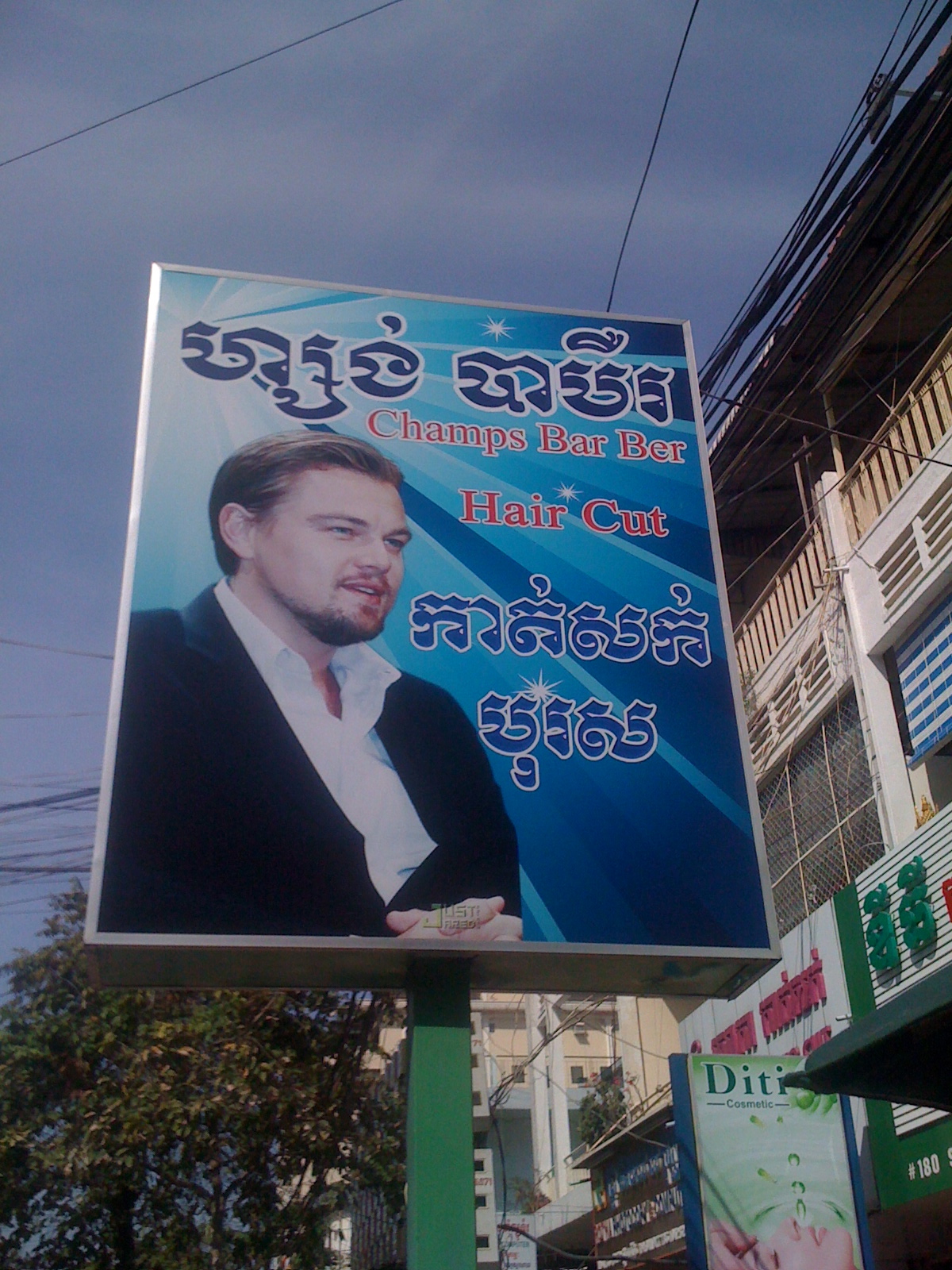
New China Paris Texas Snoop Leo Hair Cut: International Cambodian Man Style

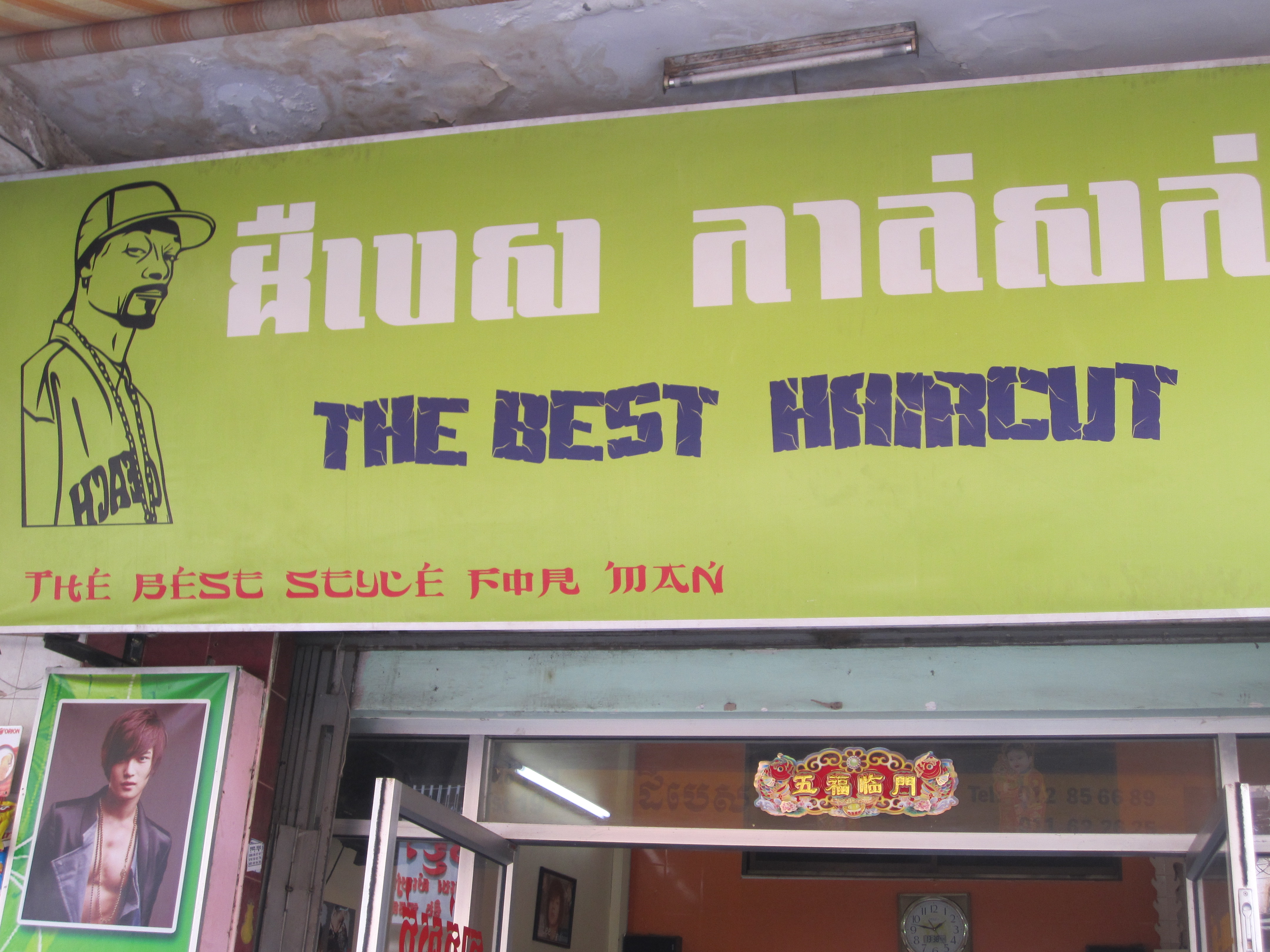
Naysayers be damned. While Cambodians may not be able to travel as freely as other nationalities, there’s a lot of international influence here in Phnom Penh. Take style. Men’s hair styles, to be specific. You’ve got, of course, the regionally ubiquitous K-Pop hair, but it doesn’t stop there.

Behold: international stylings for men.

China in the front, Paris in the back. Or something.

Doo rag. Start em young, start em right.

Despite the advertising, you sadly cannot get cornrows at this salon.

Bieber Fever hasn’t quite hit here. We’re still on the Leo/1997 kick.

If anyone needs me, I’ll be getting my hair did.


Lauren Quinn is a writer and traveler currently living in Hanoi. Lonely Girl Travels was a blog of her sola travels and expat living from 2009 to 2012. She resides elsewhere on the internet now.

Join 490 other subscribers

Buy This Sh#t

Categories