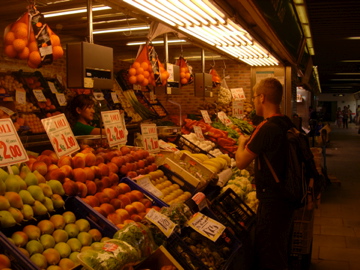
Shopping for produce
Kimmo sighs a cloud of smoke and looks into his half-full pint glass. ¨I told her one and a half months, I´ll try it. Then,¨ he shrugs and manages a smile ringed with worry lines.
It´s one am, and we´re washing down the 4th night of Doña Antonia´s grand reopening at an endearingly tacky Irish bar in the cobbled heart of Madrid. The red plaid wallpaper and grime-covered Guiness mirrors seem to agree with Kimmo, who looks 10 years younger out of his white-starched chef´s jacket.
Kimmo, Matt and I at one time all worked for the same 5-restaurant company that encompassed, at varying times, 3 SF-Chronicle Top 100 restaurants. That is to say, we´ve all been well-indoctorinated with the Alice-Waters-inspired culinary philospohy of organic, locally sourced ingredients. Ours paths have crossed for one heavy-skied Sunday in Madrid, where Matt, some friends and I feasted on the kick-ass creations of Kimmo´s new menu. It was one of the best meals I´d had in awhile.
But, apparently, Madridanos don´t share our American enthusiasm.
¨Madridanos,¨Matt tells me, ¨aren´t very discerning diners. It´s more about atmosphere than the actual food.¨ Kimmo nods in semi-forlorned agreement.
A recent transplant from the Bay Area culinary scene, Kimmo´s been trying to reconcile his California-cuisine sensibility with Madrid´s affection for over-salted sameness. It´s been 6 months, 3 restaurants, and so far, it hasn´t gone splendidly.
Listening to Kimmo´s qualms and Matt´s frustrations, I begin to realize that culinary values and expectations in California are wildly different than those in Spain.
Matt, an ex-bar-manager turned handle-bar-moustached vagabonder, has been frustrated with Spanish service and quality for the past 7 months. Kimmo, a sweet-faced Scandinavian socialist who´s vowed not to die in either the US or Finland, has been struggling against the low standards and unadventurous expectations of Madrid´s diners and restauranteurs. A chef by trade, he´s been hired as the head chef and sole cook of the newly reopened Doña Antonio near Plaza Santa Ana.
Kimmo´s creative menu includes untraditional dishes like mussels with chorizo and garbanzo beans, a sort of inventiveness valued in the Bay Area. Put the same old things on the menu there, and you can bet on your clintele steadily plummeting. In Madrid, it´s the opposite. For the 4th consecutive night, Kimmos´s watched nervously as potential diners sip on coktails (he insisted on expanding the beer and wine bar to include mojitos and caipirinhas), peruse the menu, look confused, and leave without ordering.
¨When it comes to tapas restaurants, the kind younger Madridanos go to,¨ Matt says, ¨I usually don´t even have to look at the menu. They´re pretty much all the same.¨
The increasingly anxious owner of Doña Antonia wants a more typical menu; in the previous day´s blow-out, Kimmo conceeded to including bravas and croquetas on the menu. ¨She tells me,¨Kimmo says of the owner, ¨ ´You can do them your way.´ But no one in Madrid wants to try lemon aioli. And they haven´t even heard to romesco!¨
Another problem Kimmo´s encountered is that modern Madridanos seem to have no familiarity with the Spanish cuisine he learned in the States. Filet of fish with romesco? No go. Paella without seafood? Won´t fly. Additionally, the organic craze has far from set in. An almost nauseatingly hip trend in the US, the inherent taste superioirty and sustainable sensibility means nothing in Spain. ¨There´s no idea that you might want to spend more for better ingredients. I can´t say, ´The meat is expensive because it´s organic.´ They won´t care; they say, ´Find it for cheaper.´ So I have to try to cook with rubbery arugula, carrots that don´t taste like carrots.¨
Kimmo´s decided to give it 6 weeks. He´ll do what the owner wants: put the typical dishes on the menu and try to make the best of less-than-optimum ingredients. Will he eventually conceede and adapt to the Madrid way of dining, or will he maintain his high standards and continue the seemingly impossible struggle to raise diners´expectations, lower their inhibitions and up the ante of the Madrid tapas scene?
There´s no way to know, not now. But tonight we can kick back in the thickening smoke creeping through the psuedo-pub as the crowd thins and the evening grows damp and heavy, and let it all go. Afterall, tomorrow´s Monday, Kimmo´s one day off.
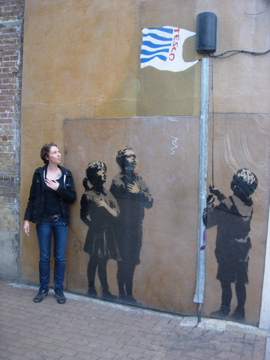 There´s nothing like a good ole map-less search for illegal art through the streets of a foreign city to get you off the tourist track.
 New Zealand native, world-travler and 30-year London resident Dave served as my gracious host and personal guide extraordinaire. We began at the Waterloo tunnel, once a Eurostar passageway, once abandoned, now a designated graffiti area. None of Banksy´s work remains, but lots of other bright colors and politized stencils fill the surprisingly clean, un-urine-smelling underground area. We rambled along the brown, gurgling Thames to the Tate Modern, sister museum to the Tate Britain, one of the museums hit in Banksy´s guerilla art hanging. We checked out the excellent Futurism exhibit (which warrants its own post), making use of Dave´s free +1 entry.
 We found another Banksy on a quiet sidestreet off of unabashed tourist trap/hipster hangout Brick Lane. The first half of the blocks we walked were wall-to-wall Indian restaurants, with pushy male touts outside jostling for patronage; I think they´d find more success if they employed the Latin American method and used smokin hot girls in skimpy clothing. The street morphed into uber-cool bar and pub land, and that´s where we found the most street art of our mission. My favorite was a collage of corporate logos composing the now-commodified famous image of Che. The Banksy we found was several blocks from the hubbub, a painter sitting next to a large yellow flower. The words ¨vandals found vandalising this vandalism will be prosecuted¨ appeared right beside the large spray of paint covering the stencil´s face.
 Another culinary and culture highlight was our next morning´s stroll through the Brixton Market, the pulsing heart of the Afro-Carribean Brixton neighborhood. African flags and fabrics, produce-selling mom and pops, Bob Marley tapestries, Obama t-shirts, Rasta onesies and pot-leaf-adorned everythings filled with multi-block indoor/outdoor bazaar of bad-assedness. There wasn´t a single corporate logo in sight, and as I sipped on a Buffalo-milk cappuccino and watched passerbys, I couldn´t help but feel my 48-hour powertour had provided me with a pretty good glimpse of the London in which locals live, graffiti-adorned, cumin-scented and throbbing with life.

 Lonely Girl Travels
Recent Comments