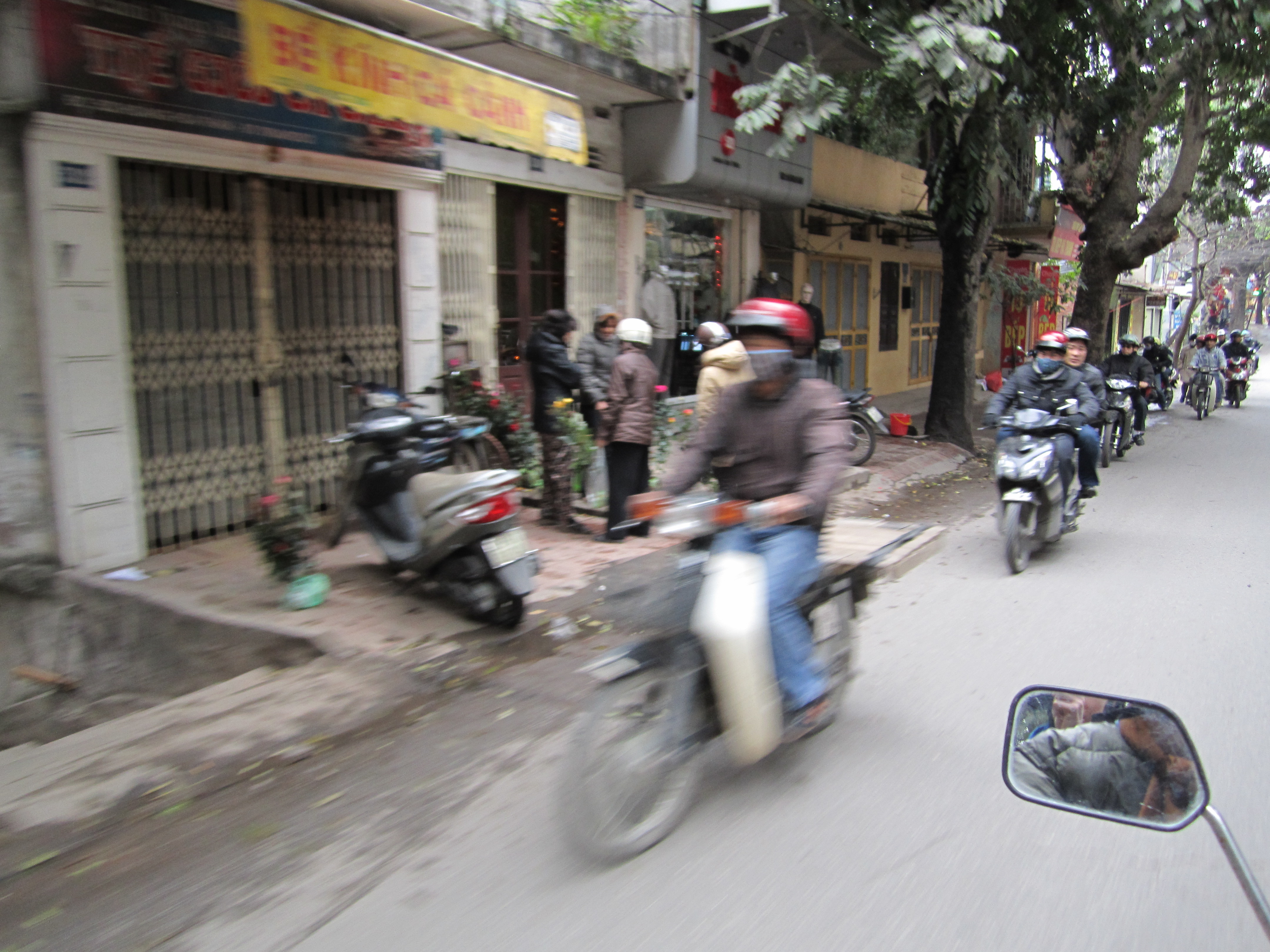
 Hanoi is a bipolar child with a strict bedtime.
Clinging hands behind me to the metal rack, I try to suppress the involuntary flinching—a circumstantial case of Tourette’s. It’s Saturday morning, and my first ride aback a motorbike through the frenetic traffic of Hanoi.
If you want to see the word “clusterfuck” defined, acted out in an exquisite charade, snap on a spare helmet, straddle the seat of your friend’s motorbike and take a ride through the streets of Hanoi. Feel the blanket of exhaust haze whip up around you; feel your legs naked to the risk of a thousand near collisions; feel the breeze of your own mortality and the queasy cocktail of sweetened coffee, cigarettes and exhaust churn in your stomach.
 See towers of Tet trees and blossom branches balanced aback bikes; see jugs of water and housewares, bundles of mysterious somethings tied on in impossible precariousness. See families of four smooshed onto a single bike; see the eyes of children placidly blinking in the madness. See drivers texting, pulling out without looking, barely slowly, pedestrians stepping out into the chaos of it all—women walking with baskets balanced on a piece of wood across their shoulders, liked Lady Justice, except it’s their mouths that are masked; their eyes remain wide open.
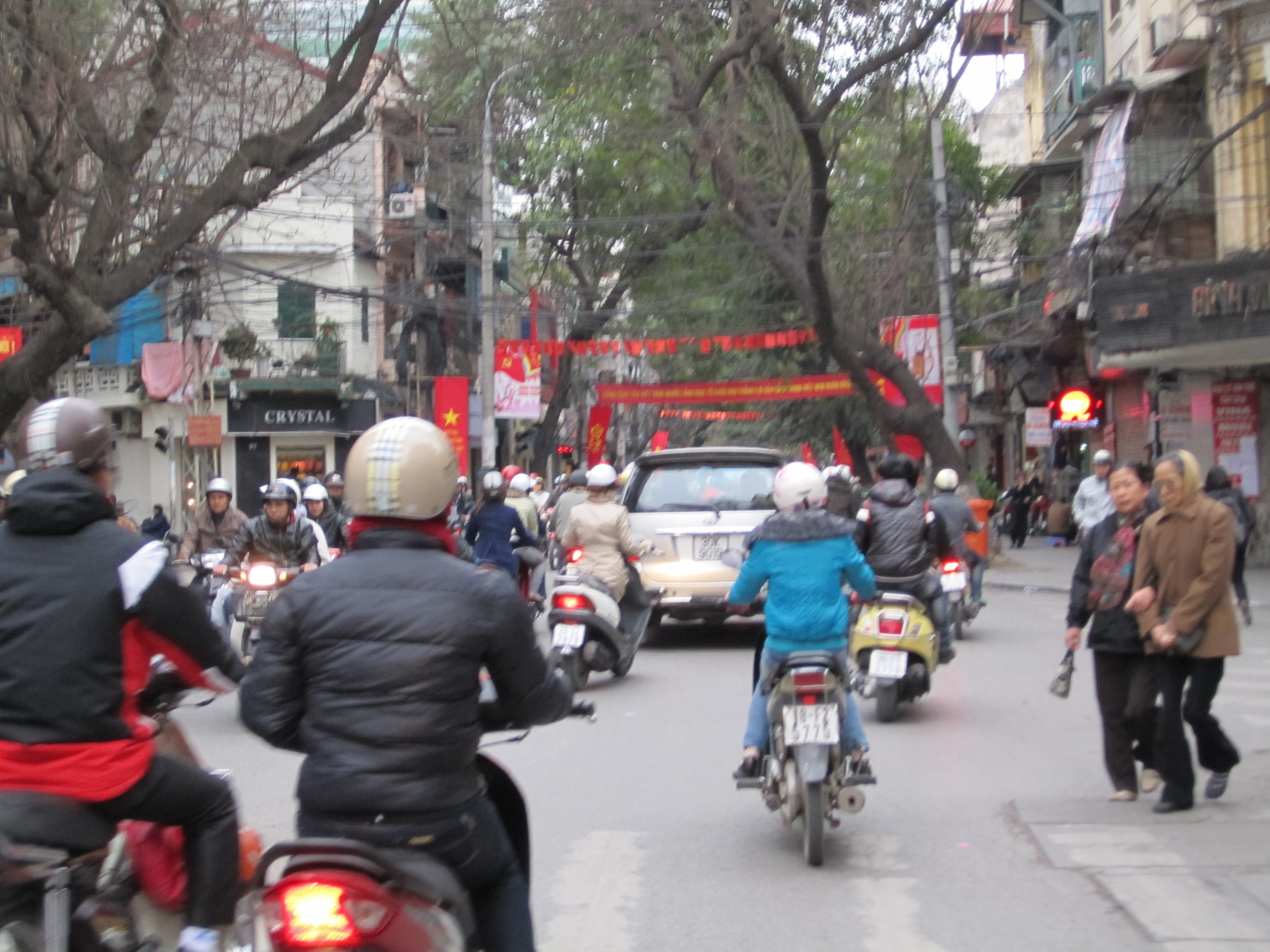 Hear the horns beep and squawk like a million hungry birds—seven million, to be exact, and every damn one of em has a motorbike and is riding their motorbike, lanes just vague suggestions, right-of-way a nonexistent notion.
See this all this because you’re in this, suddenly a part of this: a passenger in the strange dance that feels more like a riot or a mosh pit—but no, no, must be a dance because you keep skirting disaster, skirting death, and you keep wanting to clamp your eyes shut but can’t, can’t.
 Riding aback a motorbike through Hanoi isn’t exactly a near-death experience. It feels more like being on an airplane with really bad turbulence: you trust the pilot but not the skies. You know you’re not actually going to die, but you really can’t wait for the whole damn thing to be over. You get off feeling like you’ve just stepped off a rickety old rollercoaster that’s safety permits are supremely suspect.
“The sidewalks in Hanoi aren’t really for walking,” Jacob throws over his shoulder. “They’re more for commerce. If you want to walk, you’ve pretty much gotta do it in the street.”
It’s not a walking town, he says, and it’s true—at times I don’t see a single pedestrian, just a weaving, wheezing sea of traffic. How do you get to know a place without walking it? How do you get a feel for feel for a place without your feet on its streets?
 It gets easier. I tell myself to trust, to put faith in the fact no one seems to be crashing. It begins to feel like we’re moving along this barely perceptible tightrope that weaves in and out of other people’s tightropes, maybe like telephone wires—like our own personal orbit, the miracle of chance that we don’t collide, such a miracle that it can’t be chance at all, but driven by some other force I can only suspect, can feel at times in the smoggy breeze, but can’t come close to naming.
Nighttime is different. It’s as though someone flips a giant switch. By 11, the streets have cleared, suddenly swept of everything but a faint whisper, the asthmatic glow of the headlight. The streets seem smaller in the dark, emptied of their madness—they don’t seem like the same streets at all, but an entirely different place, a different city. An incredible stillness settles over the buildings, the pavement, the wires stretching and branches drooping and the shapes of shadows in the dim drizzle—as if none of it were real, all the daylight mania just a waking dream, a reverse nightmare.
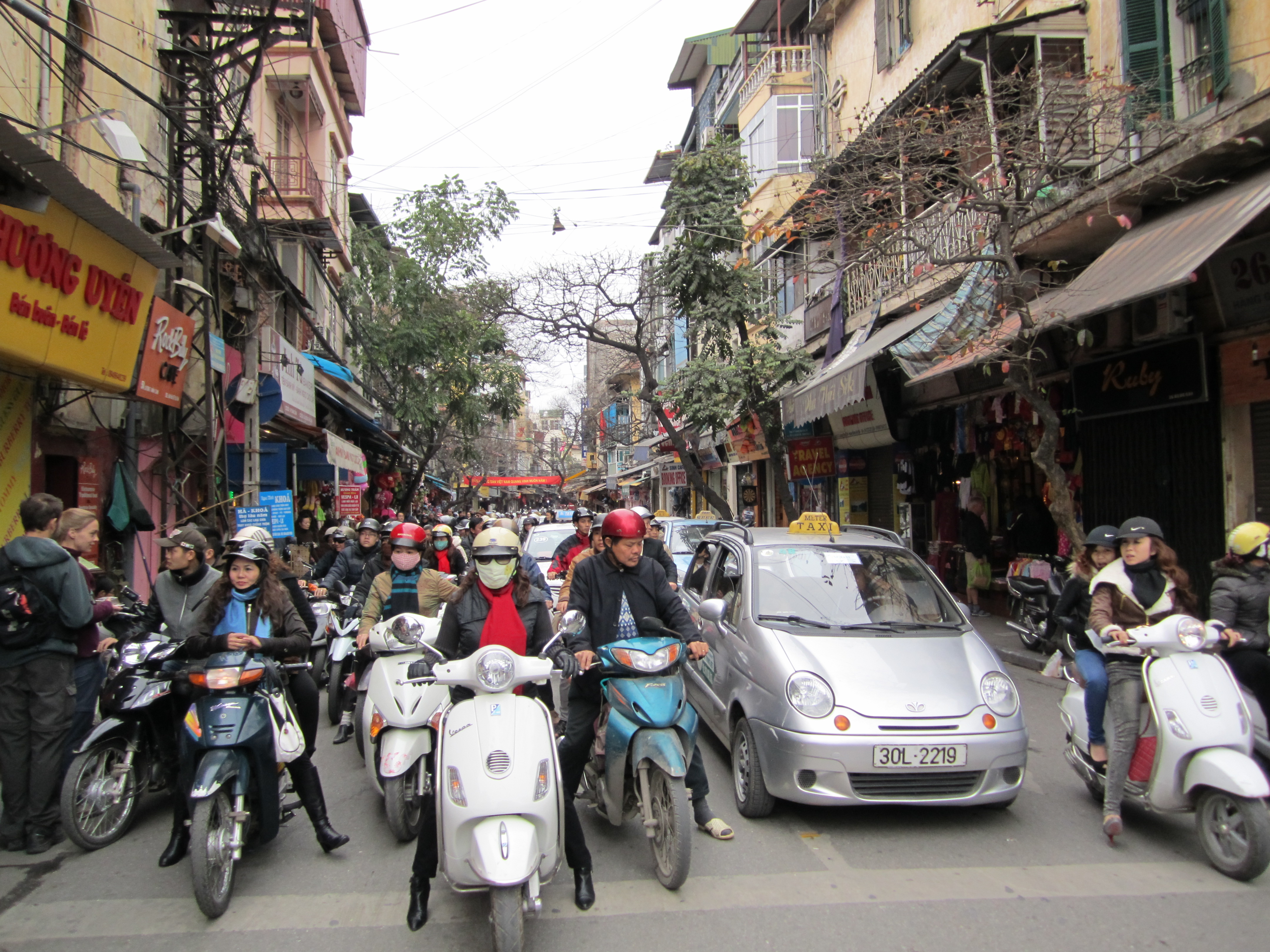 By Sunday I’m able to hang on with only one hand and snap photos with the other. I’m comfortable enough to carry on a conversation as we drive. Jacob points out landmarks and tell little stories; I tell him how my parents were revolutionaries when they were young, how the met in a Communist meeting. He quizzes me Vietnamese numbers, phrases; we laugh about the universal asshole-ness of SUV drivers. We weave through the manic chaos of daytime, and I tell him Hanoi feels like a bipolar city.
Rain comes that night, along with a cold wind; we move more slowly through the vacant streets. I blink against the lashings of wet and my hands turn frigid. Slowly, I loosen my grip on the metal grating, and place both my hands in my pockets.
I’ve learned how to trust the gods of traffic and chaos. I’ve learned how to ride a motorbike in Hanoi.



 Lonely Girl Travels
Recent Comments