Archive for the 'Offbeat' Category


Saigon’s Secret Cities

Zero points for subtlety

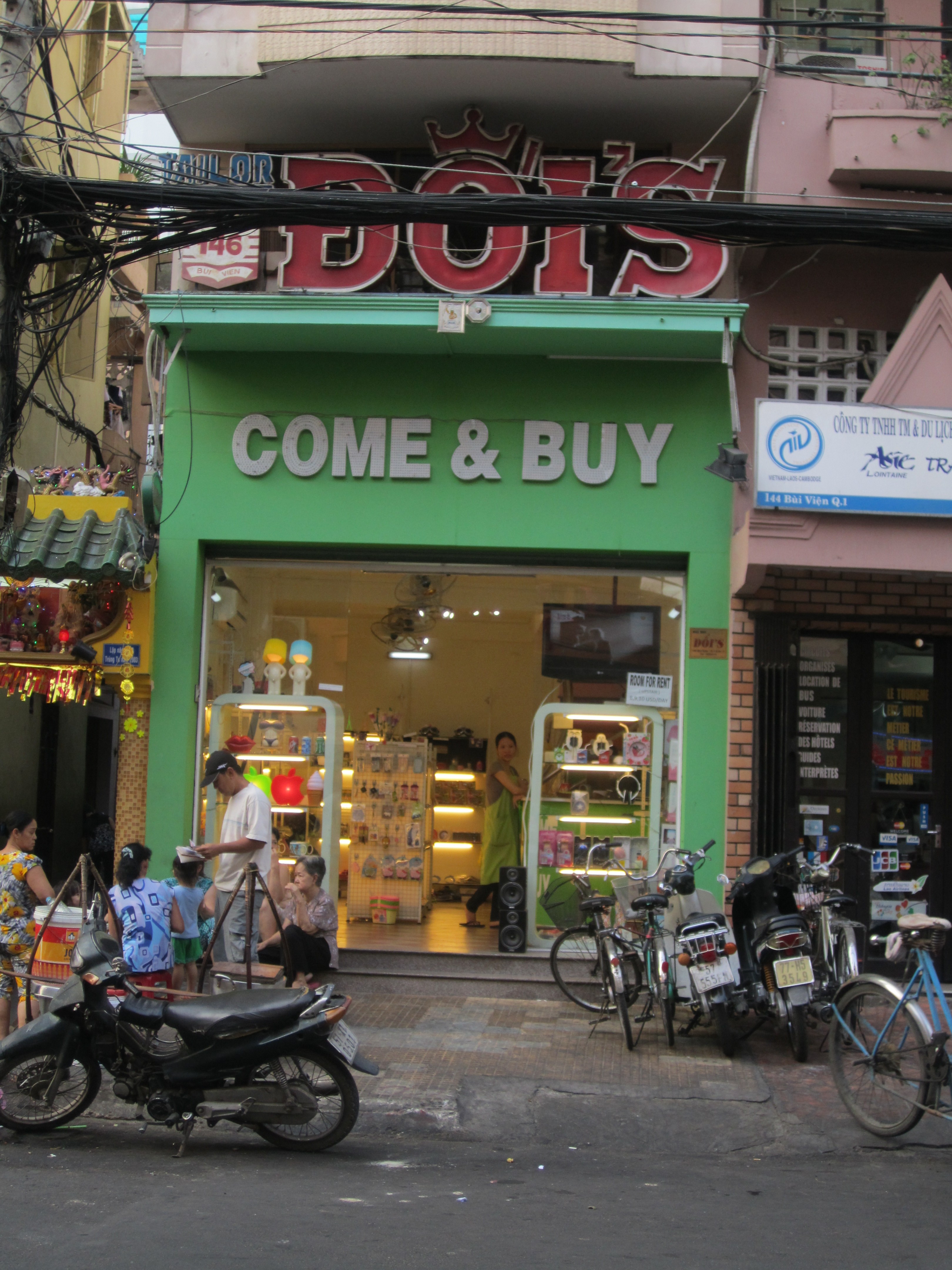
It seemed like LA to me: glitzy buildings, endless traffic, neon lights reflecting off the hoods of gleaming cars. After two weeks in Vietnam, Saigon’s wide roads and rows of Western shops, its construction cranes turning this way, that way, like slow skeletal animals—it all seemed terribly wealthy to me.

And even more than Hanoi, there seemed to be no break in Saigon, nowhere to rest or even catch your breath from the heat and exhaust and honking, the billboards and the building, always building—more, higher, newer: an unrelenting city, like hot breath on the back of your neck.

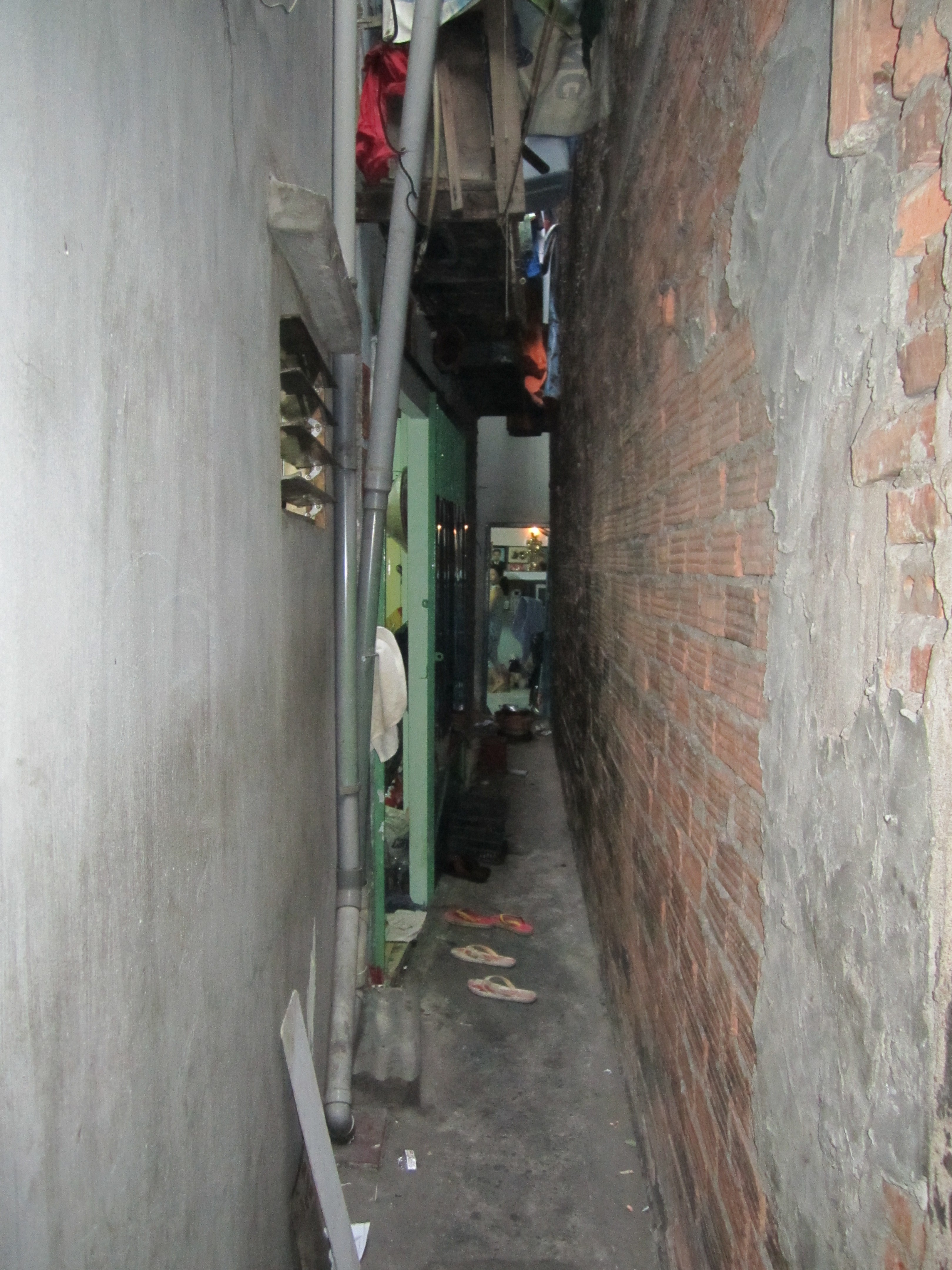
But if you looked, if someone showed you, you could find them—passageways, skinny portals to other places, other cities, secret cities just behind the surface.

You don’t notice them at first—or you think they’re dead-end alleys, nothing gaps between buildings—no wider than a doorway, and you step through them, into them, into another world: alley streets that wind inside city blocks, where people sit in doorways and women crouch over grills of smoking meat and children run and laundry hangs and TVs flash beside flashing altars and telephone wires stretch in impossible tangles, like dreadlocks—in short, where everyday life is lived.

It’s cool and quiet inside—the buildings are high and the alley streets narrow. You pass a succession of doorways, more glimpses into the lives of the people inside, a flood of images: families huddled on the floor around a big cooker, eating rice; chickens clucking around; old men napping in hammocks; women lighting incense and raising it and waving it and tucking it in a crevice to smolder and smoke.

It feels like a Moroccan medina, those deep parts when you wander far enough—little shops set up in the front rooms of people’s homes, the random internet cafe, children running everywhere, squealing and toddling off into doorways. Only the smell is of fish instead of spices, and it’s motorbikes instead of donkeys you have to look out for.

But it’s the same sense of feeling strangely at home, even though it’s so far from your own home, anything you know of home. There’s something incredibly comforting about the living of everyday life. For those of us that have treaded onto the dark side—maybe for all of us—there’s something really precious about the doing of everyday tasks, a simple joy in being a part of the world, a simple part of it all—even if only as a passing shadow on the wall, a white girl snapping photos and peering in crevices and smiling and waving when the children exclaim “Hello! Hello!” in an English they barely know.

You wander and rove, twist and turn, and then suddenly you’re back out on the surface, the wide swarming streets, an assault of heat and honking. It feels addicitive—you want more, you want to go back, go back under. You find another small portal and dive into the cool dark shadows.

It starts to feel like water, like bobbing up and down, in and under the surface, submerging and coming up for air—only you’re not sure which is the breathing and which is holding, cheeks full and a quiet burn rising through the chest.

You move in a strange space through caverns, observing the private lives of organisms you feel you’re somehow distantly related to; you move through a still, dark world terribly foreign but also somehow familiar, somehow like home—at home, in the secret cities of Saigon.

Take Me To The Jungle, And Don’t Ever Take Me Back

Okay, so outdated pop culture references aside, hear me and hear me well: Jungle Beach is the stuff of backpacker folklore.

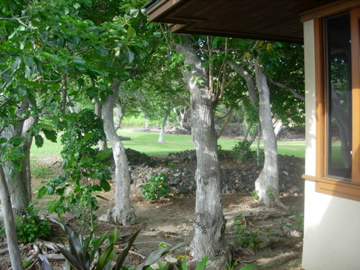
A rustic, simple homestay: a cluster of bamboo cabanas on a sandy lot, shaded by the whispering palms of trees; hammocks and hand-made lounge chairs; a communal dining room where guests gather twice a day for meals; thatched sun umbrellas stuck into the sand of a postcard beach.

Sometimes a place feels so special that you don’t really want to write about—as though writing about it would sully it, or giving it words—trying to give it words—would cheapen it, lessen it, and you want to keep it a private, precious thing.

I arrived at Jungle Beach a little heart-heavy (see previous post), a bit of melancholy sprung up, as though something tapped into a murmuring, gargling reserve of oil beneath the surface of me and wasn’t shooting out like a geyser, but rather seeping through, leaking out into the sunlight.

In any case, I crawled off the overnight bus a stop early, 40km outside Nha Trang—5:30 am on a dusty strip of highway that consituted the town Doc Let. I took a motorbike the next 20-some km, sleep-blurred and thirty-mouthed, to Jungle Beach. I arrived, and I didn’t ever want to leave.

It wasn’t the kind of place that immediately bowls you over. “This is nice,” I thought, as I curled up under a thin blanket, inside a soft blue mosquito net. But the place grew on me—or I grew into it.

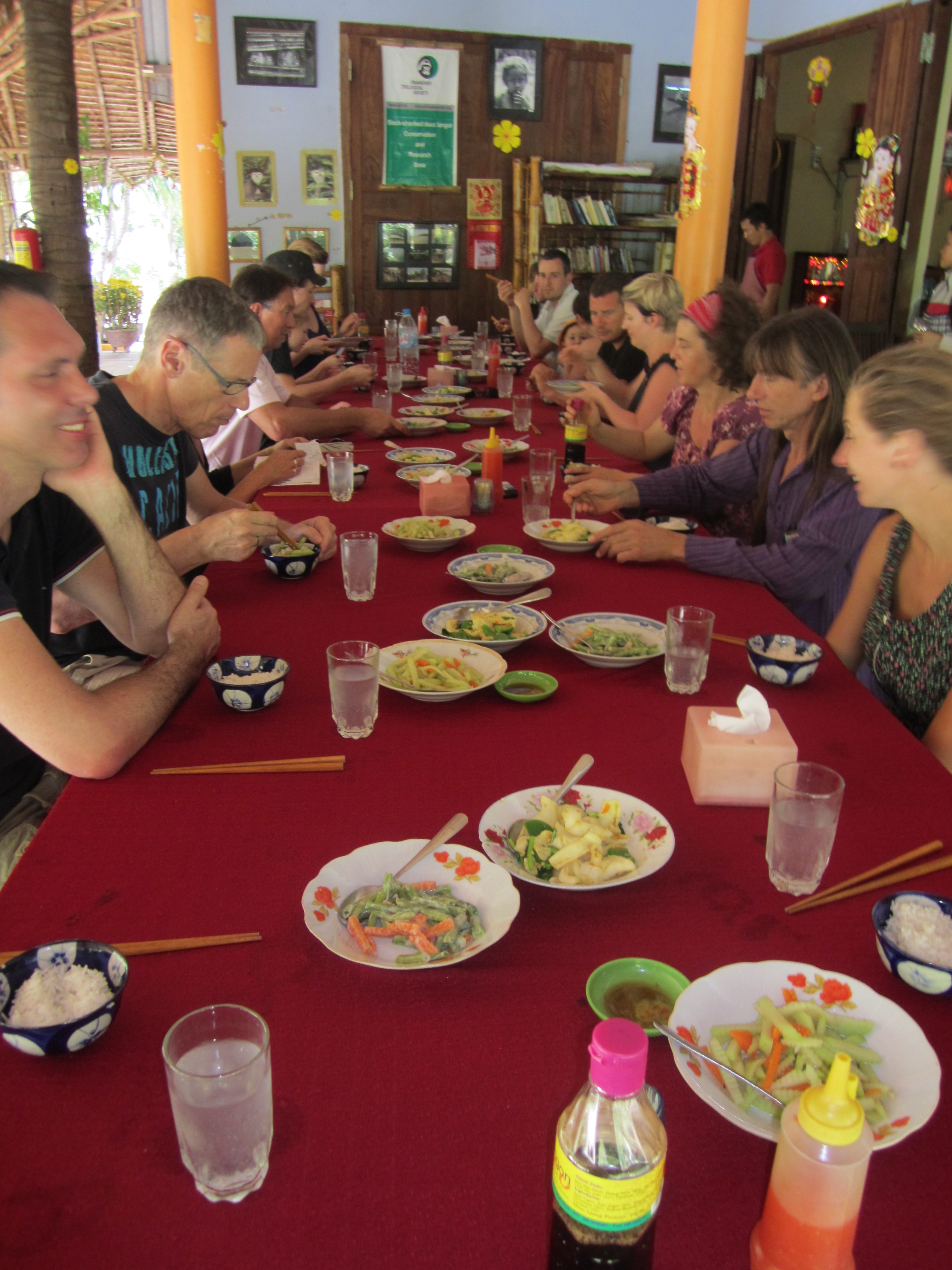
Hours and days passed in some sort of other time zone. Wake up with the sun. Jog on the beach or do yoga on a mat in the shade. Eat breakfast. Do some writing, some reading. Lay on the beach. One of the workers comes out and says it’s lunchtime. Rise off my feet, sit at the communal table, pass bowls of meat and veggies and rice and sweet chili sauce. Have another coffee. Go back to the beach. Not even read, really, just lay there—lay there thinking, or not thinking, just watching the waves and feeling my own kind of waves inside, welling up, rising and receeding, as though I were standing on the banks of a monumental sadness, whose bounds I didn’t know, just the pull of its gravity. Cry sometimes, about nothing in particular.

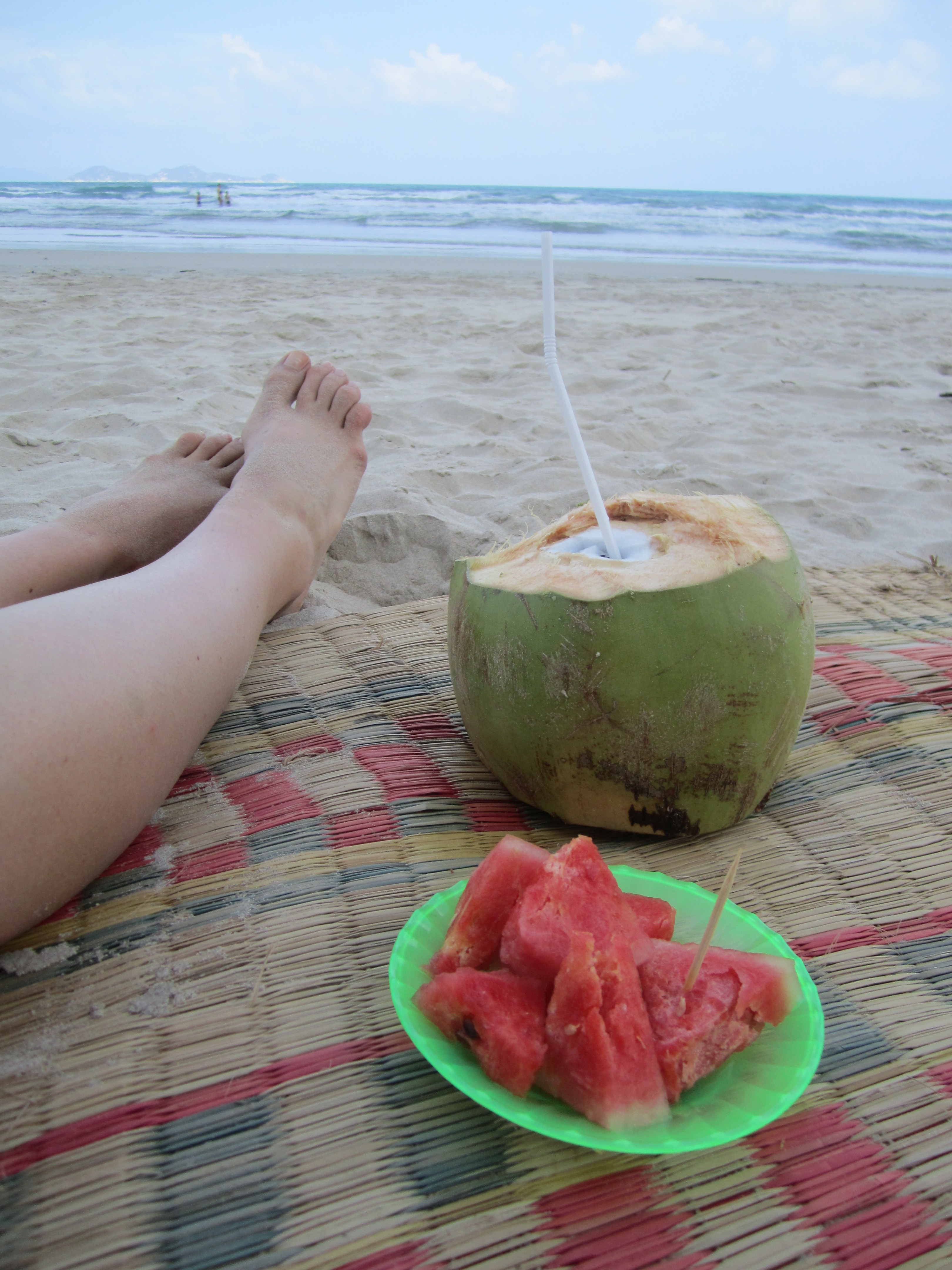
Three pm, and someone comes out with a little plastic plate of fruit, pineapple or pomello or watermelon. Eat it with a toothpick, get a coconut, drink it and scrape it clean with a spoon. Go wade in the water, hopping waves or letting them pummel me, or floating on my back and watching the great white clouds walk across the sky. Shower, check my email, write. Gather for dinner and spend hours afterwards chatting with the other travelers—mostly couples, mostly German for some reason, but really cool people, different ages but all open and friendly. Feel like it’s midnight when it’s only 9, say good night and curl up under a thin blanket, inside a soft blue mosquito net. Repeat as necessary.

The place was built by a dude named Sylvio, who walks around shirtless and smoking, a tough old guy (see character study in upcoming post). He bought the land nearly 10 years ago, and built the place slowly, each cabana by hand, and it’s become the stuff of backpacker folklore.

One of the most impressive parts of Jungle Beach is the staff. The staff to guest ratio was almost 1:1, a friendly, laid-back Vietnamese staff that didn’t pander to the guests and fawn over them, but was attentive—in short, that actually seemed to really care that we had a good time. Ten years of working in the service industry, and I’ve decided that that’s all people really want—to feel taken care of, to feel like you actually give a shit. It’s a rare thing, and it doesn’t necessarily come with heafy price tags and swanky surroundings. It comes, to be completely and utterly trite, from the heart.

I spent four days and three nights doing virtually nothing at Jungle Beach. And as my depature neared, I found myself desperately not wanting to leave. I discovered, without having known it, that I really needed that time—to decompress, to clear out some space, to get ready for the project I’m about to embark on. And yet I didn’t feel rejuvenated, in a sense; I felt simply like I didn’t want to leave.

But what would another day have done? What would another week or year done? Will I ever actually work through all this whatever-it-is I carry in me? Will I ever be done? No, no, it was time to go.

But I can’t ever remember feeling so sad to leave a place. I looked around—it all seemed so precious. I actually almost cried. What the hell is all this? Am I going crazy? Am I becoming soft in my old age?

I got in the taxi and we bumped off, leaving the buildings and the thatched roofs and the gate and the barking dogs in a billow of dust behind us.

Hanoi’s Secret Cafe

I love rooftops, and I love rooftops in cities—sitting up on your bird’s perch and watching the strange dance of it all.

There’s no pigeons in Hanoi (except the ones you see plucked and pink at the food stalls), and there’s virtually no places to take respite.

Jacob told me about the secret cafe—not so much a secret, but a nameless, signless place you could never find without looking for it. On a road behind Turtle Lake, beside an especially terrifying roundabout, at the heart of the chaos—a nondescript storefront shop selling all the usual lanterns and bags and lacquered art. You walk past it, through it, down and back, what looks like the dim hallway to some squalid toilet.

It actually leads to a cafe, opening up into a courtyard that evokes the same “ah” sensation as stepping into a riad from the din of a Moroccan medina. A girl thrust a menu at me and told me I needed to order there, right there, before going any further. I pointed to the coffee with milk and egg white, as recommended, and the girl moved aside and let me pass.

I climbed up a flight of stairs, past a set of carved doors left ajar, revealing a glowing, smoldering altar within. Up another skinny staircase, and I was at a quiet little terrace that overlooked the lake, the skyline, the swarming street, the madness of the city.

It was my fourth day in Hanoi, and I was only then beginning to make sense of it. Its roads were a tangle of incomprehension, like lines in a palm whose fortune you couldn’t quite decipher—electrical wires and branches the gentle hatch marks that lay like a webbing, even less decipherable in what was certainly a story, certainly trying to say something.

But on the terrace it almost made sense, or at least begin to take shape. The other tables were sparsely inhabited by couples, leaning in and speaking low, by a few other foreigners smoking and reading. My egg white coffee came and it was goddamn delicious, thick and like a milkshake. I spooned it to myself like I were my own infant and sat there, just sat, thinking my nothing thoughts and watching.

It was refreshing, to be up there like a bird, in a city that doesn’t have any—to enjoy a moment of peace amid the frenzy. Which is a metaphor for life, in the way it’s all a metaphor for life—one great metaphor beneath the surface of everyday, at the center of everyday, everything just an arrow, pointing, leading, hinting us towards some soft secret (down a passageway, behind a trinket shop)—nudging us towards something we can’t possibly ever know or say, can only sense sometimes, in the still moments—can only approximate, speak about in abstractions, relationally. Which is why it’s a metaphor in the first place, and not The Real Thing—why we need metaphors and egg white foam in thick coffee and pretty little terraces to take a breather on.

Hanoi Secret Cafe: 11 Hang Gai

God on the Walls: Abandoned Monastery Outside Grottaglie

If you walk far enough down a dirt road outside of town; if you stalk through the weeds and sweatshirt-snagging thistles; if you scramble and heave and hoist yourself over a crumbly stone wall and follow the dent in the foliage that has become a path, you will find it: an abandoned monastery covered in art.

You will be on the roof. You won’t be sure how you got there. The storm will be moving in, and the countryside, the heel of the boot that is Puglia, will stretch out beneath the gray: plastic tarps over vineyards, farms, the coughing plumes of the factories of Taranto.

You’ll circle the perimeter of the roof with your new friends. You found them all—you found each other—like a rag-tag team of adventurers in some cartoon: Rebecca at a cafe, Pedro as you walked through the Old Town, then Greg as he feverishly rode a bicycle away from a herd of grazing animals (“Were they rabid?” “No.” “What were they doing?” “I dunno, they were just in the road. It was some weird country shit.”). You’ve all come alone, all flown from your various big cities to Grottaglie, for nothing more than the love of street art. And adventure.

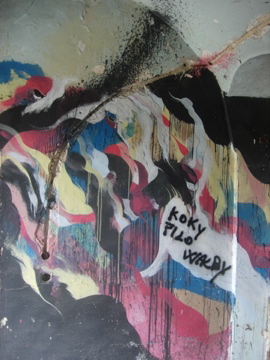
And you will have gotten there. You’ll have gotten to the moldy, peely, crumbling core of What It Is You Came For. Over the last three years of Fame Festival, the abandoned Convento dei Cappuccini has amassed works by visiting artists on its decrepit old walls. It’s become something of a museum of anarchic awesome—where you crunch through the broken glass, through rooms and rooms with bleeding walls; down dank stairways where the mosquitoes buzz and the light don’t shine; down into the guts and internal organs of an abandoned holiness left to rot, left to reborn in the last gasps of its decomposition, its swallowing-back-up by the earth, by the weeds, by the green; left to the artists and the vandals and the punk little kids with bruises on their knees, to the foreigners that don’t speak the language but know that urgent lonesome in the howling of the wind, the coming of the storm, as it blows through the broken windows and walks alongside you.

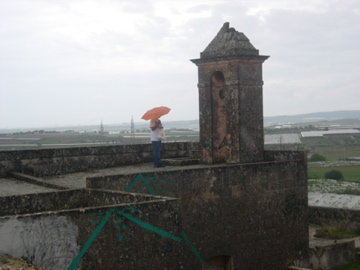
Pedro on the roof

Courtyard

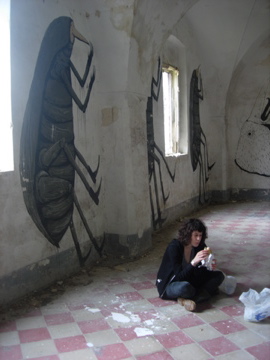
Panini break in the cockroach room

Cockroach close-up

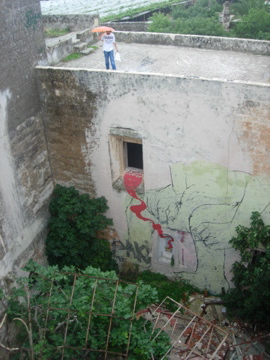
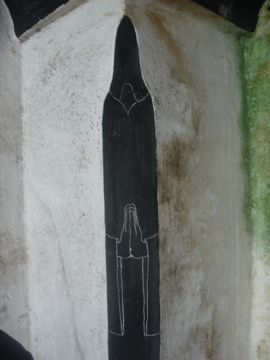
Where two walls meet

It’s not so much about the art, not the monastery or Fame or the streets of Grottaglie. It’s about the spirit, the breathing of new life into the forgotten, the love of the forgotten, saying, “Yes, yes, you can still be something beautiful to me.”

It’s exceedingly tender; it’s exceedingly unexpected that you would find this here: this vision of yourself in the walls of an abandoned monastery outside a small Italian town. As though every painting and stencil and shitty little tag were a message of love, saying, “Even in your wreckage, your falling-apart, your scars and wounds and ragged flesh—something can still love you enough to take the time, to do something beautiful.”

It’s what you like to think of God as. It’s how you’d like to treat yourself, as if you could love yourself as much as an abandoned monastery.

And it’s even more unexpected that you would find three friends to tromp around with you, to be as stoked as you, to love this place and this town and this art as much as you do.

You pause; you take a moment to take it all in, to file it away in the card catalog of your heart, to be able to call upon in those certain difficult times ahead, when you need something, just a little something, to remind you What It Is You Came For. You look around, smile, tuck it under the slot labeled “Best Travel Moments.”

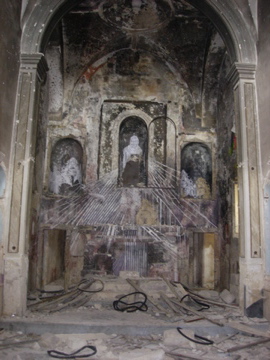
And then you walk into the chapel.

For a far better visual representation, check out Bablegum’s video of their trip to the monastery. The music doesn’t really fit the experience to me—but in those moments when you hear the wind howl, that’s closer to what I felt in there.

Thank God for San Lorenzo Street Art

The last full day of my trip: drizzly grey and a mounting head cold, city still shuddering from the previous night’s storm. I would not be stopped by the weather or my health (I really should have been stopped by that) or my impending departure or my own crappy attitude. I was going to go out and find something cool. Goddamnit.

It was more than my intuition that told me that Something Cool would be in San Lorenzo. It was Jessica from Rome Photo Blog. Specifically, she told me: “Go to San Lorenzo. Take the number 14 street car. There’s lots of cool street art.” It seemed a good enough activity for my final day in Europe. Because Lord knows I hadn’t tromped around in the rain hunting down street art enough on the trip.

I like Rome’s neighborhoods. I supposed every city has its distinct neighborhoods with their distinct vibes, but for some reason the differences feel more marked in Rome, where perhaps the centuries have dug those differences down deep, deeper than in other places. The center, while magnificent, bums me out and exhausts me, with its gaggles of people and trinket shops. There’s not a lot of contemporary culture to dig into. And contemporary culture is kind of what I’m all about.

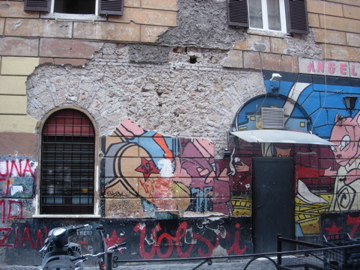
Typical crumbling building

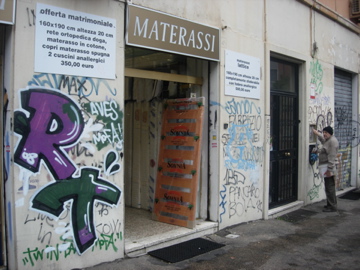
San Lorenzo is one of Rome’s hippest neighborhoods. It’s the bombed-out, more gentrified version of Pigneto—or rather, it’s formerly bombed-out and further along the gentrification scale from Pigneto. The working-class 19th-century neighborhood received the heaviest bombing during WWII, and I don’t know if all that crumble I saw was a remnant of that or just a result of the usual Italian building decay. Either way, it was fucking cool. There’s a lot less immigrants than in nearby Pigneto, and the neighborhood seems to have moved deeply into the third stage of gentrification: when the local business begin catering to the new residents. San Lorenzo’s proximity to the enormous La Sapienza university means there’s tons of students and tons of artists, with a proportionate ton of trendy stores and cool record shops and cafes with wifi.

And a whole mess of graffiti and street art.

I hopped off the tram when the walls began to resemble a two year old’s furious crayon scribbling.

I was delighted to see some good ol’ Space Invader the moment I got off the 14. He’d recently come to Rome, and has an upcoming solo exhibition in the city. Word has it (ok, Jessica told me) that Roman street artists are pretty stoked about Invader’s, um, invasion (I hate myself for using that pun)—hoping it’ll lend a little more attention and validity to their own work.

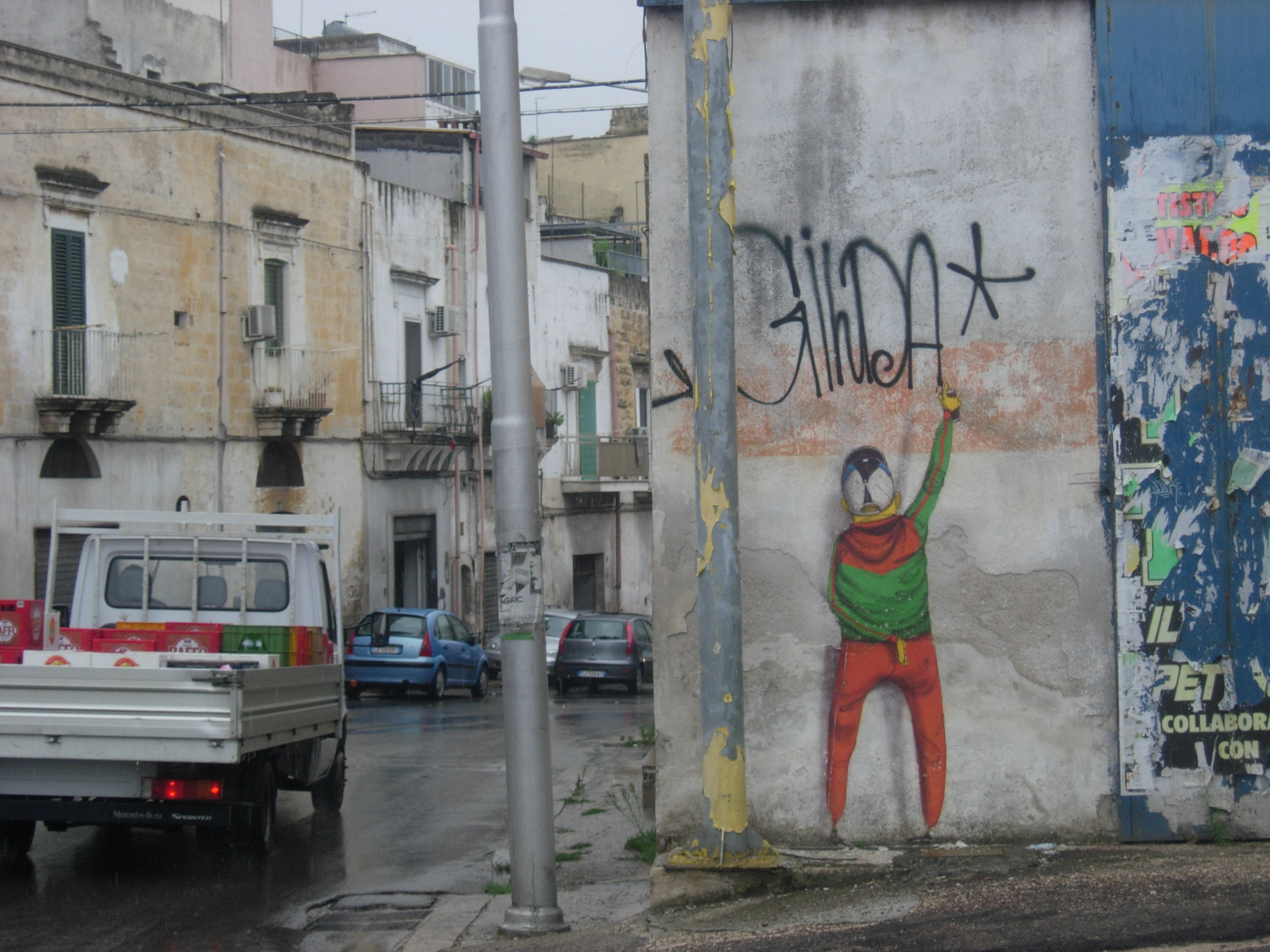
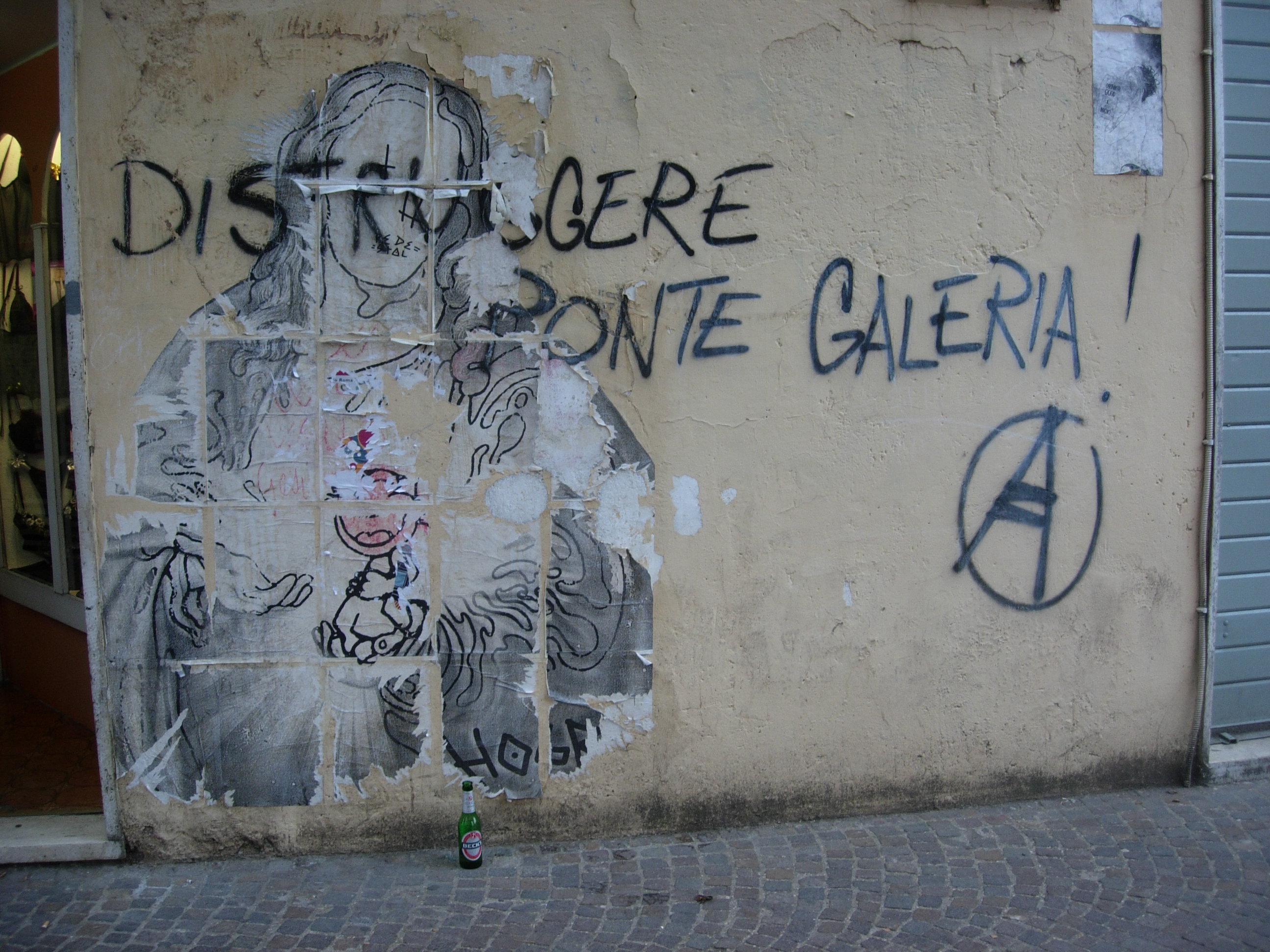
I wandered about a bit, until I found what I was looking for: Something Extremely Cool. Along Via Delgi Ausoni, on a wall surrounding the block-long Fondazione Cavalieri di Colombo, was the best street art I found in the city. It was like the Clarion Alley of Rome.


Hey, Ekua, check it out: a whole wall of Hopnn!


Okay, so the picture doesn’t give you the full effect, but a shadow/inverse of the stencil was actually put on the sidewalk in front of the wall as well—so it felt like you were walking through some weird mirror of the piece. Cool ass effect.


Too cool for just one picture…

This reminds me of Retna:


I’m not totally sure what’s going on here, whether the figures were wheatpastes that got taken down, or if that was an effect was created intentionally—but a pretty fresh, haunting effect, especially given the message written:

But to be fair, most of the stuff on the walls in San Lorenzo looks like this:

Okay, so I’m gonna be the asshole and say it: this is not aesthetically pleasing. But it reminded me of this conversation I had with Pedro at Fame Festival, about the need to create urban spaces designated for street art, like they have in Melbourne or in that tunnel in London. I can totally feel people when they complain about piss-poor chicken-scratch tagging all over their neighborhoods; it’s ugly. But cities need to have some kinda strategy towards graffiti that goes beyond just prevention.

When I was growing up, the Oakland Public Schools had a full-time employee whose sole job was to go around and paint over graffiti on all the school campuses. Which seems like a damn waste of resources. The sad thing, to me, is that these kids obviously have something to say, something they wanted to communicate, and no other way to do it. I think it’s important to create those spaces, walls and zones where they can throw up pieces—to give kids the space to say what they need to say. (I’m assuming this is what’s being discussed in this news coverage of Pedro’s Crono Lisboa project…)

Because you never know which one of them just might grow up to be a dope street artist. And because it limits the amount of tagging elsewhere. And because it looks cool as shit.

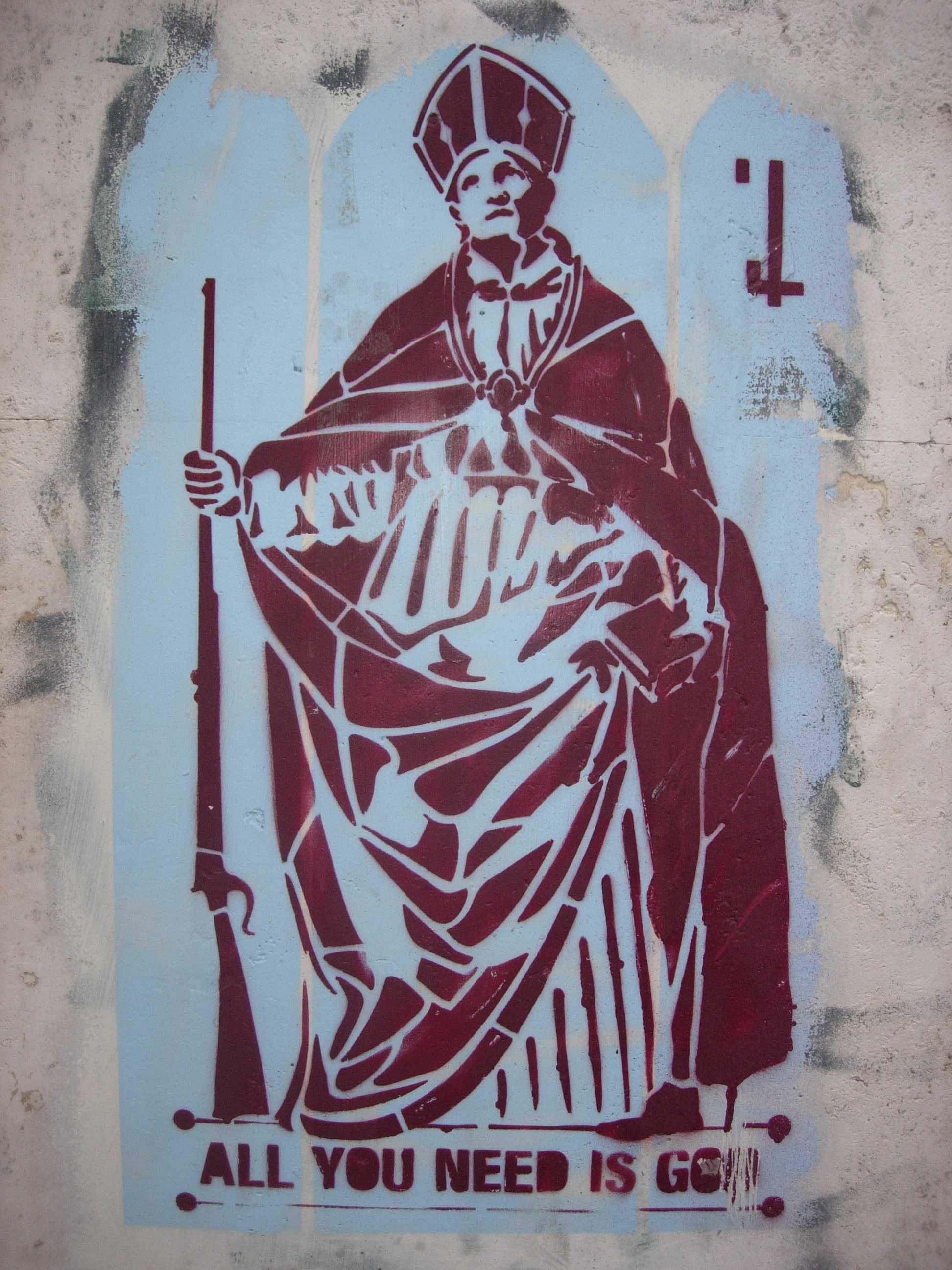
I’m not sure what all that has to do explicitly with San Lorenzo, except that I was thinking about that as I wandered around the neighborhood. Here’s some more stuff I spotted:

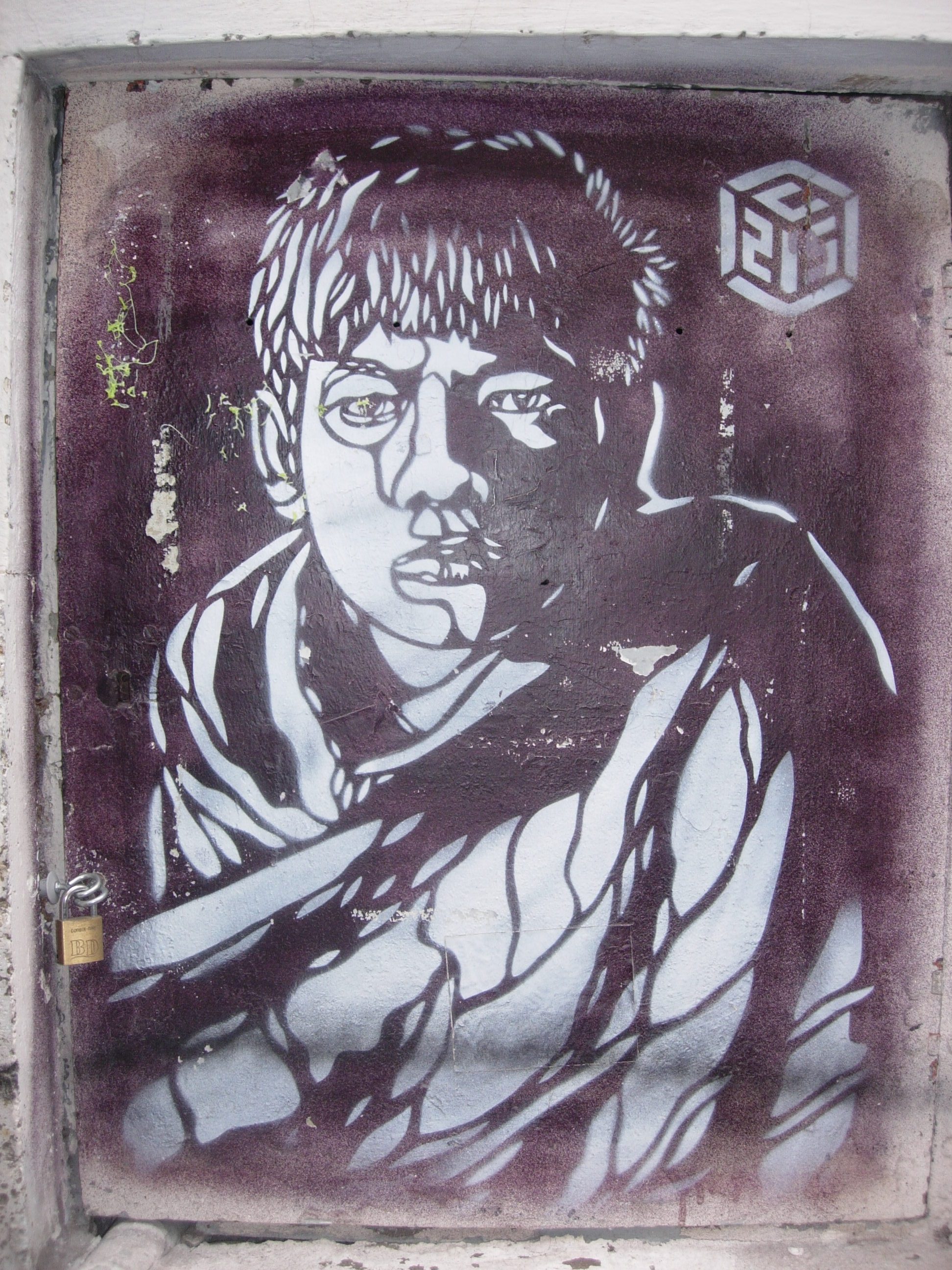
This C215 piece was actually on the wall of a church. It blended so well I wasn’t sure if it was street art or the church’s actual art work until I saw the signature logo:


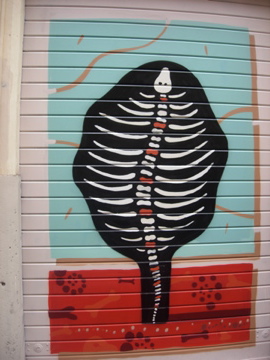
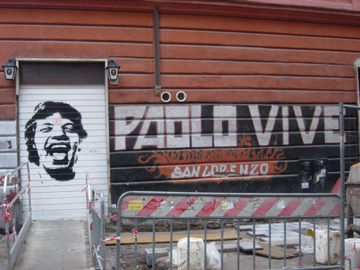
Lots of stores had pieces on their shutters…


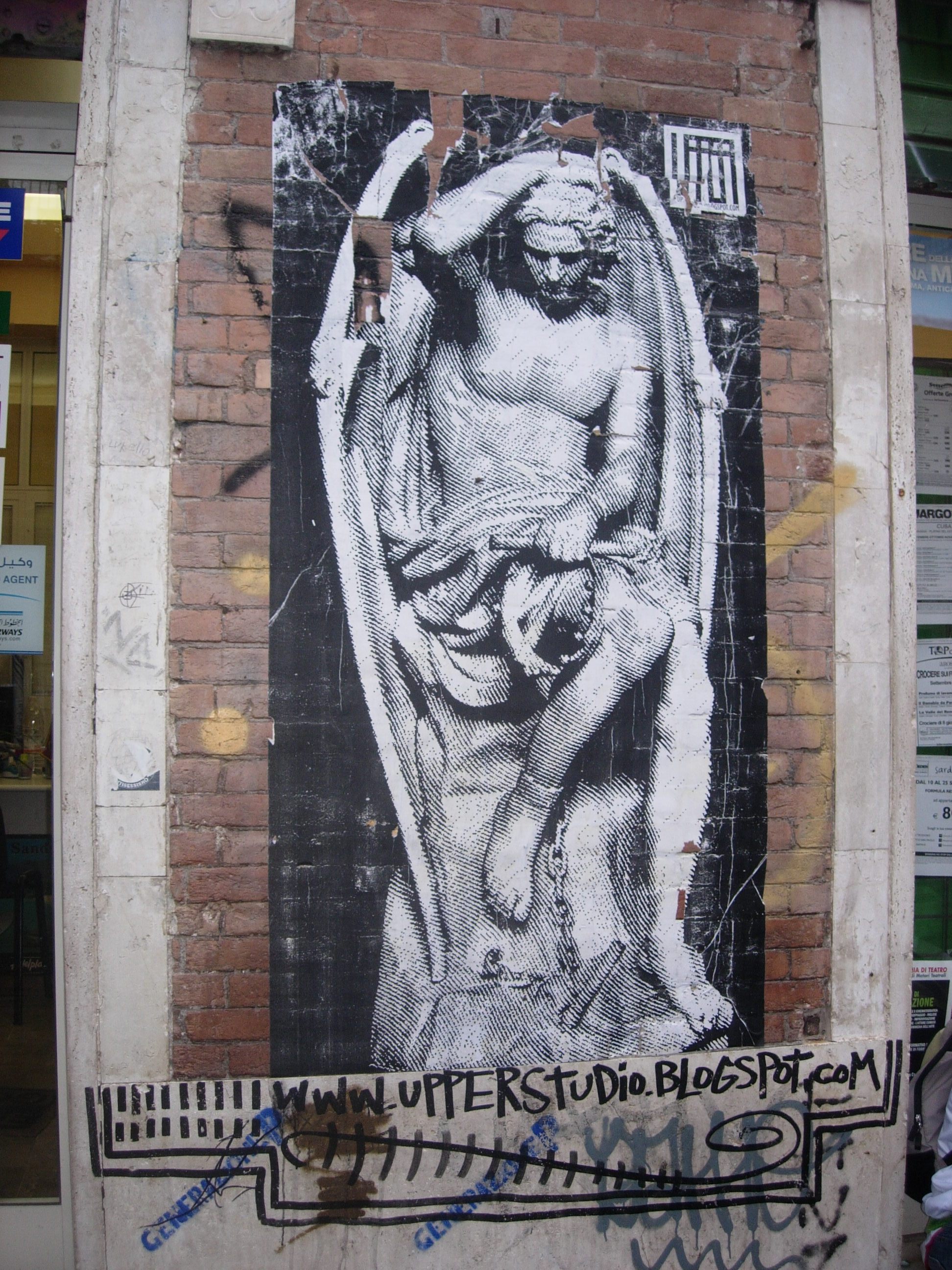
But I think my favorite might have been pieces that worked with the crumbling facades of San Lorenzo. I get pretty stoked on well-done site-specific street art, when the environment and the art interact with and inform each other…


Walking around there, damp-footed and achy-throated, I had to say a little thank you to San Lorenzo, for giving me one last cool adventure on my trip. And for reminding me that Rome is more than history and monuments—that it’s a damn big city, and a damn great city, and that there is contemporary culture—just beneath the surface, below the rubble, just a short tram ride from the center.

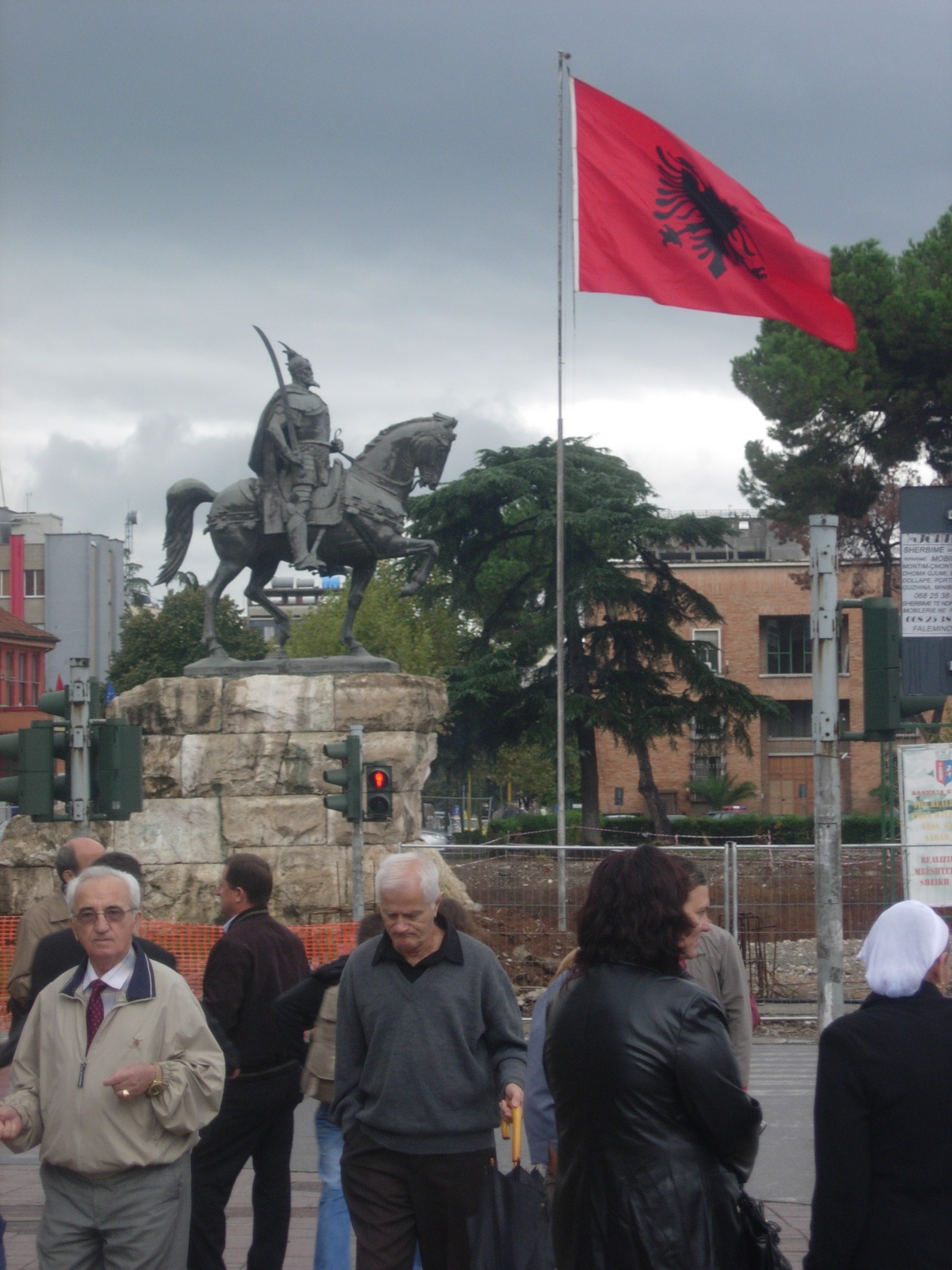
Tirana, Tirana, The One I’ve Been Waiting For

If Tirana were a boy, it’d be the boy I’ve been waiting to meet.

You rumble across the border, furious windshield wiper and donkeys in the dirt road, hills dripping lush green. You dash from the taxi to the minibus, puddle-footed and soaking-hooded, grab the last seat as a man climbs into the trunk compartment.

You rattle like this through the rainstorm, through a landscape of sheeps and shacks, the smooth round dome of abandoned bunkers, half-built buildings with sleeping bulldozers stuck in the mud, the carcasses of stipped-down cars piled in empty lots. The minibus driver turns on some kind of Albanian butt rock, and you silently thank him for knowing the exact right soundtrack for your entrance into the country.

I’d meant to travel around a bit in Albania, see a UNESCO town or two, climb in a bunker, poke around some old Ottoman castle. Which still all sounds awesome. But four hours in Tirana, and I knew I wouldn’t be going anywhere.

There’s only one other city I’ve walked into and felt this feeling, this long “yeeeesss” coming from some place between my ribs, near my gut, a forgotten organ of intuition. Some places just fit, and you just fit them, and Tirana is one of them.

It’s got a certain electric insanity, that infectious energy, without being a total free-for-all. It’s just dirty enough, has just enough street dogs and decrepit buildings, just enough business men, the click of just enough three-inch heels, attached to smooth legs and slim skirts. It’s like meeting a boy with just enough of “the dark side,” as Luke would say—not a total depraved junkie, but not squeaky clean and wholesome either: a chipped tooth and an ancient wound.

So I walked Tirana’s streets, its run-down markets and posh cafes, past Mercedes Benzes negoitating potholes, 10-years-old smoking cigarettes, old women roasting chestnuts, old men selling gum and lighters, gypsies sitting cross-legged with outstetched palms, the blare of the horns and the hum of the engines and the swoon of the city.

Within a few hours of staggering into the frenetic swarm of this city, I’d fallen in with the artsy, alternative crowd, finding myself at a rock show in a tiny, smokey bar in an otherwise-shuttered mall. The next night was K’tu Ka Art, a weekly show featuring local live music acts. It felt a lot like being at a small show at home, until I had it explained to me.

Apparently, bands in Albania work like this: they play cover songs. God-awful, Top 40, English-language cover songs. A band will book at a certain bar for a year. And every Friday and Saturday, people will go to same bar and hear the same band play the same cover songs.

“Bloody boring as hell,” Ghenti surmised, an indie-rocker dude in a Sonic Youth shirt and a Kurt Cobain sweater. He’d moved to Brighton when he was 16, but came back to Albania every year for a few weeks. So last year he started organizing weekly showcases of local bands, who played their own songs, singing in Albanian.

It’s a small group of people, maybe 30 or so, that are into that scene right now, into something different from the imported cool. And after two nights, I seem to know all of them. Yesterday, I walked around town and kept bumping into people I knew. It’s a funny feeling of belonging, of fitting into a place you just met. (“I feel like I’ve known you for years.”)

Tirana’s also an insanely safe and insanely cheap city. I can’t manage to spend more than $40 a day, and I can’t manage to feel uncomfortable walking its streets, even at 2am. (“Heaven must have sent you from above…”) The people are startlingly friendly, and I haven’t received any street harrassment—just a lot of stares for being the one tattooed girl in the whole city (more on that in another post).

The only drawback of the city, I told Robo, is that I smoke too much. It’s too easy and too cheap ($1.50 for a pack). It was the K’tu Ka Art afterparty, in a basement bar playing a soundtrack of “Vogue,” “Highway to Hell,” and “I Love Rock N Roll.”

“No, I think it’s a good thing,” Robo replied, yelling over the music.

“Oh yeah? Why’s that?”

“It means you’re having fun.”

“Yeah, I’ll try telling my mom that,” I smiled, leaning in to the flicker of his lighter.

He leaned back, regarded me there: sitting at the bar, happy as could be with my can of Coke, singing along to cheesy hits with Tirana’s tiny clan of rock n roll kids.

He patted me on the shoulder. “You should be an advertisement for ‘Come to Albania.'”

I threw my head back and laughed.

Dubrovnik, I Don’t Hate You

Amid the souvenoir shops, currency exchange offices and endless umbrellas of the tourist restaurants of Dubrovnik’s Old Town, I realized that something in me had changed.

It wasn’t a sudden, burning-bush kind of change, but slower, more subtle. It’s something that’s been changing in me, I suspect, for some time, without me noticing it—a transformation, unfolding gently, quietly, while I wasn’t looking. And it took Dubrovnik to make me aware of it: I no longer hate tourists.

And more than that, I no longer despise hard-partying backpackers, 20-year-olds that sleep all day and drink/cruise for girls all night on mom and dad’s bill. In short, my disapproval of how other people travel, when it isn’t my way of traveling, has dissipated.

I endured the torturous, fluorescent, overly air-conditioned ferry ride from Bari, Italy, in search of sunnier—and cheaper—shores. Well, um, Croatia ain’t it, I’ve discovered. And especially not Dubrovnik.

Yes, really.

My guidebook gushed about the splendor of the city. After I slept off the sleepless ferry ride, I curled up next to my $4 americano and watched the scene parade by: tour groups led by umbrella thrusting guides; middle-aged folks clutching their Rick Steves’; lots and lots of English. Later, at my hostel, I listened to the play-by-play recounting of the previous night’s drunken antics, and who’d made out with the hottest girl (it was Mark, the kid with the Justin Bieber hair).

And the remarkable thing was, I was okay with it all.

Now it could be that I’m getting older. It could be that I’m more well-traveled, and settling into myself. But I think it’s got more to do with something else, with this personal journey I’ve been on lately, entirely unrelated to travel. It’s got to do with taking care of yourself, with stopping using other people as a way of not looking at your own shit; it’s got to do with lovingly detatching from sick people. It’s potent shit, and it’s changing everything. Including, apparently, the way I travel.

No one likes to think of themself as a judgy a-hole, but hey, we all got our faults. In previous years, Dubrovnik would have evoked all my self-righteous better-than-thou-ness: too expensive, too touristy, too too. And it’s true that I’m not really into the scene here; I definitely dig the more obscure, the more offbeat and bizarre.

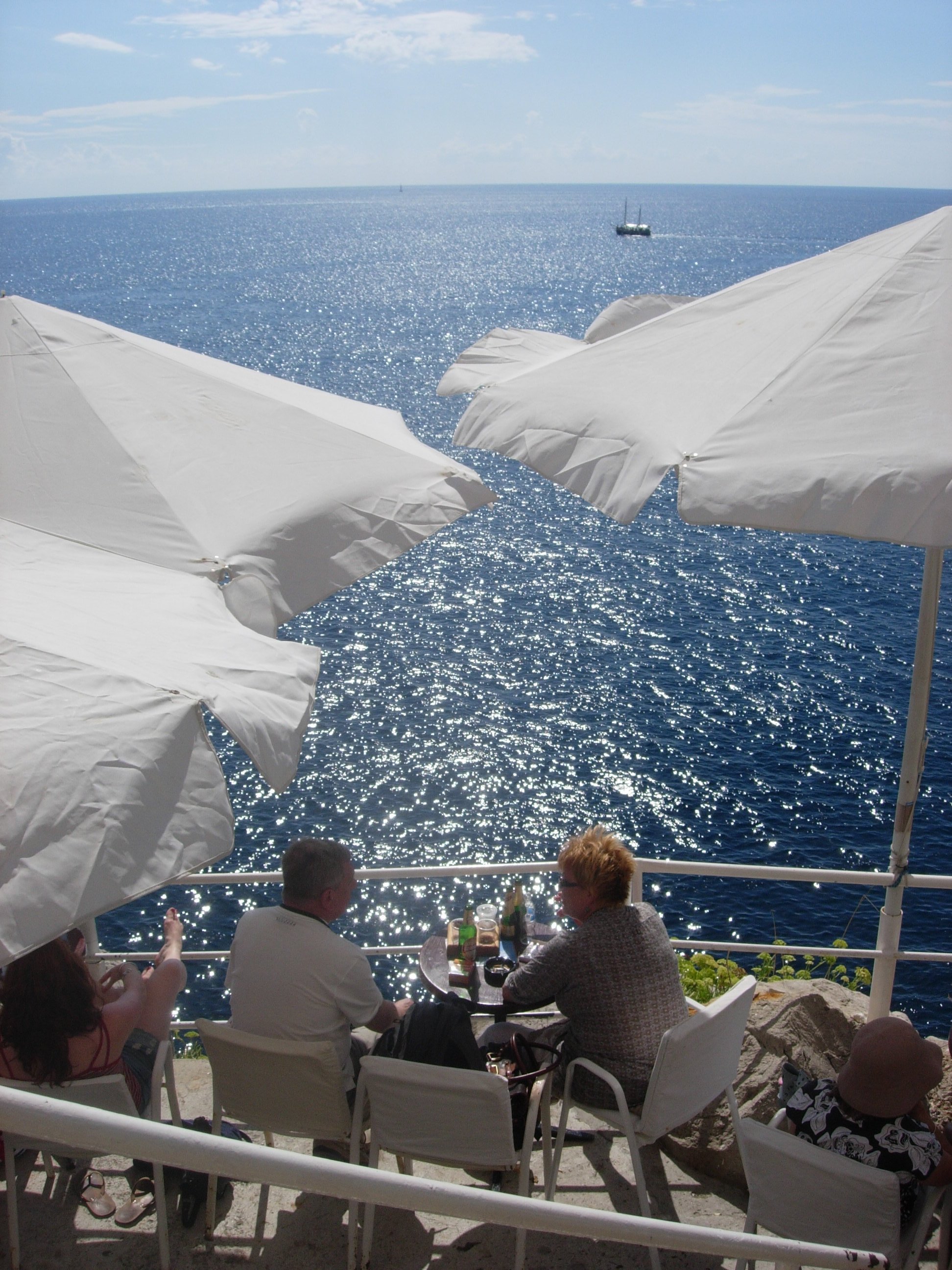
But it isn’t awful—it’s not theme-park-ish and you don’t get that resentment vibe from the locals. And it is beautiful: smooth stone streets gleaming white; sheets of ancient walls; passageways that lead to startling, sparkling vistas of aqua-clear water that really does live up to the hype.

And I’m letting myself enjoy that without judging it.

As I’ve learned to focus more on accepting myself, I’ve discovered a curious by-product: I’m better able to accept others, better able to let them be themselves, whatever that entails. And this doesn’t just come, apparently, with emotionally unavailable active alcoholics; it apparently also comes with accepting other travelers.

When you’re constantly measuring yourself against other people, when you’re constantly using other people to determine your worth and what exactly it is you are, there isn’t a lot of room left to just be okay, to just sit with yourself and be okay. And I’m learning to do that. I’m learning to go swim off the deck of a jokey tourist bar with a couple dudes I don’t have much in common with, learning to lay out in the Adriatic sun of a destination I’m not nuts about, and let that be okay.

I don’t think I’ll ever be into the big huge tourists destinations. I’ll probably always love the less obvious, the little-off; I’ll probably always love digging around, getting the dirt of a destination under my nails. That’s just what I’m into. It’s not any better or any worse than what anyone else is into. (Including getting black-out drunk and hooking up with random girls.)

Even now, with the chatter from the hostel’s common room filtering up the stairs, through the cracks under the door, over to my glowing light on this rickety bunk, even now it’s okay. Tomorrow I’ll take off for Montenegro, in search of something a little more me.

But Dubrovnik, I gotta say, it was a pretty good day. And I don’t hate you.

Grottaglie Or Bust!: Fame Fest ’10

Siesta-dazed and still covered in little bits of glitter, I’m holed up in my hotel room in Grottaglie. Laptop on my lap, balcony door open a crack, listening to the moan of the fan, I don’t know where to start.

I could spend the next two months writing about this weekend, here in this random little Puglian town, wedged between plastic-tarp-covered vineyards and industrial, cloud-coughing skylines. It’s at times like these when you realize just how insufficient your own words are—how close they can sometimes come to capturing this thing, this thing you’re always circling and chasing, but that ultimately always goes “fluttering through your nets,” as Virginia Woolf said.

This weekend has been a little of everything I love in travel: discovering killer art, adventuring around abandoned buildings and ancient caves, eating great food, meeting awesome people. I came here for the opening of Fame Festival, a DIY street art event put on by the one-man-powerhouse/party Angelo Milano, that is slowly transforming the forgotten little town of Grottaglie. I’d been following the build-up on various art blogs, and it seemed like a pretty damn good excuse to go on an adventure.

There’s about 100 different angles to write about this from, and I’m sure I’ll be torturing everyone with posts for months on end. So instead of giving the 3000-word play-by-play (you’re welcome), I’ll give you the highlights. And some pictures.

Fame Festival
“Success, celebrity” in English, “hunger, starvation” in Italian, Fame Festival is the blood, sweat and glitter (more on that later) of one dude, Angelo Milano. Three years ago, he started inviting international artists to his little hometown for short residencies. The artists produced prints at his studio, Studio Cromie, produced ceramics using the town’s ancient ceramics studios, and threw up street art pieces all over the city. The festival has grown, gained a fair amount of notoriety, and a small crew of artists/collectors/enthusiasts/fanatics make the mission down to Grottaglie for a complete and total adventure.

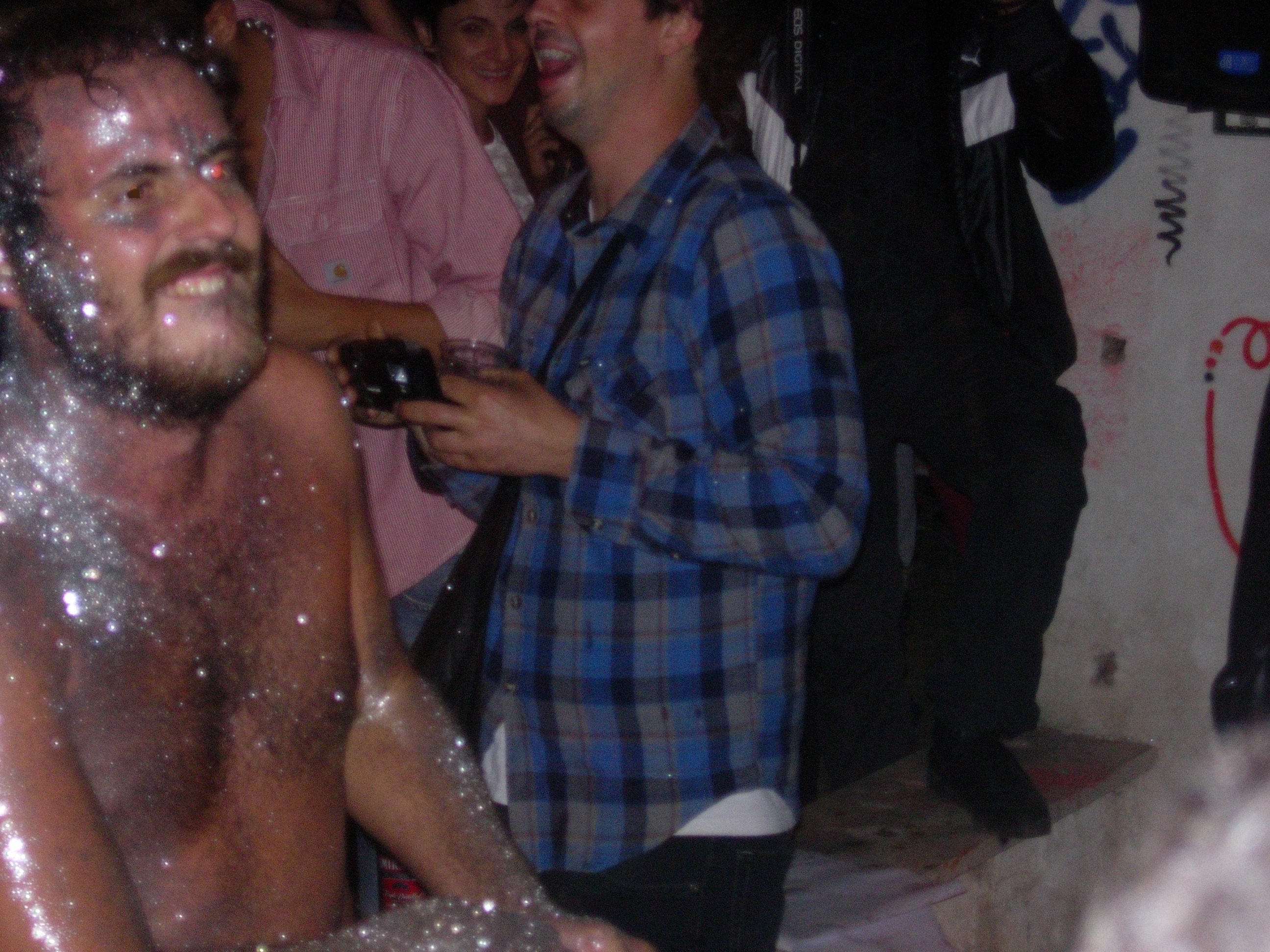
Angelo welcomes you with all the enthusiasm and graciousness in the world, arranging hotel rooms and rides from the airport. On the evening of the preview, he takes the gang load of visitors back to his grandmother’s house, where his dad shakes your hand and his mom cooks a huge traditional Italian dinner. The opening party is complete with DJs, Puglian wine and a diverse mix of locals and art lovers; you then trek across town to Studio Cromie, where Angelo goes ape shit on the dance “floor,” dumping about 8 bags of glitter on everyone and generally having about as much fun as humanly possible.

You see everyone stagger around town with glitter stuck in their hair the next day. You’re given, on preview night, a map of the city marked with all the street art pieces, and you wander around, ticking off the 60+ list and snapping photos. It’s like a treasure hunt.

Coolest part: adventuring around an abandoned monastery filled with art.

Grottaglie
The town itself is awesome. Not in a knock-your-socks off way, but in a slow, subtle way that sneaks up on you. It’s got an old town, complete with winding roads and a couple UNESCO sites, as well as a new part, devoid of billboards and with only one corporate chain. The whole town siestas from 12-4. You can get dinner at a restaurant for 6 euros. Old women say, “Ciao, bella.” Teenagers hang out in cafes til 2am.

The city’s surrounded by ancient caves that were inhabited until just a few decades ago, when the Italian government kicked everyone out. You can go and poke around in them, see the remnants of old cooking areas, frescos peeling off the walls.

The Peeps, and The Adventure
So what kind of wingnuts travel all the way to bumfuck Puglia for an art festival? Awesome ones. I met so many fresh people, one of those this-is-why-I-travel experiences that you know is going to linger with you for a long time.

There’s also the adventure aspect. No guidebooks mention Grottaglie. The bus from Naples dropped me off on the side of the road; luckily I’d had the wherewithal to print out a Google map the night before. You traipse around the random town that epitomizes off-the-beaten-path, and it reminds you, again, why you travel.

Street Art
I’m no expert on street art, but I got to meet a lot of people who were. And it’s clear that we’re on the brink of something, something bigger than just the art world. Street art is a kind of dialouge with a city, and it’s changing cities. Street art as architecture, urban development, tourism—there’s a lot to discuss.

But right now, legs crossed on this hideous hotel bedspread, I’m feeling incredibly tired and incredibly grateful. I gave myself an extra day here, to hang out with the wifi and sleep, before I take off for Dubrovnik tomorrow. But even if I were going home tonight, it would have all been worth it. Fame Fest was one of the best parties I’ve ever gone to, and one of the best adventures a traveler could hope for.

Pigneto: The Rome For Outsiders, and Me

Here’s a little rule of thumb I learned yesterday: if a neighborhood has a shitton of street art, it’s probably the neighborhood I wanna be in.

It’s funny coming back to a place; I never really do it. I was interested to experience the difference. Three years ago, Rome was hands down my favorite European city—probably because it was the most vivaciously chaotic of the cities I’d visited in Europe. Life was different then; for one, I was traveling with my then-boyfriend, who I’d break up with a month after returning home. Nuff said.

Rome didn’t seem so intense and frenetic this time around; it felt much more manageable. I landed with 8 hours of scattered sleep within the previous 48 hour period, and decided to power through the day in order to acclimate myself to the time difference (it worked).

I wandered through the city in a haze of memory, surprised by how my legs took me to all the familiar spots—muscle memory of a city. There was the Colosseum, aching in its magnificent crumble; there was this piazza and that piazza; there was the terrible Chinese restaurant I dragged us to in a vegan moment of tofu craving. It’s funny when a place has only existed in your mind, at one very specific time, funny to see it still going on, living and breathing, like going back into a dream that had kept on dreaming without you.

I remember my dad saying that Rome made him feel his own mortality, and I can definitely say that’s still true for me. There’s something about the ancient greatness, the ruins and remains of glory, that really serve to check you. Just in case, you know, you got to thinking your shit really mattered, there’s Rome to remind you how inconsequential it all is—how small, how much of one shining moment you are. All your joy and heartbreak, your own impending ruin—it will all come and go, and Rome will still be there. You’ll be lucky if your bones last as long as Rome’s.

That being said, Rome isn’t really about anything I’m about. It’s one of the world’s great cities, and has been for thousands of years, and I love it for that, but everything that I get stoked on—diversity, punk rock, hip hop, street art, tattoos, counterculture—Rome doesm’t give a shit about. Why should it? It had Julius Caesar; Rome doesn’t have time for trends.

Walking around center, you get to feeling like an absolute slob—an(other) American slob. Everyone has so much style and grace in Rome; how do their clothes fit so well? How do they all look so effortlessly chic and beautiful, and what the hell is wrong with you in your Toms and Talk Is Poison shirt?

And then you take a rickety street car down, along desolate tracks and amid rows of block buildings, into the rundown side of town, and you realize: that’s because all the Romans in the center are rich. Rich people of any culture look good, and are inherently alientating (to me at least). You get amid a neighborhood a little more like your own, and you realize there’s more to Roman life than tailored suits and killer shoes.

Pigneto is the Mission Dolores/Williamsburg of Rome—an old-school, traditional neighborhood first overtaken by immigrants, now overtaken by hipsters artist types otherwise entirely abscent from Rome. Along its shady streets, you see little old Italian men shuffling around; African, Chinese and Bangladeshi immigrants hanging out, free of their blankets of goods to sell; young Italian sitting in doorways smoking. I love dynamic cultural collisions like that; they’ve been known to bring much of the forementioned things I love. Including street art.

I’d headed out to Pigneto in the first place to meet up with Jessica Stewart, who runs the very kick-ass Rome Photo Blog, covering contemporary art, street art and other radom wonderful things around Rome. I had some time to kill before we met, so I roamed around and took photos.

Swear I saw stuff from this person in Brooklyn...

Loved this series

Well, lookey who...

My favorite series

I met Jessica at Necci, a bar/restaurant that’s been around since the 1920s and was featured in an issue of Australian Gourmet Traveller last year. We sat at a table under a tree (which only kind of shielded us from the rain) and she told me about the neighborhood, about the art scene and ex-pat life in Rome.

“Rome is a very play-it-safe, stay-with-the-pack kind of city,” she told me. She spoke about the city’s slowness to accept street art in its galleries. “It’s a very traditional city. It’s hard to impress people in Rome—you know, when you’ve got the Colosseum right there, it’s hard to feel like you can do anything in comparison, or anything that matters.”

There were, she told me (and as she’s documented on her blog), a small handful of artists, living out in Pigneto and San Lorenzo, that were doing their own thing. And acceptance was growing, along with recognition.

“The one thing one of the artists said that was true,” she told me, our shoulders hunched under the branches and drizzle, faces half-lit from the barroom light, “is that, if you can make it in Rome, you can make it anywhere.”

It seemed true enough.

A Circle of Stones

“I believe that the land has memory—that the earth remembers the things it has seen.”

Lucille Clifton said that at a reading I went to as a teenager, in introduction to her poem “Auction Street,” about how it felt to stand at former slave auctioning blocks in Memphis. I hadn’t traveled yet, hadn’t experienced much outside of the Bay Area, but something in me knew she was right: that rocks and trees and dirt have memories, maybe even dreams—that they hold little pieces of their histories in them, stored emotions, tender and swollen as our own knotted muscles.

I kept thinking about that line, said in passing in some beaming wooden room years ago, on my last trip. Walking amid the wordless rocky ruins of an abandoned village with a heat in my chest and a trouble in my mind, nothing seemed truer. Because, after all, Hawaii is a tragic place.

I stayed along the Kona Coast, a barren, burned-out mound of volcanic rock where the resorts stand out like green sores: lush, overly landscaped swaths of palm and grass against the expansive silence of lunar black.

P. was supposed to be one of them. Not a resort, but a tract of vacation homes: 7 acres divided into 10 lots, like much else along the winding 3-mile road that led from the highway to the coast. The land had belonged to a Hawaiian family who, amid the 80s mad-dash of development, could no longer afford the property tax and was forced to sell the land to a shady enterprise. A wealthy philanthropist came into contact with the family, bought P. from the enterprise, and built a personal vacation home there. My brother married the daughter of a the philanthropist’s good friend—which is how I came to find myself vacationing in a private, ocean-side villa earlier this month.

Sure, there was a gym and a media room and a billiards room and WiFi and groundskeepers and a gated entrance. But it wasn’t like a private resort. Not really. Because something had been retained, kept, preserved—not bulldozed and landscaped over (just landscaped around). The place quivered with a peculiar spiritual energy that made me hippie-out on heavy vibage. (And feel like I was on Vicodin.)

P. had once been a small Hawaiian village, abandoned for unknown reasons around the time Westerns arrived. Through a kind of cheat-the-locals-out-of-their-land swindle, a family came into possession of the land in the 1930s when they swapped their more lucrative property on a lusher side of the island for the rocky tangle of coast. As they bush-whacked into the overgrowth, the family discovered the rock-mound remains of the old buildings, as well as a burial site for what was later determined by archeologists to be a chief. The family was old-school, and believed in respecting the ruins; they didn’t move a stone, but left it in homage to their ancestors.

When the philanthropist came into possession of P., he respected the original family’s wishes and built his home around the ruins. He hired the son of the family, T., to be the property manager, an effort to maintain the sacred integrity of the place and undo some of the bad mojo that had cheated the family from their land.

That was as much of the story I knew as I walked the property the first day. Barefoot, the thick grass felt like carpet, and the air was soft and heavy and feeling of paradise. The path of grass snaked between the ruins, dotted by dense tangles of native trees. Neon birds flitted past, and the weasels darted like small, hungry ghosts.

I approached a perfectly circular mound to the immediate right of the house. Shaded by trees and covered in the round shells of their nuts, it seemed like a particularly potent spot.

As I got closer, I felt a warmth in my chest, rising into the base of my throat—not entirely unlike how I remember that first sip of alcohol: the healing heat, how something from the outside got inside, and suddenly made me feel more whole, less empty and aching. It was a curious, jarring feeling, at once intensely comforting and, well, disturbing in its unapologetic power.

I steered clear of the spot for the next few days. Frankly, I was freaked out. There was plenty else to do: I floated around the pool in an inner tube, did yoga on the deck, lounged in a hammock and read my self-help book on love addicition and co-dependancy. I’d glance sideways at the mound, avoid it, like it were a person watching me with too-blue eyes: it had seen through me and sat waiting.

T. came over to attend to some maintenance issues one day, and we got to talking. He filled in more of the history of P.—how he’d spent his summers there as a kid, how his grandmother had always told him about the spiritual power of the place and how he’d always felt it, even during his wild party days. He talked about respecting the land, saying thanks and being in tune. He told a story about an owl that lived on the property, that may or may not have been the spirit of his deceased grandmother, that had once come out in the middle of the day to watch him repair some of the stones the archeologists had moved.

If it were a movie, T. would have been wearing a lion cloth and the lights would have dimmed when he spoke, the sound of far-off drumming accompanying his tales. As it was, he wore flip-flops and a t-shirt, wrap-around sunglasses and an American moustache.

“P. has always been a healing place,” he told me simply. “I’m just glad that G. bought it, and it was able to stay the place it had always been.” He looked around the stately furniture in the vaulted-ceilinged living room, the hint of a wistful smile in the lines around his eyes. It was a far cry from the rustic shacks of his childhood, but I knew what he meant: it turned out as best it could, for the situation.

“That mound over by the house,” I pointed. “What was that?”

“Heavy, huh?” T. smiled. “We don’t really know. The archeologists thought it might have been a women’s house. Either way, it’s got some of the most powerful energy here.”

Later, I went over to the mound. Thinking of what T. had said, I bowed my head a little and asked permission before I entered into the center. I sat down cross-legged and breathed.

I felt the heat come—not a burning, but a warmth. I tried not to fight it. (He left.) It reached down, to some very tiny place inside, a very old and glowing wound. (A black kitchen and a birthday cake.) I looked at the trees, imagined their roots reaching down, back, on in at something (purple sores, swallowed by black)—like the pulsing red roots of teeth, the throbbing behind the bones of things. (He was sick, I loved him, he left.) The wind was gentle but urgent, speaking in a language of leaves (if I could have loved them more), like a mournful ballad sung in a language you don’t understand. (And left me here: gone.) The stones scratched and the shells dug in.

I heard a hoot. My eyes shot open and my spine twitched.

I heard it again, a belly sound, a calling. I thought of T.’s story: his grandmother owl in the middle of the day, watching over him.

It could have been a dove, cooing at the wind. But in the center of that circle, the ancient black of rocks, it sounded like the voice of P., the voice of the past—whatever it was, still was, had been and was still being, despite the house and the sprinklers and walking of foreign feet: a place of healing. A place that could somehow get down, down into the tightly clutched hurt of things, and coo.

Does the earth remember what it was? Does it carry its past in special little pockets, like a wound we hardly remember, but keep reliving, searching to heal? Well, fucked if I know. All I know is that, with all its resorts and rental cars, Hawaii feels like a beautiful young girl who’s been forced to marry a man she doesn’t love—and P. feels like the place where she goes, not to weep, but to pretend, to dream, to whisper her fantasies to herself, in the voice of the wind.

Lauren Quinn is a writer and traveler currently living in Hanoi. Lonely Girl Travels was a blog of her sola travels and expat living from 2009 to 2012. She resides elsewhere on the internet now.

Join 490 other subscribers

Buy This Sh#t

Categories