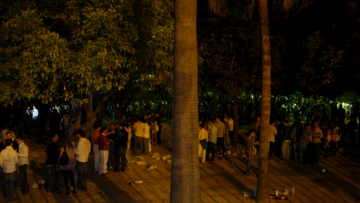
 The roar of voices rose from between the trees, out of the darkness and dirt. Scooters swarmed, freshly broken glass glittered in the dim park lights. Young girls teetered in impossibly high heels and boys stumbled, leaned their faces against the sides of walls as they pissed. And every person clutched a plastic cup.
When Spanairds sigh in disapproving despondency about ¨kids today,¨ they´re talking about botellónes. In a culture of late-night fiestas, these youth-ridden BYOB binges stand out as particularly debaucherous.
Bottelónes take place in public, on the streets and in the parks; teeangers and early 20-somethings gather to drink, flirt, cause trouble, and leave a mountain of trash in their wake. Increasingly the subject of public controversy, Seville´s bottelónes are known to be especially raucous.
We passed one as we trod through Parque Maria Luisa on Friday during a once-a-year festival of museum open houses and cultural performances. (How Spanish is this?: museums are free to the public from 10pm-3am, and completely full the whole time.) September is festival month in Seville, when residents have returned from August vacations and the oppression of the heat has subsided; it´s also the beginning of botellón season. My couchsurfing hosts and I were walking over to Museo Artes y Costumbres Populares, where we saw a killer flamenco show, and the adjacent Museo Arqueológico, where a classical guitarist´s exaggerated facial expressions were more dramatic than an old guitar-playing friend with Tourettes (RIP, friend).
We passed what I was told was a typically trashy Friday night bottelón. It was like a rave minus the pulsing lights and techno music, like a sideshow minus the cars and firearms. Hundreds of kids filled the open space at the park´s entrance. Teenage girls were dressed to the nines to attire revealing even by Spanish standards, while boys puffed their chests and tried to impress each other, even in curiously effeminate clothing. My hosts spoke of the trash, piss and vomit the parties left in their wake, the shards of glass and tell-tale crushed plastic cups that city workers scurry to clean up the mornings after. (The next day, I passed through the carnage of another botellón, down by the river, and had to say, it was pretty gnarly.)
I smiled to myself as we passed by. I couldn´t help but feel that, if you swapped the heels for combat boots, and blush and blow-drying for heavy eyeliner and multi-colored dreads, it wouldn´t have been too unlike the Rocky Horror Picture Show or Gilman Street of my adolescence. Instead of being out in the open, though, we were relegated to the sketchy corners of the city, to alleyways, public restrooms, the stairwells of parking garages. I wondered if having to hide it—the violent pursuit of oblivion—somehow served to make ours worse, more seedy and powder-laced, more self-destructive and apt to end in institutions and death.
From between the park gates, I spotted a girl hoisted up by two friends, her arms drapped over their shoulders. Her head hung at a sharp angel; her heeled feet scuttled, dragged in the dirt lifelessly. Whether it´s a plague to Spanish culture or kids just being kids, I felt mighty glad not to be a teenager anymore.
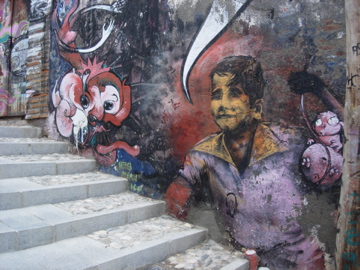 Down a
  The streets I wandered got starker, more litter-filled than people-filled. Abandoned buildings and dirt lots suggested that restoration efforts weren´t the trend in this forgotten corner, perched on a precipice between well-visible, touristed neighborhoods. A steep stone footpath lightning-bolted its way down the hillside; I followed it.
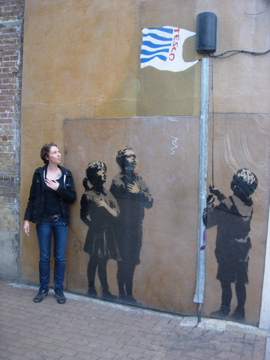 There´s nothing like a good ole map-less search for illegal art through the streets of a foreign city to get you off the tourist track.
 New Zealand native, world-travler and 30-year London resident Dave served as my gracious host and personal guide extraordinaire. We began at the Waterloo tunnel, once a Eurostar passageway, once abandoned, now a designated graffiti area. None of Banksy´s work remains, but lots of other bright colors and politized stencils fill the surprisingly clean, un-urine-smelling underground area. We rambled along the brown, gurgling Thames to the Tate Modern, sister museum to the Tate Britain, one of the museums hit in Banksy´s guerilla art hanging. We checked out the excellent Futurism exhibit (which warrants its own post), making use of Dave´s free +1 entry.
 We found another Banksy on a quiet sidestreet off of unabashed tourist trap/hipster hangout Brick Lane. The first half of the blocks we walked were wall-to-wall Indian restaurants, with pushy male touts outside jostling for patronage; I think they´d find more success if they employed the Latin American method and used smokin hot girls in skimpy clothing. The street morphed into uber-cool bar and pub land, and that´s where we found the most street art of our mission. My favorite was a collage of corporate logos composing the now-commodified famous image of Che. The Banksy we found was several blocks from the hubbub, a painter sitting next to a large yellow flower. The words ¨vandals found vandalising this vandalism will be prosecuted¨ appeared right beside the large spray of paint covering the stencil´s face.
 Another culinary and culture highlight was our next morning´s stroll through the Brixton Market, the pulsing heart of the Afro-Carribean Brixton neighborhood. African flags and fabrics, produce-selling mom and pops, Bob Marley tapestries, Obama t-shirts, Rasta onesies and pot-leaf-adorned everythings filled with multi-block indoor/outdoor bazaar of bad-assedness. There wasn´t a single corporate logo in sight, and as I sipped on a Buffalo-milk cappuccino and watched passerbys, I couldn´t help but feel my 48-hour powertour had provided me with a pretty good glimpse of the London in which locals live, graffiti-adorned, cumin-scented and throbbing with life.

 Lonely Girl Travels
Recent Comments