Archive for the 'Sola' Category


Morocco: First Impressions

DSCN3259As I staggered off the Tarifa ferry, through the desserted port gates and into the quiet Tangier morning, I had a thought I’ve had before. It was the same thought I had as I first stared through a taxi window at the hazy Lima streets, when I first stepped out the Bogota airport, when I walked around big bad cities like Caracas and Mexico City. The thought is, “Oh. This is it?”

And I don’t mean it in a disappointed, anti-climatic way. The opposite, in fact. After all the hype, all the warnings and precautions, horror stories and wayward looks, my initial reaction to notorious destinations I’ve encountered is, “Hey, this isn’t so bad. Or so scary or different.”

Okay, I admit the squat toilet I used earlier in a restaurant bathroom was a little different. And I didn’t expect that hooded jellabas would look so curiously like clan robes. But, really—the intense cultural shock I’d been prepping for, again, didn’t hit.

My guidebook had prepared me to be inundated with pushy faux guides as soon as I left the port gates, to be lured into medina shops and held captive till I bought something, to be oogled and followed like a celebrity by sex-starved adolescents because I’m a solo Western female. Guess what? None of these things happened.
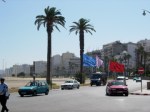
DSCN3241What did happen: I left the port gates, took a moment getting my orientation, and found the left luggage office. The clerk and I fumbled with mutally poor Spanish, and I left my backpack secure. I headed uphill, largely ignored by every passerby, and parked it at a cafe along the Grand Socco. I lazed, and have been wandering the Medina and Ville Nouvelle ever since. I plan on getting a coffee at the Beat-beloved Cafe Paris before meeting up with my couchsurfing host (only slightly concerned we won’t actually connect).

So far, the street harassment I so feared is, well, about what it is at home. Maybe less. A few young men have said hello in whatever white-person language they think I might speak; I’ve been the target of one gross kissing sound, and received one offer to be bought coffee. In short, Latin America still wins the prize for harassment, cat-calling and all-around-demeaning (but what kind of prize would that be?).  Attempts in Tangier have thus far proven half-hearted, generally good-natured and easy to brush off.
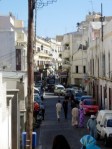
DSCN3236I’m also surprised by the dress of the women. I wasn’t expecting burkhas or even necesarily hijabs, but I’ve even seen some short sleeves—on the younger women, that is. I’m tromping around town in long sleeves, but I’ve seen many tourists in spaghetti straps and shorts. I have yet to see visible tattoos (does a knock-off Ed Hardy shirt count?), which I’ll take as a que to keep mine covered.

One thing I wasn’t expecting was for half the city to still be shut down for Eid (thus the killing of time in an internet cafe). The attractions I’d starred in my guidebook have all been closed, and I haven’t been able to find any open shops in which to buy better long-sleeve shirts in. I’m hoping for tomorrow.

As I wandered around the Medina’s narrow Medieval “streets” (some aren’t as wide as my arms’ reach), I came around a blind corner and narrowly missed walking dead into a hijab-donning middle-aged women. We paused, made eye contact; we both smiled and laughed, then went on our way. I guess this is the oh-so-frightening Morocco, Muslim, African and not all that different.

On the Edge of Continents

Flying over, on the way back

Flying over, on the way back

A languid, palm-fringed town perched on the edge of worlds feels like the perfect place to end the Spanish leg of my journey.

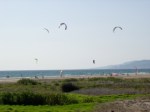
English derives the word ¨tarif¨ from the town Tarifa, a port city and entryway into Europe for thousands of years. The city occupies the wind-swept space between places: the end of the Atlantic, the lip of the Mediterranean, where two continents nearly kiss. Instead of the edgy instability of a lot of border towns, Tarifa lazes comfortably in this in-between space. It´s not unlike any other beach town: surf shops and gently weathered buildings, sniffing dogs and barefoot children, blown-out tattoos and sun-bleached hair. The surrounding skies are populated with the cheerful kites of windsurfers, punctuated with the horns of the Tangier ferry. Just across the azure waters (for all its hype, the Mediterranean is truly gorgeous), vampiric African mountains crest hazily—¨vampiric¨ because, despite seeming so touchably close, they´ve eluded all my photography attempts. The narrow passageway of streets in Tarifa´s historical center tell the town´s history like lines dug in a palm: an old city wall, a crumbling castle, the remains of abandoned structures stretching lazily into the waters. And always, in every part of the city, a persistent wind rushes through, a transient resident itself.

DSCN3205I can´t think of anything better than to spend a chilled-out day wandering the streets, sitting at the beach, reading, catching up on writing (and sleep), and generally getting ready for tomorrow´s ferry embarkment. The 35-minute ride will deposit me at sister city Tangier, another meeting of worlds, where I´ll begin my Moroccan odyssey.
Europe is a pleasant, lovely place to travel—it´s clean, safe, everyone speaks English, buses arrive and depart on schedule and people generally leave you alone (even construction workers refrained from cat-calling this afternoon). It´s almost too easy, to be honest, feels like something other than traveling (vacationing?).

The real challenge of Europe is the punch-to-the-kidneys expense. I´ve done it about at cheaply as possible, and am still woefully over budget. Transportation costs took me by surprise. My last European adventure rang in at €36 per day; however, the Eurail pass I prepurchased meant I didn´t pay anything in travel between destinations. Of course, I anticipated Spain to be the most costly leg of my journey, so Morocco and Portugal should even things out, if I behave myself.

Here´s a wrap-up of my Spanish travels:

Number of days: 10

Number of cities: 4

Number of nights in a hostel: 2

Things I liked more than I expected: Flamenco, Madrid

Favorite new travel accessories: hat, spray hand sanitizer

Travel accessories as-of-yet unused: sleeping sheet, laundry detergent

Biggest travel splurge: a universal adaptor from El Corté Ingles (€18, adaptor I brought was busted)

Budget Break-down (frighteningly, I keep this scrupulous of track of my finances even at home…)

Daily average: €45

Transportation: €130.5

Food: €170

Lodging: €46

Entrance fees (museums, attractions): €21

Internet: €21

Coffee and sweet treats (gotta have my indulgences): €26

Other (laundry, adaptor, etc): €31.5

BYOB Debauchery: Spanish Botellónes

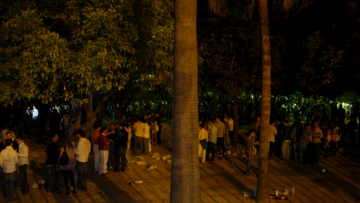
DSCN3177The roar of voices rose from between the trees, out of the darkness and dirt. Scooters swarmed, freshly broken glass glittered in the dim park lights. Young girls teetered in impossibly high heels and boys stumbled, leaned their faces against the sides of walls as they pissed. And every person clutched a plastic cup.
When Spanairds sigh in disapproving despondency about ¨kids today,¨ they´re talking about botellónes. In a culture of late-night fiestas,  these youth-ridden BYOB binges stand out as particularly debaucherous.

Bottelónes take place in public, on the streets and in the parks; teeangers and early 20-somethings gather to drink, flirt, cause trouble, and leave a mountain of trash in their wake. Increasingly the subject of public controversy, Seville´s bottelónes are known to be especially raucous.

We passed one as we trod through Parque Maria Luisa on Friday during a once-a-year festival of museum open houses and cultural performances. (How Spanish is this?: museums are free to the public from 10pm-3am, and completely full the whole time.) September is festival month in Seville, when residents have returned from August vacations and the oppression of the heat has subsided; it´s also the beginning of botellón season. My couchsurfing hosts and I were walking over to Museo Artes y Costumbres Populares, where we saw a killer flamenco show, and the adjacent Museo Arqueológico, where a classical guitarist´s exaggerated facial expressions were more dramatic than an old guitar-playing friend with Tourettes (RIP, friend).

We passed what I was told was a typically trashy Friday night bottelón. It was like a rave minus the pulsing lights and techno music, like a sideshow minus the cars and firearms. Hundreds of kids filled the open space at the park´s entrance. Teenage girls were dressed to the nines to attire revealing even by Spanish standards, while boys puffed their chests and tried to impress each other, even in curiously effeminate clothing. My hosts spoke of the trash, piss and vomit the parties left in their wake, the shards of glass and tell-tale crushed plastic cups that city workers scurry to clean up the mornings after. (The next day, I passed through the carnage of another botellón, down by the river, and had to say, it was pretty gnarly.)

I smiled to myself as we passed by. I couldn´t help but feel that, if you swapped the heels for combat boots, and blush and blow-drying for heavy eyeliner and multi-colored dreads, it wouldn´t have been too unlike the Rocky Horror Picture Show or Gilman Street of my adolescence. Instead of being out in the open, though, we were relegated to the sketchy corners of the city, to alleyways, public restrooms, the stairwells of parking garages. I wondered if having to hide it—the violent pursuit of oblivion—somehow served to make ours worse, more seedy and powder-laced, more self-destructive and apt to end in institutions and death.

From between the park gates, I spotted a girl hoisted up by two friends, her arms drapped over their shoulders. Her head hung at a sharp angel; her heeled feet scuttled, dragged in the dirt lifelessly. Whether it´s a plague to Spanish culture or kids just being kids, I felt mighty glad not to be a teenager anymore.

The Jugular of Granada´s Street Art

DSCN3131Down a deserted stairwell in a steep tangle of stone streets, I stumbled upon the best street art in Granada.

Literally, I stumbled. The precarious passageway of unleveled rocks made walking an ankle-twisting, sole-bending venture. The vacant lots, abandoned mattresses and wafting bits of urban debris didn´t make the footpath a particularly picturesque one either. But I didn´t care; it was what covered the cement walls and old stone wells that fascinated me. Color-swarmed, vibrant and thoroughly hidden, I´d discovered the best street art in Granada.

This isn´t a difficult feat. The ancient city of intricatly carved Islamic monuments, mammoth cathedrals and labyrinthic streets is, in its modern-day incarnation, also a college town. Chicken-scratch tags and idealistic political statments irreverently adorn any paintable surface; Granada writers have a particular penchant for anarchy symbols, replacing ¨a¨s with the symbol at every opportunity. A crayon box of every imaginable color, the city is swarmed in adolescent scribblings that somehow add to the o ld-world ambiance; they seem to fit.

I decided to take a morning walk through Albaicín to the city´s center. My couchsurfing host, a thin Spanish girl in a black raincoat, had a quiet apartment in the Sierra mountains, a simple tiled space that´s view from the balcony was like a prayer. The building was  just outside the old city wall, a half-crumbled mass that arched down the spine of the steep terrain. Just on the other side was the city´s old Muslim quarter, cascading down the hillside towards the city center. Crumbling buildings mixed in with modest modern architecture, lining the zig-zag of cobbled streets with walls tall enough to block the wind and let in only a bit of the morning sun.

The layout of the streets is utterly random and unintuitive, so I gave myself a couple hours to wander the mile downhill. Small plazas punctuated the skinny streets, most of which were closed off to anything by foot traffic. It was a functioning neighborhood that gave a gentle nod toward the map-clutching, steep-grade-panting tourists that trcikled through: a couple stores sold postcards in addition to fruits and food staples, an internet cafe´s doors were locked for Ramadan. People bustled about their business—old men smoked and the women gathered in an arm-crossed group at a plaza´s market—and us tourists smiled pleasantly at each other in passing.

I maplessly meandered my way to an impressive mirador directly across from the Alhambra, where people posed for photos and looked out over the vast  city view. A slight grumble in my stomach inspired me to move towards the city center. Directionless, I decided to just make my way downhill until I hit a promising-looking street.

DSCN3134The streets I wandered got starker, more litter-filled than people-filled. Abandoned buildings and dirt lots suggested that restoration efforts weren´t the trend in this forgotten corner, perched on a precipice between well-visible, touristed neighborhoods. A steep stone footpath lightning-bolted its way down the hillside; I followed it.
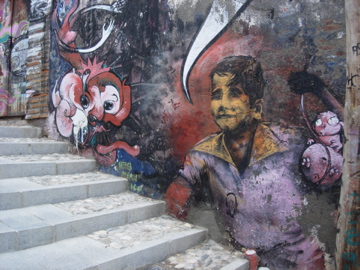
I passed one of the old, gated-up wells that fill the Albaicín neighborhood. This one was covered in slightly different bread of tags, filled with crude characters and comical creatures. Turning a sharp corner, a mural-filled walls of air-brushed portraits and abstract colors stretched out in front of me. A stencil of George Bush with a blood-red clown nose appeared next to a telling tag: Albaicín Crew.

I walked up and down a bit, taking pictures and smiling at the refreshingly creative vibrancy. In one litter-strewn, forgotten footpath, tucked into the secret flesh of the city, I´d found the jugular of Granada´s street art scene.

Kimmo´s Culinary Quest in Madrid

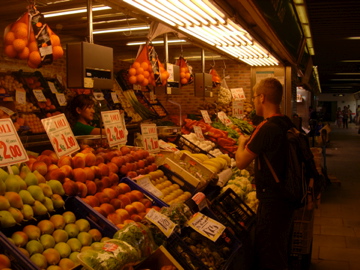
Shopping for produce

Shopping for produce

Kimmo sighs a cloud of smoke and looks into his half-full pint glass. ¨I told her one and a half months, I´ll try it. Then,¨ he shrugs and manages a smile ringed with worry lines.

It´s one am, and we´re washing down the 4th night of Doña Antonia´s grand reopening at an endearingly tacky Irish bar in the cobbled heart of Madrid. The red plaid wallpaper and grime-covered Guiness mirrors seem to agree with Kimmo, who looks 10 years younger out of his white-starched chef´s jacket.

Kimmo, Matt and I at one time all worked for the same 5-restaurant company that encompassed, at varying times, 3 SF-Chronicle Top 100 restaurants. That is to say, we´ve all been well-indoctorinated with the Alice-Waters-inspired culinary philospohy of organic, locally sourced ingredients. Ours paths have crossed for one heavy-skied Sunday in Madrid, where Matt, some friends and I feasted on the kick-ass creations of Kimmo´s new menu. It was one of the best meals I´d had in awhile.

But, apparently, Madridanos don´t share our American enthusiasm.

¨Madridanos,¨Matt tells me, ¨aren´t very discerning diners. It´s more about atmosphere than the actual food.¨ Kimmo nods in semi-forlorned agreement.

A recent transplant from the Bay Area culinary scene, Kimmo´s been trying to reconcile his California-cuisine sensibility with Madrid´s affection for over-salted sameness. It´s been 6 months, 3 restaurants, and so far, it hasn´t gone splendidly.

Listening to Kimmo´s qualms and Matt´s frustrations, I begin to realize that culinary values and expectations in California are wildly different than those in Spain.

Matt, an ex-bar-manager turned handle-bar-moustached vagabonder, has been frustrated with Spanish service and quality for the past 7 months. Kimmo, a sweet-faced Scandinavian socialist who´s vowed not to die in either the US or Finland, has been struggling against the low standards and unadventurous expectations of Madrid´s diners and restauranteurs. A chef by trade, he´s been hired as the head chef and sole cook of the newly reopened Doña Antonio near Plaza Santa Ana.

Kimmo´s creative menu includes untraditional dishes like mussels with chorizo and garbanzo beans, a sort of inventiveness valued in the Bay Area. Put the same old things on the menu there, and you can bet on your clintele steadily plummeting. In Madrid, it´s the opposite. For the 4th consecutive night, Kimmos´s watched nervously as potential diners sip on coktails (he insisted on expanding the beer and wine bar to include mojitos and caipirinhas), peruse the menu, look confused, and leave without ordering.

¨When it comes to tapas restaurants, the kind younger Madridanos go to,¨ Matt says, ¨I usually don´t even have to look at the menu. They´re pretty much all the same.¨

The increasingly anxious owner of Doña Antonia wants a more typical menu; in the previous day´s blow-out, Kimmo conceeded to including bravas and croquetas on the menu. ¨She tells me,¨Kimmo says of the owner, ¨ ´You can do them your way.´ But no one in Madrid wants to try lemon aioli. And they haven´t even heard to romesco!¨

Another problem Kimmo´s encountered is that modern Madridanos seem to have no familiarity with the Spanish cuisine he learned in the States. Filet of fish with romesco? No go. Paella without seafood? Won´t fly. Additionally, the organic craze has far from set in. An almost nauseatingly hip trend in the US, the inherent taste superioirty and sustainable sensibility means nothing in Spain. ¨There´s no idea that you might want to spend more for better ingredients. I can´t say, ´The meat is expensive because it´s organic.´ They won´t care; they say, ´Find it for cheaper.´ So I have to try to cook with rubbery arugula, carrots that don´t taste like carrots.¨

Kimmo´s decided to give it 6 weeks. He´ll do what the owner wants: put the typical dishes on the menu and try to make the best of less-than-optimum ingredients. Will he eventually conceede and adapt to the Madrid way of dining, or will he maintain his high standards and continue the seemingly impossible struggle to raise diners´expectations, lower their inhibitions and up the ante of the Madrid tapas scene?

There´s no way to know, not now. But tonight we can kick back in the thickening smoke creeping through the psuedo-pub as the crowd thins and the evening grows damp and heavy, and let it all go. Afterall, tomorrow´s Monday, Kimmo´s one day off.

In Search of Banksy: 30 pounds and 48 hours in London

DSCN2994There´s nothing like a good ole map-less search for illegal art through the streets of a foreign city to get you off the tourist track.

Call it my guide to ¨spending less and seeing more¨: extend your flight connection from an hour and a half to 48, crash with a family friend in Brixton, and set out on a scavenger´s hunt through one of world´s most expensive cities for illusive works of a notorious street artist. Arm yourself with nothing more than a transit day pass (5.6 pounds), a scribbled scrap of notes from a Banksy locations website, no guidebook or map, and a long-time London resident down for the quest. You´ll trapse through the heart of the city, through 2 ethnic neighborhoods, 2 gentrified hipster havens and an unabashed tourist trap; take 4 tube rides, 3 buses and walk an estimated 5 miles; pop into 2 galleries and 1 museum; sip cappuccinos on a roof-top cafe (2 pounds), munch on Jamaican patties at an Afro-Carribean market (2.5 pounds), and down some killer dal at a Pakinstani restaurant (17 pounds, with hella leftovers). You´ll venture down abandoned tunnels and crumbling back alleys as you tour the city´s sweet, tender underbelly, swollen with bright colors and pealing wheatpaste. And all for less than the Lonely Planet shoestringer budget.

Bristol-native Banksy has become synonymous with street art, his satyrical, subversive large-scale stencils offering poignant and humorous statements on politics, culture, capitalism. While his pieces have popped up in cities around the world (an apparent traveler himself), London is one of the hotbeds. The ephemeral nature of street art makes finding his work a kind of wild goose chase.

DSCN2972New Zealand native, world-travler and 30-year London resident Dave served as my gracious host and personal guide extraordinaire. We began at the Waterloo tunnel, once a Eurostar passageway, once abandoned, now a designated graffiti area. None of Banksy´s work remains, but lots of other bright colors and politized stencils fill the surprisingly clean, un-urine-smelling underground area. We rambled along the brown, gurgling Thames to the Tate Modern, sister museum to the Tate Britain, one of the museums hit in Banksy´s guerilla art hanging. We checked out the excellent Futurism exhibit (which warrants its own post), making use of Dave´s free +1 entry.

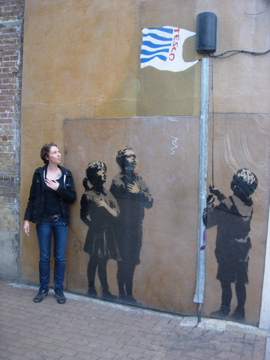
Our search took us through two once-funky, now-trendy gentrified neighborhoods, the Angel and Old Street areas. We passed a crosslegged girl working on a legit piece on the exterior of a hip nightclub, a one-time poppin gay bar that was ¨the perfect mix of seedy and interesting,¨ Dave sighed in bittersweet nostalgia. Amid the antique stores and vintage shops of Angel, we at last found a Banksy. Preserved under plate glass like the Mona Lisa, I posed next to the children pledging a Tesco shopping bag (of course, I forgot my camera cord at home, so you´ll have to wait for the proof).

DSCN3006We found another Banksy on a quiet sidestreet off of unabashed tourist trap/hipster hangout Brick Lane. The first half of the blocks we walked were wall-to-wall Indian restaurants, with pushy male touts outside jostling for patronage; I think they´d find more success if they employed the Latin American method and used smokin hot girls in skimpy clothing. The street morphed into uber-cool bar and pub land, and that´s where we found the most street art of our mission. My favorite was a collage of corporate logos composing the now-commodified famous image of Che. The Banksy we found was several blocks from the hubbub, a painter sitting next to a large yellow flower. The words ¨vandals found vandalising this vandalism will be prosecuted¨ appeared right beside the large spray of paint covering the stencil´s face.

One of my visit´s sub-missions was to find one of those Cockney ATMs; while that searched proved unfruitful, it did bring us to bomb-ass Tayab, a Pakistani restaurant doing a cafeteria-style smorgasborg for Ramadan. I wisely stocked up on minced meat pastries for my next day´s flight, as well as enough leftovers for a spicy breakfast.

DSCN3018Another culinary and culture highlight was our next morning´s stroll through the Brixton Market, the pulsing heart of the Afro-Carribean Brixton neighborhood. African flags and fabrics, produce-selling mom and pops, Bob Marley tapestries, Obama t-shirts, Rasta onesies and pot-leaf-adorned everythings filled with multi-block indoor/outdoor bazaar of bad-assedness. There wasn´t a single corporate logo in sight, and as I sipped on a Buffalo-milk cappuccino and watched passerbys, I couldn´t help but feel my 48-hour powertour had provided me with a pretty good glimpse of the London in which locals live, graffiti-adorned, cumin-scented and throbbing with life.

The Itch for Ink

My new article came out on Matador Nights, just as I was taking off. I was so bummed about missing the London Tattoo Convention (by two weeks!) that I wrote a quick round-up of tattoo travel destinations I´m currently stoked on. More than anything, it´s a list of places I´m already in to, or what to go to. (Milan´s kinda random, but sounds fresh.) There was a fair amount of editing and word change, but I can still hear an echo of my own voice.

Of course, I should have specified that these were modern tattooing destinations; the first comment makes a good point about traditional tattooing destinations missing. And, um, what´s up with the fourth comment? You don´t sound very educated yourself, uncle whatever.

Check out my picks, and the comments, here.

Packing Up and Taking Off, By Numbers

I got this idea from a Matador Travelers Notebook series, By the Numbers, reminiscent of the Harper’s Index (the only part of the magazine I ever manage to read all the way through).

backpack

Number of hours till take-off: 19.33

Number of good-bye hugs given in the last 36 hours: 9

Anticipated number in the next 16 hours: 4

Number of underpants planned to be packed: 5

Number of underpants currently packed: 0

Number of books packed: 4

Number of non-guidebooks packed: 1

Budget, per day, in US dollars: 54.76

Percentage chance, based on previous travels, that I will end at or under budget: 80%

Cost, per day, of at-home expenses during trip (rent, health insurance, etc): 21.78

Percentage chance, based on reality, that at-home expenses will end under budget: 0%

One-way BART fare to SFO, in US dollars: 8.3

Number of nights currently set up with places to stay: 10

Number of couchsurfing requests written in last 2 weeks: 6

Number of couchsurfing requests accepted: 3

Number of Survival Arabic podcasts downloaded: 12

Percentage change, based on previous travels, that I’ll actually listen to said podcasts: 15%

Number of articles slated to be published during trip: 2

Number of submitted articles floating in the nethers of editors’ inboxes: 4

Number of hours, per day, I plan to write: 1

Percentage chance, based on previous travels, that I will meet writing goal: 25%

Percentage chance, based on new blog and current upswing in writing trend, that I will meet writing goal: 75%

Down-dogging for No Fee

For the final assignment of my five-month editorial internship with the trip-planning site NileGuide, I got to indulge my increasingly nerdy obsession with donation-based yoga.

NileGuidance, NileGuide’s blog, features weekly travel themes; I scratched my head and made several trips to the water faucet while considering what to write for fitness week. Then I remembered the inferno of an afternoon in the East Village, when Alicia and I jammed ourselves in a mat-to-mat studio and power lunged our hearts out (and thighs off). We took a pilgrimage to the mother studio of our beloved Yoga to the People, who had earlier that year reached its well-limbered tentacles to the West Coast. Our little Berkeley studio had been getting increasingly crowded (class sizes now edge over 50), and we wanted to get a taste of what the New York studio was all about. So, while spending a week in the most killer city in the US, we popped into a noon class. As the windows fogged up and our sweaty hands slid us out of our down dogs, we felt right at home.

Yoga to the People’s new San Francisco studio opened in May. It’s on the fifth floor of an industrial building that, in a previous incarnation, served as the venue for raucous illegal punk shows (carrying amps up five flights of stairs: not fun). Now, the space gleams with new hardwood floors and nearly floor-to-ceiling windows that display the San Francisco skyline with the effortless panache of a French girl.

Donation-based yoga is catching on like a California wildfire. Studios are sprouting up all over the country, all with the common goal of making yoga accessible to everyone. Not bad. And you can be sure I’ve downloaded Yoga to the People’s free podcasts, and will be busting some half-pigeon on my upcoming trip.

Check out the full post, or just google “donation-based yoga”—my post is coming up second! (SEO is a beautiful thing.)

If AC Transit Gave Passport Stamps

Inside the belly of the beast

Inside the belly of the beast

I started traveling at 15.

Which isn’t true–I didn’t leave the country until I was 22, and all travels leading up to that were pretty much of the camping and visiting-the-relatives-in-Milwaukee variety. I was a working class kid; international travel was the exotic, unattainable luxury of the privileged, or else something you only did a couple times in your life: your honeymoon, a cruise at retirement, maybe to visit your parents’ hometown in Vietnam. It was completely outside of the realm of what anyone I knew did, an opportunity I never expected and didn’t know I wanted.

But something that happened at 15 that I inextricably link to travel, to the little sparks flashing in that otherwise-dormant part of the mind you use when vagabonding and adventuring around unknown, foreign places–I started riding the bus.

It wasn’t a short ride. I landed a spot in a decent public high school a couple towns away from my house; my mom could drop me off in the mornings, but after school, I had to make the 10-some-mile trek by myself. It took about an hour and a half on at least 2 different buses.

My laminated, cheesy-graphic-ed youth bus pass was my ticket to freedom. My parents had been deservedly hesitant to let me ride the buses alone when I was younger–a skinny white girl, the mean streets of Oakland’s flatlands–they weren’t being unreasonable. But when necessity arose at 15, I was old enough and aware enough to be let loose.

And I loved it.

I listened to my Walkman, stared out the window. Everywhere I went, I noticed the bus stops, took note of the numbers, figured out what lines connected, the most efficient routes. My friends were scattered at high schools all over the East Bay; I got myself to neighborhoods and parts of town I only vaguely knew, learned the streets, how all the places fit together. I only used the overpriced, plush BART system to get across the Bay, choosing instead to rely on the unreliable, infrequently running tangle of AC Transit buses. I started dating a boy in San Francisco, and got to know the heaving electric buses and rattling streetcars of MUNI. I could get myself just about anywhere “worth going” in the inner Bay Area–Gilman, the Cocodrie, Mission Records, Ocean Beach bonfires, a constant sprinkling of house parties. I even transited to an all-night beach party in the North Bay’s Bolinas. I felt unstoppable.

But the cheif benefit about all that transiting wasn’t the freedom; it was learning how to be in the world. I learned, yes, that I could figure logistical things out, but also that I could handle myself. I knew exactly how to respond to cat calls, comments, advances from much-older and very-gross men, a fine line between acknowledging and not encouraging them. I learned what to do when the guy next to you is jerking off through his pants, or when the lady across from you nods out so hard to bashes her head into the pole. I learned how to laugh off the Oakland Tech kids asking me if I was in a cult because I wore all black. I learned what to do when a fight broke out (get out of the way). I grew comfortable with my ability to take care of myself, to just be myself.

I was also forced to slow down, to sit. I noticed little things I’d never seen before, the time the clock had frozen to outside a shut-down storefront (4:20, and I was convinced that it was a front for a weed operation). I discovered little shops and corner stores. I got the experience of watching a neighborhood gentrify, slowly, day-by-day, standing on the same corner waiting for my transfer–a sort of time-lapse photography of incoming punks, then yuppies, then stroller-pushing nannies. I wrote poetry in my head, silently recited my favorite works by my favorite poets. I got time–a lot of time–to just be with myself.

Why does this feel like the beginning of my traveling? In the most practical sense of the term, it is–the getting from point A to point B, the journey involved. But it’s more. It’s way I was thrown into the unknown, the unfamiliar. I get that same sort of tingle when I travel, when I stare at a map or figure out a metro system in a foreign city or try to decipher signs in other languages–this back part of the brain that gets ignited when you’re outside of familiar settings, your everyday life–that grows fat and numb as you drive to work, to the grocery store, the gym. It’s how riding the buses afforded me the time to sit and listen to music and think, about nothing in particular, an almost meditative chunk of time where I had nothing to do but just wait, just slow down. It’s the way I noticed the little things in the world again, instead of letting it be a big blurred rush of color and sound behind me, beside me, but always outside of me.

And it’s the way I loved it.


Lauren Quinn is a writer and traveler currently living in Hanoi. Lonely Girl Travels was a blog of her sola travels and expat living from 2009 to 2012. She resides elsewhere on the internet now.

Join 490 other subscribers

Buy This Sh#t

Categories