Archive for the 'Subculture' Category


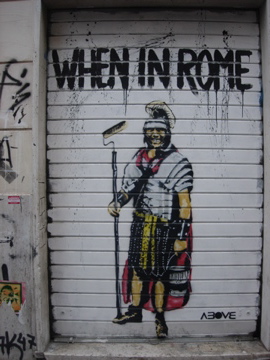
Thank God for San Lorenzo Street Art

The last full day of my trip: drizzly grey and a mounting head cold, city still shuddering from the previous night’s storm. I would not be stopped by the weather or my health (I really should have been stopped by that) or my impending departure or my own crappy attitude. I was going to go out and find something cool. Goddamnit.

It was more than my intuition that told me that Something Cool would be in San Lorenzo. It was Jessica from Rome Photo Blog. Specifically, she told me: “Go to San Lorenzo. Take the number 14 street car. There’s lots of cool street art.” It seemed a good enough activity for my final day in Europe. Because Lord knows I hadn’t tromped around in the rain hunting down street art enough on the trip.

I like Rome’s neighborhoods. I supposed every city has its distinct neighborhoods with their distinct vibes, but for some reason the differences feel more marked in Rome, where perhaps the centuries have dug those differences down deep, deeper than in other places. The center, while magnificent, bums me out and exhausts me, with its gaggles of people and trinket shops. There’s not a lot of contemporary culture to dig into. And contemporary culture is kind of what I’m all about.

Typical crumbling building

San Lorenzo is one of Rome’s hippest neighborhoods. It’s the bombed-out, more gentrified version of Pigneto—or rather, it’s formerly bombed-out and further along the gentrification scale from Pigneto. The working-class 19th-century neighborhood received the heaviest bombing during WWII, and I don’t know if all that crumble I saw was a remnant of that or just a result of the usual Italian building decay. Either way, it was fucking cool. There’s a lot less immigrants than in nearby Pigneto, and the neighborhood seems to have moved deeply into the third stage of gentrification: when the local business begin catering to the new residents. San Lorenzo’s proximity to the enormous La Sapienza university means there’s tons of students and tons of artists, with a proportionate ton of trendy stores and cool record shops and cafes with wifi.

And a whole mess of graffiti and street art.

I hopped off the tram when the walls began to resemble a two year old’s furious crayon scribbling.

I was delighted to see some good ol’ Space Invader the moment I got off the 14. He’d recently come to Rome, and has an upcoming solo exhibition in the city. Word has it (ok, Jessica told me) that Roman street artists are pretty stoked about Invader’s, um, invasion (I hate myself for using that pun)—hoping it’ll lend a little more attention and validity to their own work.

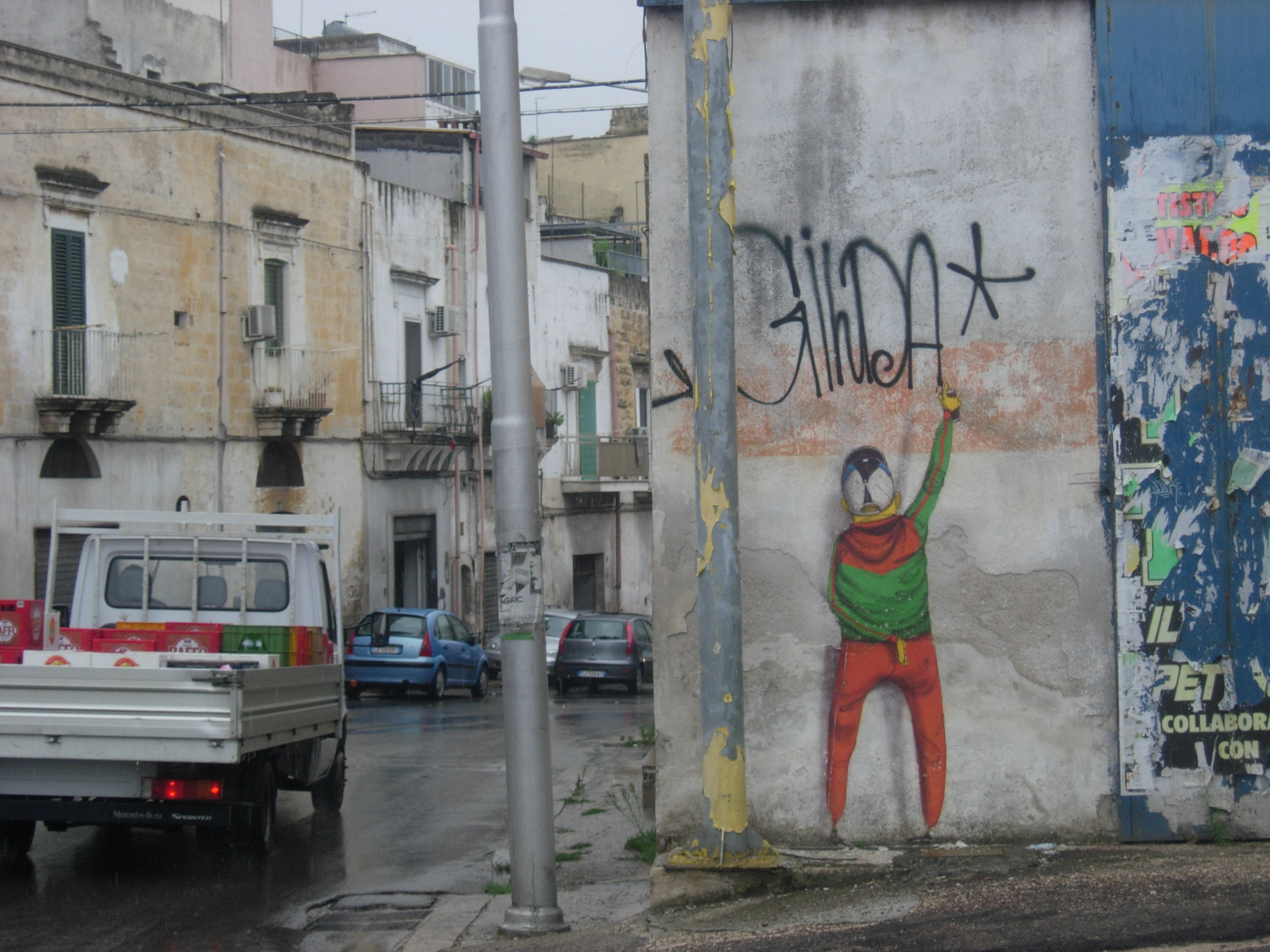
I wandered about a bit, until I found what I was looking for: Something Extremely Cool. Along Via Delgi Ausoni, on a wall surrounding the block-long Fondazione Cavalieri di Colombo, was the best street art I found in the city. It was like the Clarion Alley of Rome.

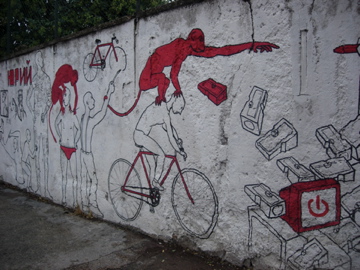
Hey, Ekua, check it out: a whole wall of Hopnn!


Okay, so the picture doesn’t give you the full effect, but a shadow/inverse of the stencil was actually put on the sidewalk in front of the wall as well—so it felt like you were walking through some weird mirror of the piece. Cool ass effect.


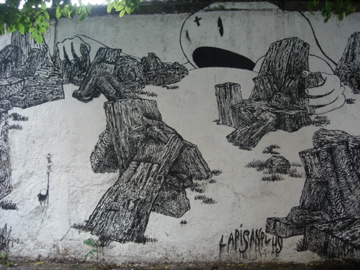
Too cool for just one picture…

This reminds me of Retna:
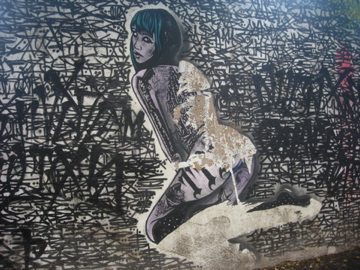


I’m not totally sure what’s going on here, whether the figures were wheatpastes that got taken down, or if that was an effect was created intentionally—but a pretty fresh, haunting effect, especially given the message written:

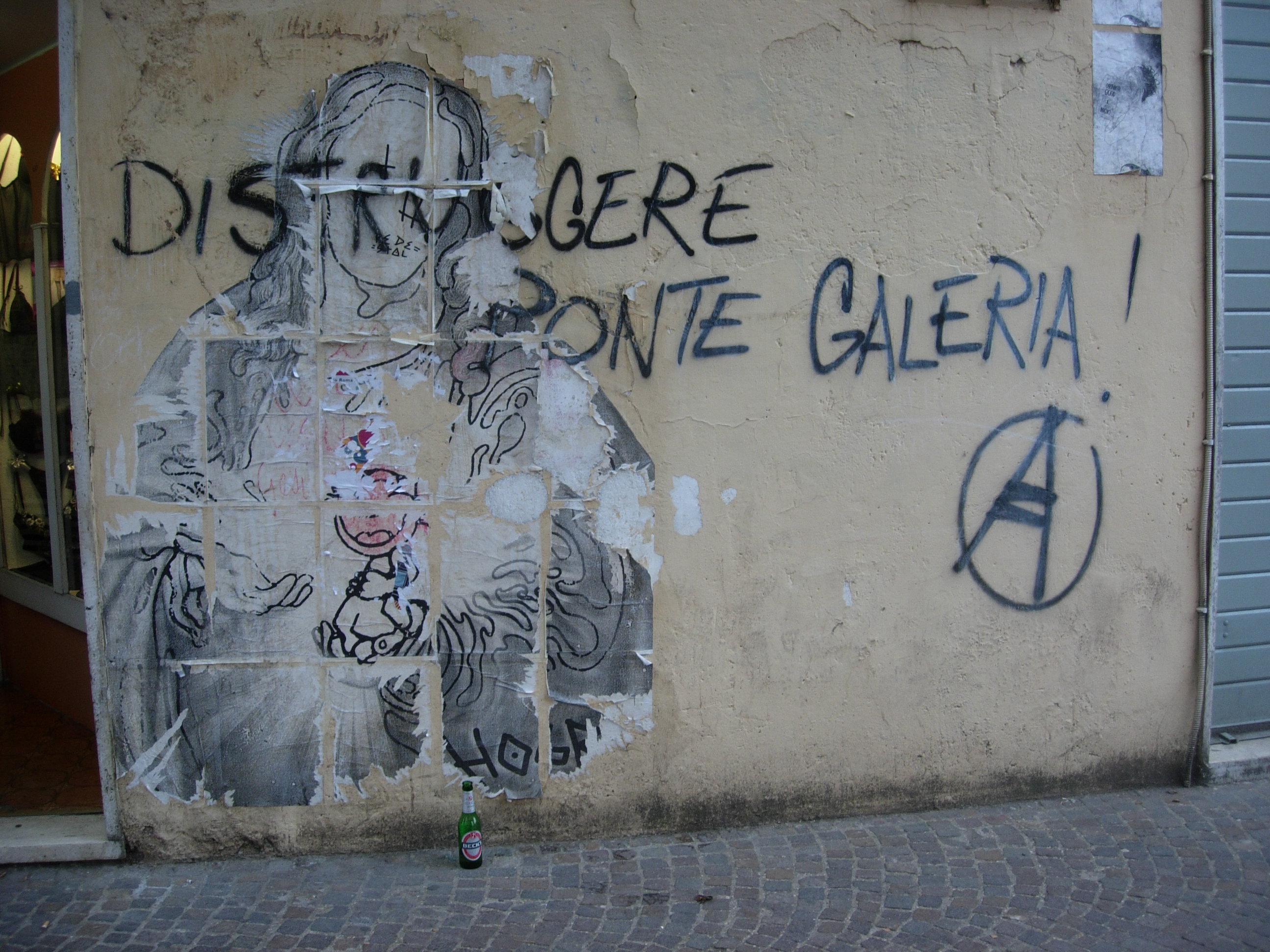
But to be fair, most of the stuff on the walls in San Lorenzo looks like this:
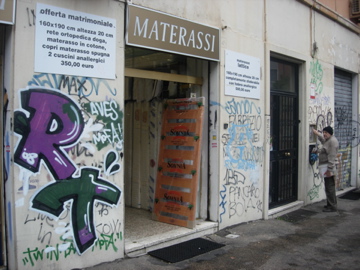
Okay, so I’m gonna be the asshole and say it: this is not aesthetically pleasing. But it reminded me of this conversation I had with Pedro at Fame Festival, about the need to create urban spaces designated for street art, like they have in Melbourne or in that tunnel in London. I can totally feel people when they complain about piss-poor chicken-scratch tagging all over their neighborhoods; it’s ugly. But cities need to have some kinda strategy towards graffiti that goes beyond just prevention.

When I was growing up, the Oakland Public Schools had a full-time employee whose sole job was to go around and paint over graffiti on all the school campuses. Which seems like a damn waste of resources. The sad thing, to me, is that these kids obviously have something to say, something they wanted to communicate, and no other way to do it. I think it’s important to create those spaces, walls and zones where they can throw up pieces—to give kids the space to say what they need to say. (I’m assuming this is what’s being discussed in this news coverage of Pedro’s Crono Lisboa project…)

Because you never know which one of them just might grow up to be a dope street artist. And because it limits the amount of tagging elsewhere. And because it looks cool as shit.

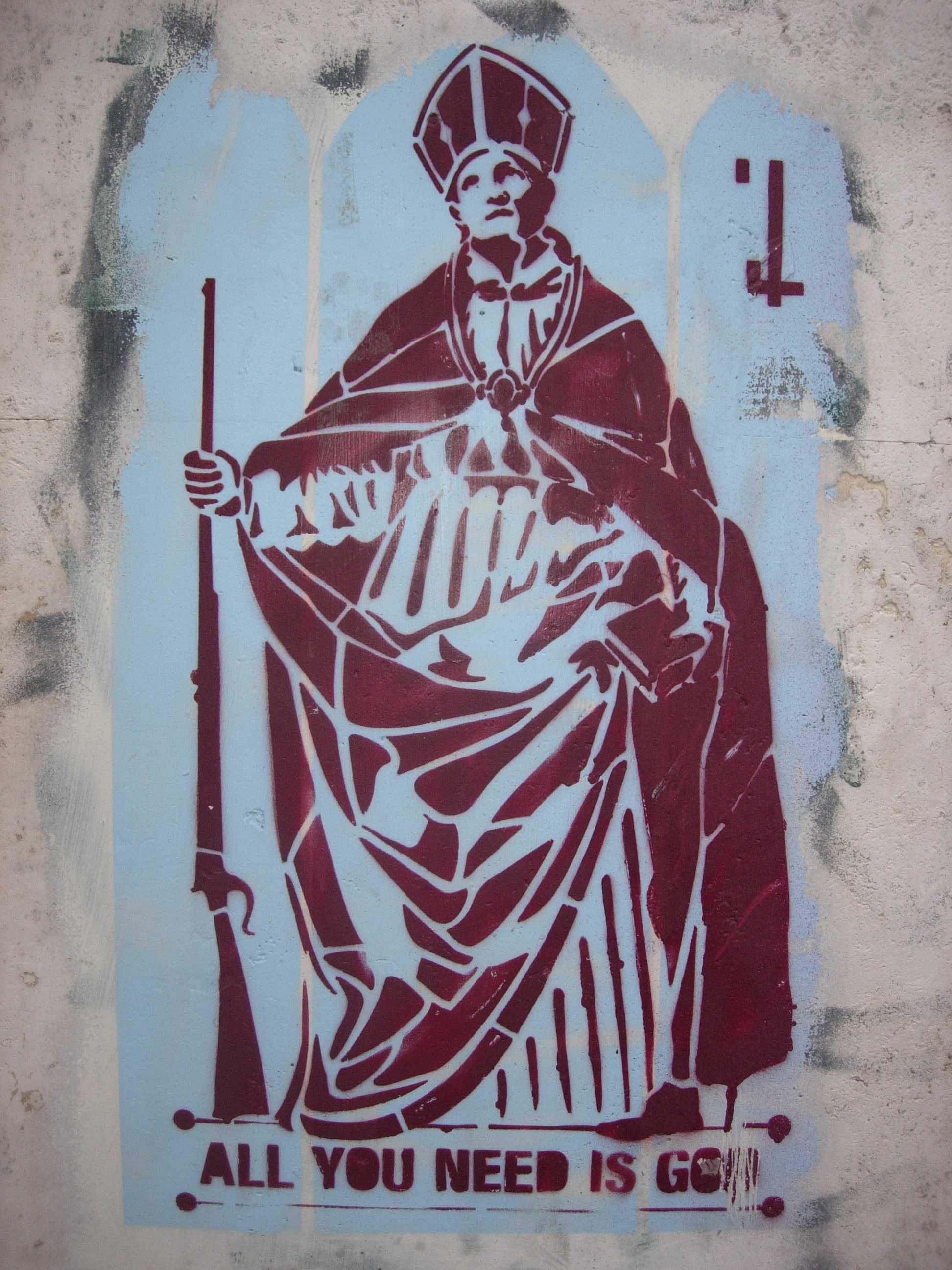
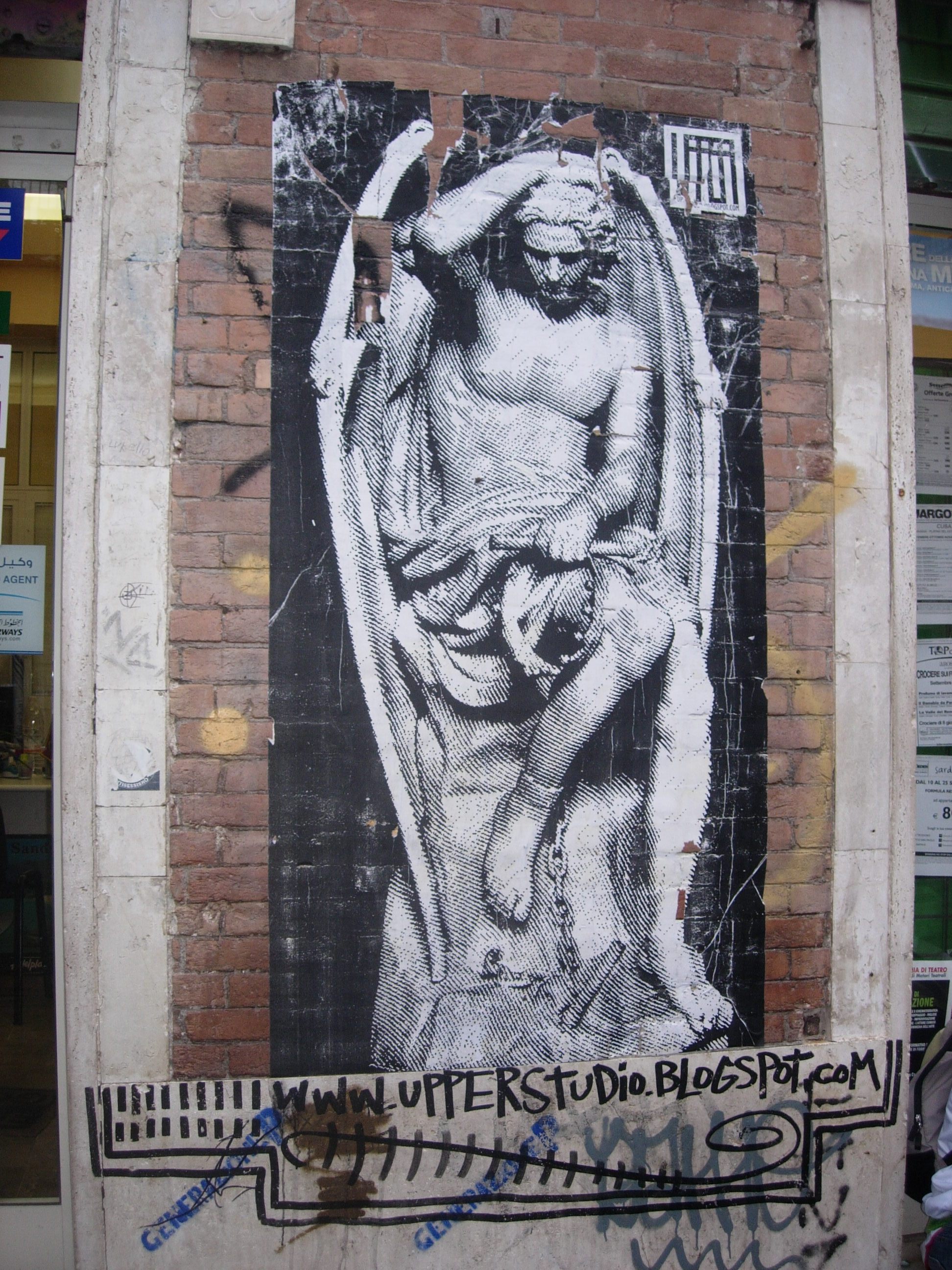
I’m not sure what all that has to do explicitly with San Lorenzo, except that I was thinking about that as I wandered around the neighborhood. Here’s some more stuff I spotted:

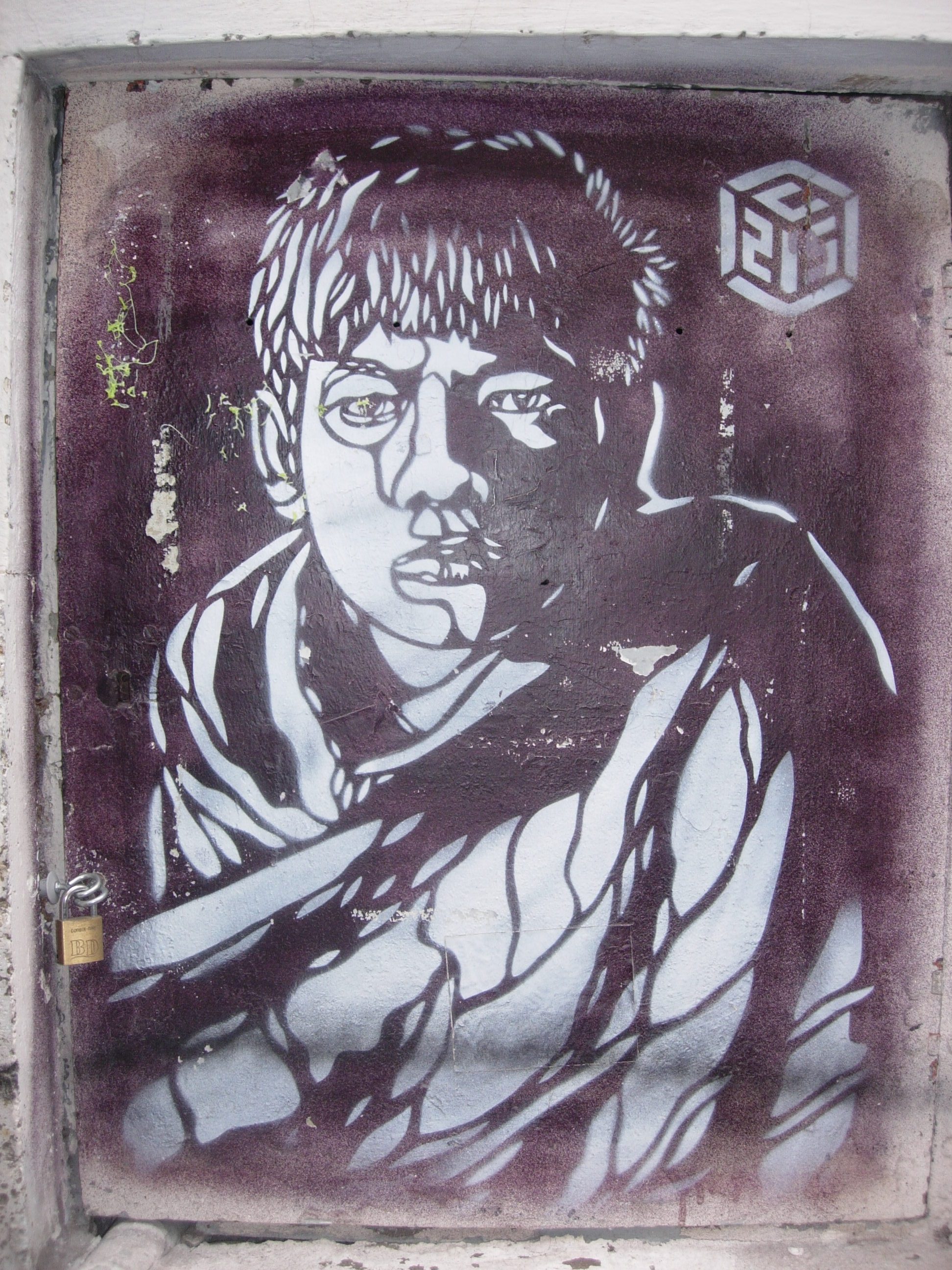
This C215 piece was actually on the wall of a church. It blended so well I wasn’t sure if it was street art or the church’s actual art work until I saw the signature logo:


Lots of stores had pieces on their shutters…
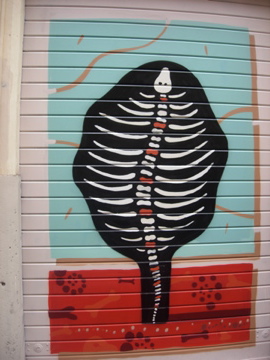


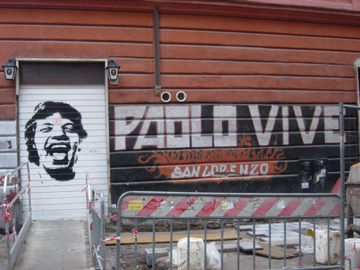
But I think my favorite might have been pieces that worked with the crumbling facades of San Lorenzo. I get pretty stoked on well-done site-specific street art, when the environment and the art interact with and inform each other…

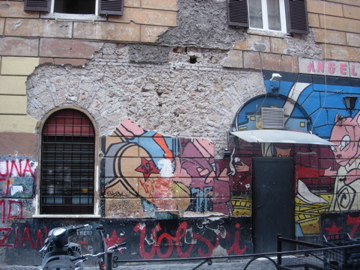

Walking around there, damp-footed and achy-throated, I had to say a little thank you to San Lorenzo, for giving me one last cool adventure on my trip. And for reminding me that Rome is more than history and monuments—that it’s a damn big city, and a damn great city, and that there is contemporary culture—just beneath the surface, below the rubble, just a short tram ride from the center.

The Foreigner at the Party

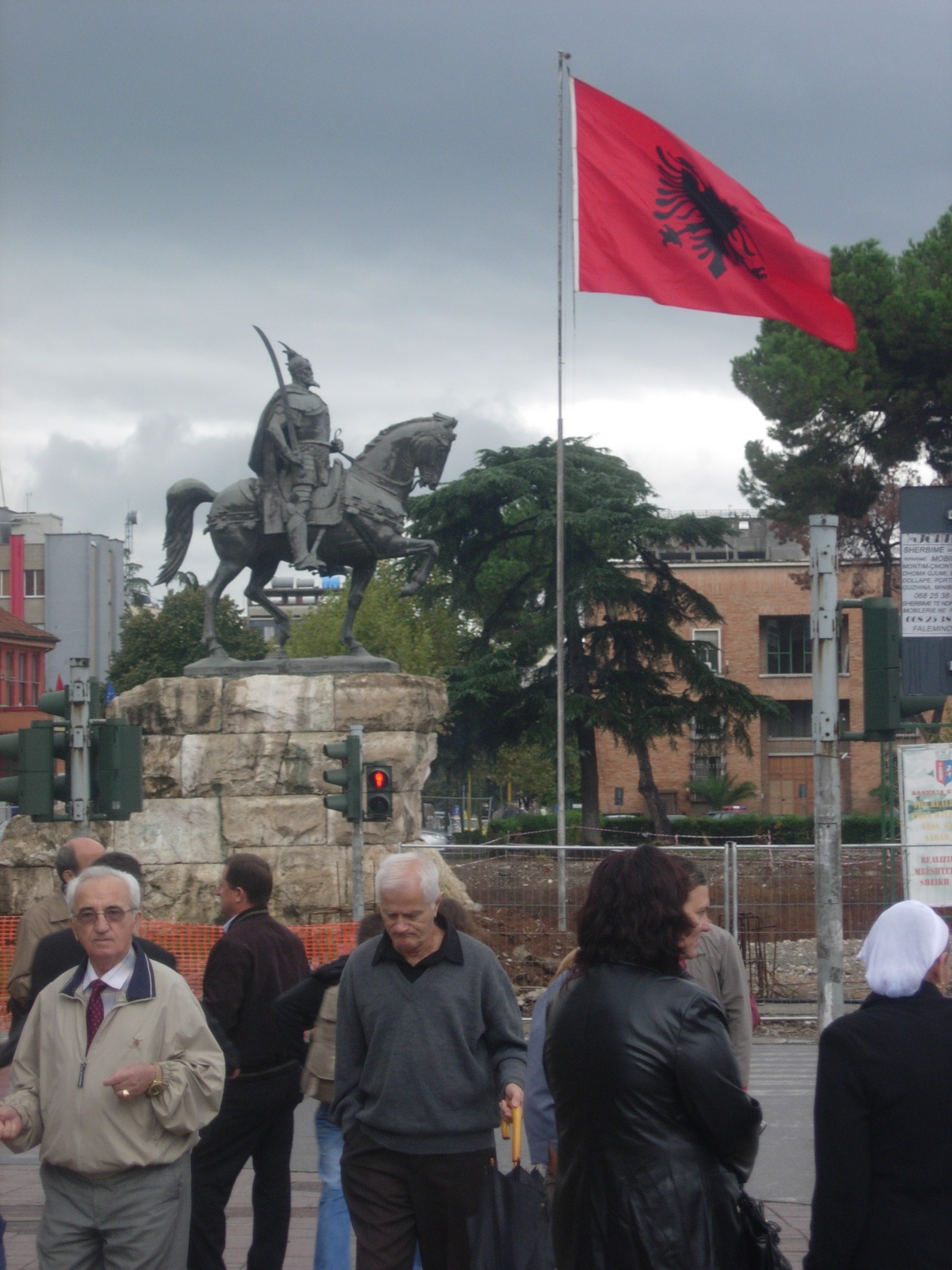
Tirana and Rome don’t have much in common—except that it’s absurdly easy to stand out as a tourist.

They come at it from different angles—Rome because there’s so many goddamn tourists (really, do Americans realize that there’s other countries in the world?), and Tirana because there’s so few goddamn tourists (really, do people realize how amazing it is?). But the effect is the same either way: you aren’t ever, ever going to blend in.

Some travelers get bummed out by this, and do everything within their power to fool themselves (and themselves only), acquiring affected accents and scarves for the local football team. But I say fuck it—no one’s gonna buy it anyway. So you may as well just dance.

Friday night felt like a riot in Tirana: chanting crowds, police sirens, streets shut off, smoke billowing and fireworks flashing. It wasn’t a riot, just the Albania-Bosnia football match. The insane energy of it all is a little anxiety-provoking for an American—if it were Oakland, someone would have gotten shot.

Our little clan from the hostel walked through the raucous roads; some had picked up Albanian flags along the way, but it wasn’t any use. We were varied races and ethnicities, all speaking English, and the stares we ellicted became almost laughable, necks craning and feet stopping cold.

“Hello, hello,” shouted a voice from a drunken crowd, as though to point out that we were different and didn’t belong.

Everyone got quiet and a little uncomfortable. I gave a stupidly exaggerated wave. “Howdy!” I exclaimed in a Southern accent. “How y’all doin’?”

And we all had a laugh.

We didn’t end up getting into the stadium. It’s my absolute fate with football—I’ve never managed to actually see a match. So we marched across town to a bar to watch it on TV, amusing everyone with our mispronounciation of “Shqipëri,” the Albanian name for Albania. One of the waiters was so amused he bought everyone at our table—fourteen of us—a round of drinks. Sometimes it pays to stand out.

After the match we went to another bar, an underground spot near the Opera House, walls covered in the photos of the artists that used to hang out there (as well as a healthy layer of cigarette smoke). A DJ was playing drum and bass from his glowing white laptop and everyone was dancing, arms raising to graze the low ceiling.

Again, we were the only foreigners. But the good news is, the language of dance is universal.

So universal, in fact, that everyone was shacking up, disappearing from the dark room in hand-holding couples. At one am, it was just me and the gay Dutch dude left. “We’re dropping like flies!” I screamed over the music.

He kissed me on the cheek.

Saturday took me back to Rome, throat sore and heart heavy, sad and actually a little ill to be leaving. I met up with my couchsurfing host in the evening; we got in the car and drove. And drove and drove, into the damp-smelling dark, street lights thinning and stars appearing. A friend of his was having a birthday party at his parents’ country home.

My first clue that I was somewhere I seriously didn’t belong should have been “country home.” Or the red-candle-lit driveway, that rambled on for half a block. It was dark, so I couldn’t see the house I walking into, but I could sense its presence—something large and sturdy and stately.

We walked into a huge living room, exposed wooden beams and tasteful vases. The crowd was art-opening-hip, wine glasses and expensive haircuts. There was a DJ. There was actual porchetta—a whole pig—being sliced by a little old lady in an apron.

I was in Toms and (again) a Talk Is Poison shirt. I still stank from Tirana’s cigarette smoke, dirty hair stuffed under a beanie. Even in the States, I’d stand out in a party like this.

But I didn’t get any snotty vibes from anyone, so I shrugged and grabbed a plate. I couldn’t really talk to anyone, but I smiled a lot, and people smiled back. No one seemed to mind me too much. It was one of those isn’t-it-funny-where-travel-takes-you moments: if you’d ever asked me, “Hey, do you think you’ll ever end up at a super posh party in a villa outside of Rome?”, I’d have answered, “no.”

After the pig was picked apart, the lights went down and the dance songs started cranking. Good time stuff: “Surfin USA,” “Girl’s Just Wanna Have Fun,” some old rock n roll hits and a couple Italian songs to round it out.

And I danced again. It didn’t matter that I was dirty and foreign and didn’t belong. There was a good time to be had, and sometimes, in the midst of a really good party, the only thing the really “belongs,” so to speak, is fun—the boom of the bass and the way your shoulder dips to the beat.

Tirana, Tirana, The One I’ve Been Waiting For

If Tirana were a boy, it’d be the boy I’ve been waiting to meet.

You rumble across the border, furious windshield wiper and donkeys in the dirt road, hills dripping lush green. You dash from the taxi to the minibus, puddle-footed and soaking-hooded, grab the last seat as a man climbs into the trunk compartment.

You rattle like this through the rainstorm, through a landscape of sheeps and shacks, the smooth round dome of abandoned bunkers, half-built buildings with sleeping bulldozers stuck in the mud, the carcasses of stipped-down cars piled in empty lots. The minibus driver turns on some kind of Albanian butt rock, and you silently thank him for knowing the exact right soundtrack for your entrance into the country.

I’d meant to travel around a bit in Albania, see a UNESCO town or two, climb in a bunker, poke around some old Ottoman castle. Which still all sounds awesome. But four hours in Tirana, and I knew I wouldn’t be going anywhere.

There’s only one other city I’ve walked into and felt this feeling, this long “yeeeesss” coming from some place between my ribs, near my gut, a forgotten organ of intuition. Some places just fit, and you just fit them, and Tirana is one of them.

It’s got a certain electric insanity, that infectious energy, without being a total free-for-all. It’s just dirty enough, has just enough street dogs and decrepit buildings, just enough business men, the click of just enough three-inch heels, attached to smooth legs and slim skirts. It’s like meeting a boy with just enough of “the dark side,” as Luke would say—not a total depraved junkie, but not squeaky clean and wholesome either: a chipped tooth and an ancient wound.

So I walked Tirana’s streets, its run-down markets and posh cafes, past Mercedes Benzes negoitating potholes, 10-years-old smoking cigarettes, old women roasting chestnuts, old men selling gum and lighters, gypsies sitting cross-legged with outstetched palms, the blare of the horns and the hum of the engines and the swoon of the city.

Within a few hours of staggering into the frenetic swarm of this city, I’d fallen in with the artsy, alternative crowd, finding myself at a rock show in a tiny, smokey bar in an otherwise-shuttered mall. The next night was K’tu Ka Art, a weekly show featuring local live music acts. It felt a lot like being at a small show at home, until I had it explained to me.

Apparently, bands in Albania work like this: they play cover songs. God-awful, Top 40, English-language cover songs. A band will book at a certain bar for a year. And every Friday and Saturday, people will go to same bar and hear the same band play the same cover songs.

“Bloody boring as hell,” Ghenti surmised, an indie-rocker dude in a Sonic Youth shirt and a Kurt Cobain sweater. He’d moved to Brighton when he was 16, but came back to Albania every year for a few weeks. So last year he started organizing weekly showcases of local bands, who played their own songs, singing in Albanian.

It’s a small group of people, maybe 30 or so, that are into that scene right now, into something different from the imported cool. And after two nights, I seem to know all of them. Yesterday, I walked around town and kept bumping into people I knew. It’s a funny feeling of belonging, of fitting into a place you just met. (“I feel like I’ve known you for years.”)

Tirana’s also an insanely safe and insanely cheap city. I can’t manage to spend more than $40 a day, and I can’t manage to feel uncomfortable walking its streets, even at 2am. (“Heaven must have sent you from above…”) The people are startlingly friendly, and I haven’t received any street harrassment—just a lot of stares for being the one tattooed girl in the whole city (more on that in another post).

The only drawback of the city, I told Robo, is that I smoke too much. It’s too easy and too cheap ($1.50 for a pack). It was the K’tu Ka Art afterparty, in a basement bar playing a soundtrack of “Vogue,” “Highway to Hell,” and “I Love Rock N Roll.”

“No, I think it’s a good thing,” Robo replied, yelling over the music.

“Oh yeah? Why’s that?”

“It means you’re having fun.”

“Yeah, I’ll try telling my mom that,” I smiled, leaning in to the flicker of his lighter.

He leaned back, regarded me there: sitting at the bar, happy as could be with my can of Coke, singing along to cheesy hits with Tirana’s tiny clan of rock n roll kids.

He patted me on the shoulder. “You should be an advertisement for ‘Come to Albania.'”

I threw my head back and laughed.

Kotor Fragments

View from the bus
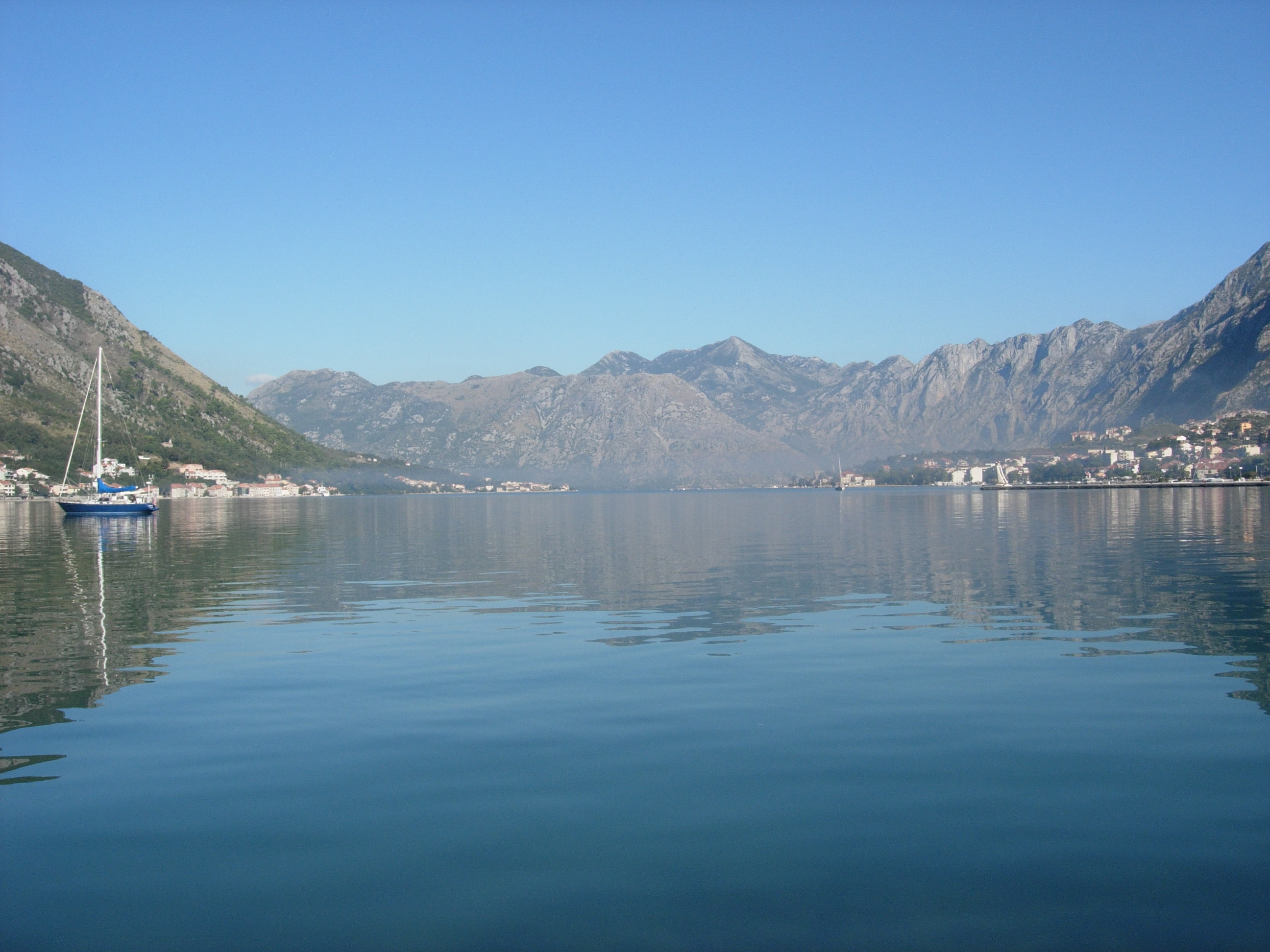
Little town tumbling—orange roofs and white walls, a piercing spire poking through. They huddle there, like that, against the flat glass of water and the great grey of the mountains, rising up, behind their shoulders, like a fanged phantom in an old movie.

Looking up
An opposite feeling from looking down from a great height—an inverted vertigo—but still something you feel in your throat: a mild choking, the sense of great force, the immensity of rock, a gravity that could crush you, take you, toss you up and swallow you whole—but instead just makes you utter one long “fuuuuck.”

Boy by the bay
Little tough guy, maybe 7 or 8, comes buzzing up on his bicycle. Buzzing because the plastic crate fastened to the handlebars has sagged down and is rubbing against the front wheel. He looks at me as he passes, nods at my arm, then stops—skids his worn sneakers on cement—and circles back.

He juts his chin at my right arm, an international gesture for “show me your tattoos.” I roll up my sleeve and he smiles. He juts his chin at my other arm, and I repeat.

He gives me a broad grin—one molded yellow tooth—and extends his arm in a thumbs up. I smile back with my gleaming row of American white. He nods again, then pushes off, pedals away, is gone.

Tanya
Something of a little girl still in her, something in the smile and the slouch, that behind the grim skin and grey smile, under the coat-hanger bathrobe and shuffle of slippers, seems vulnerable—breakable but not broken.

Abandoned hotel
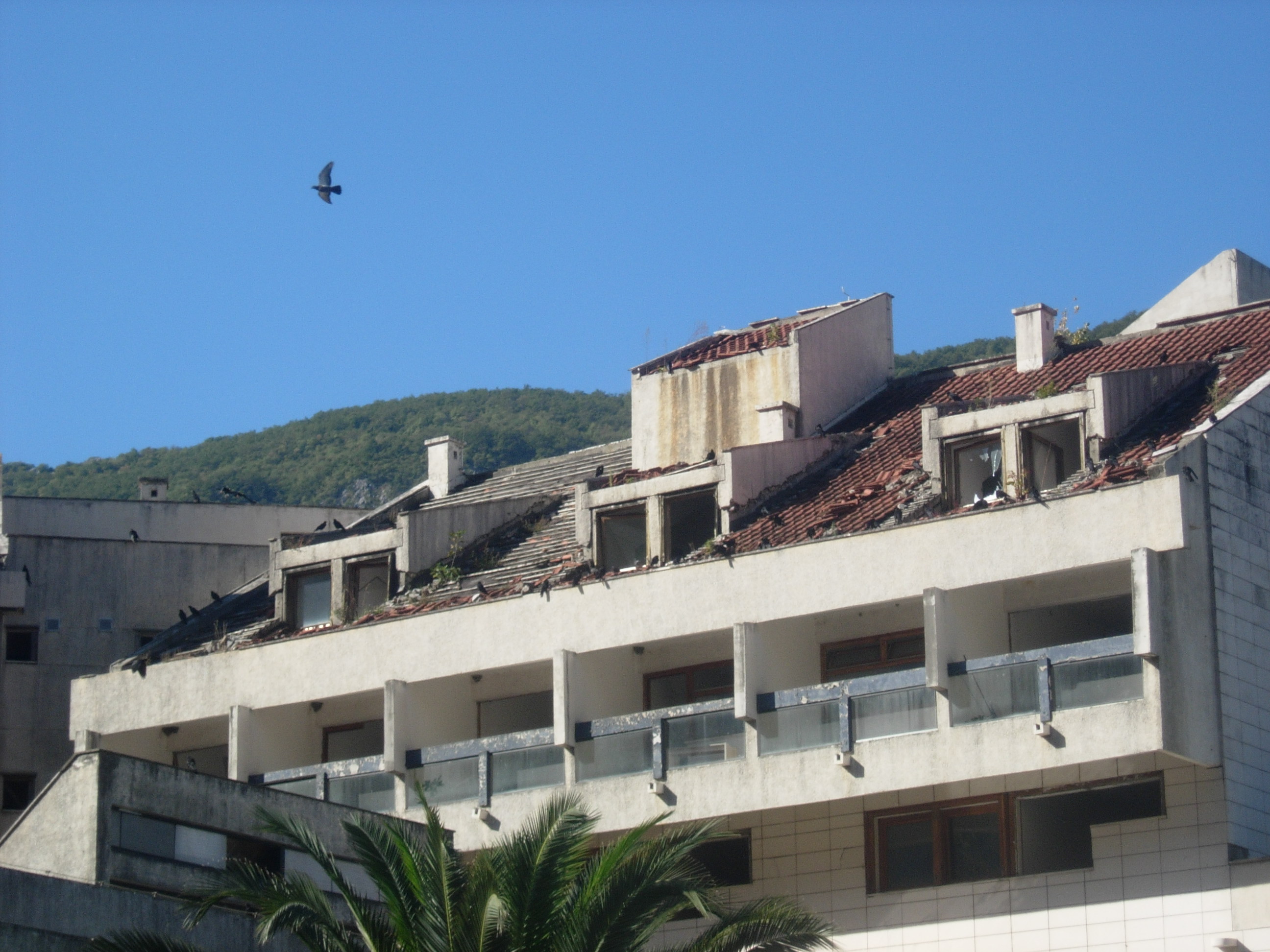
Broken glass and shattered tile, ruins of an old hotel—an exquisite home for the ravens.

Kotor
I like this place better by morning—the umbrellas folded and the stones still wet, the sun a soft thing, haloing from behind the mountains’ immense back. I like the footsteps, the sound of voices, the rattle of stroller wheels. I like the cats in the doorways and the pigeons staring, staring from their stoop between green shutters.

Filling the Fame

The hunger, that is.

Okay, so let’s make a deal. I won’t torture you all with never-ending posts about Grottaglie/Fame Festival/one of the best travel experiences of my life IF you all check out my coverage of the festival on the following links:

Hi-Fructose Basic summary with some pics

Hi-Fructose My interview with Fame organizer Angelo Milano.

Huffington Post More narrative coverage of the event, my favorite of the write-ups I’ve done so far.

Since I have no way of actually enforcing this deal, so we’ll work on the honor system. Okay? Okay.

(And, yes, I’ve been a busy girl. Loving my Netbook, and loving free wifi!)

Grottaglie Or Bust!: Fame Fest ’10

Siesta-dazed and still covered in little bits of glitter, I’m holed up in my hotel room in Grottaglie. Laptop on my lap, balcony door open a crack, listening to the moan of the fan, I don’t know where to start.

I could spend the next two months writing about this weekend, here in this random little Puglian town, wedged between plastic-tarp-covered vineyards and industrial, cloud-coughing skylines. It’s at times like these when you realize just how insufficient your own words are—how close they can sometimes come to capturing this thing, this thing you’re always circling and chasing, but that ultimately always goes “fluttering through your nets,” as Virginia Woolf said.

This weekend has been a little of everything I love in travel: discovering killer art, adventuring around abandoned buildings and ancient caves, eating great food, meeting awesome people. I came here for the opening of Fame Festival, a DIY street art event put on by the one-man-powerhouse/party Angelo Milano, that is slowly transforming the forgotten little town of Grottaglie. I’d been following the build-up on various art blogs, and it seemed like a pretty damn good excuse to go on an adventure.

There’s about 100 different angles to write about this from, and I’m sure I’ll be torturing everyone with posts for months on end. So instead of giving the 3000-word play-by-play (you’re welcome), I’ll give you the highlights. And some pictures.

Fame Festival
“Success, celebrity” in English, “hunger, starvation” in Italian, Fame Festival is the blood, sweat and glitter (more on that later) of one dude, Angelo Milano. Three years ago, he started inviting international artists to his little hometown for short residencies. The artists produced prints at his studio, Studio Cromie, produced ceramics using the town’s ancient ceramics studios, and threw up street art pieces all over the city. The festival has grown, gained a fair amount of notoriety, and a small crew of artists/collectors/enthusiasts/fanatics make the mission down to Grottaglie for a complete and total adventure.

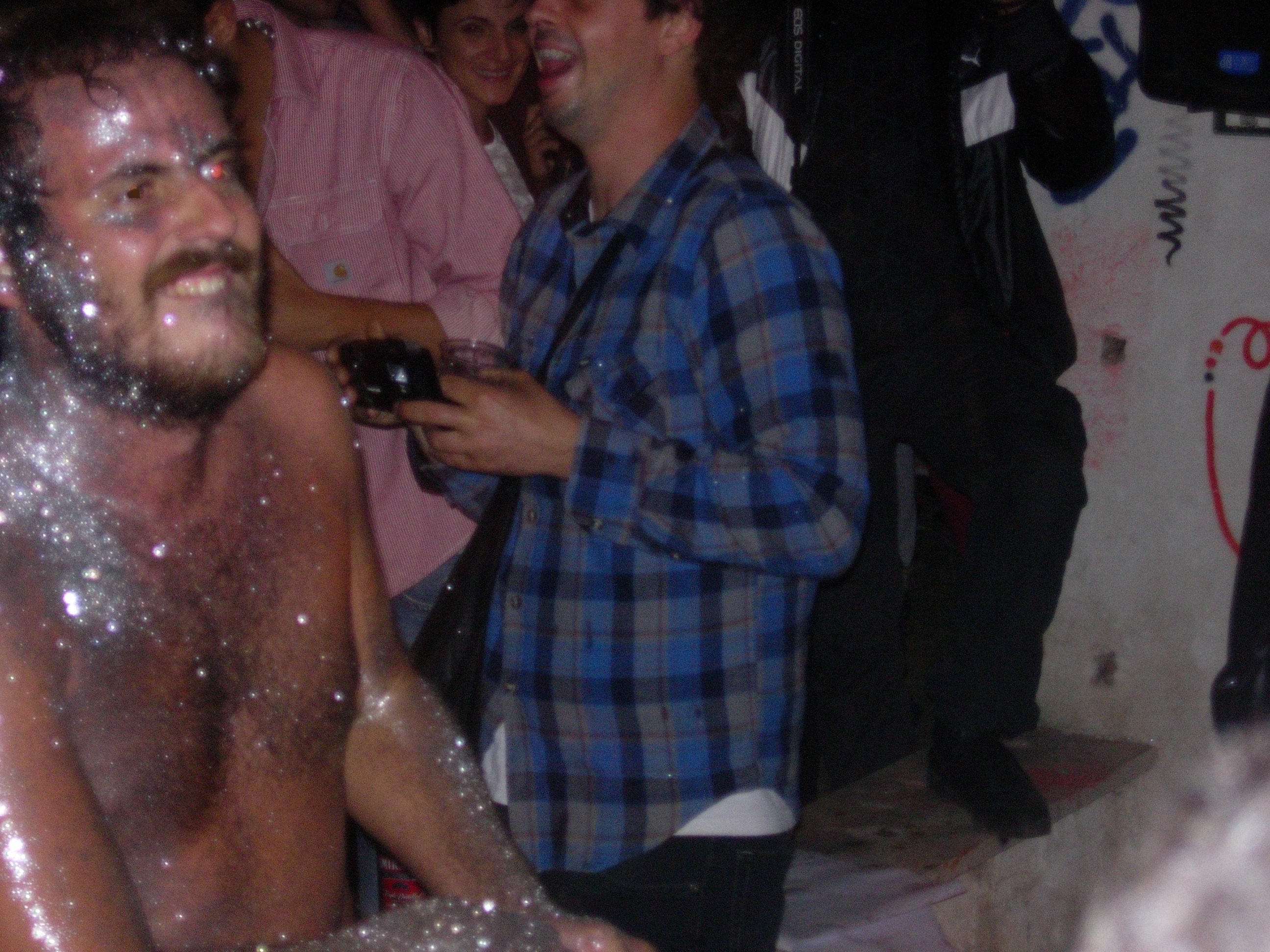
Angelo welcomes you with all the enthusiasm and graciousness in the world, arranging hotel rooms and rides from the airport. On the evening of the preview, he takes the gang load of visitors back to his grandmother’s house, where his dad shakes your hand and his mom cooks a huge traditional Italian dinner. The opening party is complete with DJs, Puglian wine and a diverse mix of locals and art lovers; you then trek across town to Studio Cromie, where Angelo goes ape shit on the dance “floor,” dumping about 8 bags of glitter on everyone and generally having about as much fun as humanly possible.

You see everyone stagger around town with glitter stuck in their hair the next day. You’re given, on preview night, a map of the city marked with all the street art pieces, and you wander around, ticking off the 60+ list and snapping photos. It’s like a treasure hunt.

Coolest part: adventuring around an abandoned monastery filled with art.

Grottaglie
The town itself is awesome. Not in a knock-your-socks off way, but in a slow, subtle way that sneaks up on you. It’s got an old town, complete with winding roads and a couple UNESCO sites, as well as a new part, devoid of billboards and with only one corporate chain. The whole town siestas from 12-4. You can get dinner at a restaurant for 6 euros. Old women say, “Ciao, bella.” Teenagers hang out in cafes til 2am.

The city’s surrounded by ancient caves that were inhabited until just a few decades ago, when the Italian government kicked everyone out. You can go and poke around in them, see the remnants of old cooking areas, frescos peeling off the walls.

The Peeps, and The Adventure
So what kind of wingnuts travel all the way to bumfuck Puglia for an art festival? Awesome ones. I met so many fresh people, one of those this-is-why-I-travel experiences that you know is going to linger with you for a long time.

There’s also the adventure aspect. No guidebooks mention Grottaglie. The bus from Naples dropped me off on the side of the road; luckily I’d had the wherewithal to print out a Google map the night before. You traipse around the random town that epitomizes off-the-beaten-path, and it reminds you, again, why you travel.

Street Art
I’m no expert on street art, but I got to meet a lot of people who were. And it’s clear that we’re on the brink of something, something bigger than just the art world. Street art is a kind of dialouge with a city, and it’s changing cities. Street art as architecture, urban development, tourism—there’s a lot to discuss.

But right now, legs crossed on this hideous hotel bedspread, I’m feeling incredibly tired and incredibly grateful. I gave myself an extra day here, to hang out with the wifi and sleep, before I take off for Dubrovnik tomorrow. But even if I were going home tonight, it would have all been worth it. Fame Fest was one of the best parties I’ve ever gone to, and one of the best adventures a traveler could hope for.

Pigneto: The Rome For Outsiders, and Me

Here’s a little rule of thumb I learned yesterday: if a neighborhood has a shitton of street art, it’s probably the neighborhood I wanna be in.

It’s funny coming back to a place; I never really do it. I was interested to experience the difference. Three years ago, Rome was hands down my favorite European city—probably because it was the most vivaciously chaotic of the cities I’d visited in Europe. Life was different then; for one, I was traveling with my then-boyfriend, who I’d break up with a month after returning home. Nuff said.

Rome didn’t seem so intense and frenetic this time around; it felt much more manageable. I landed with 8 hours of scattered sleep within the previous 48 hour period, and decided to power through the day in order to acclimate myself to the time difference (it worked).

I wandered through the city in a haze of memory, surprised by how my legs took me to all the familiar spots—muscle memory of a city. There was the Colosseum, aching in its magnificent crumble; there was this piazza and that piazza; there was the terrible Chinese restaurant I dragged us to in a vegan moment of tofu craving. It’s funny when a place has only existed in your mind, at one very specific time, funny to see it still going on, living and breathing, like going back into a dream that had kept on dreaming without you.

I remember my dad saying that Rome made him feel his own mortality, and I can definitely say that’s still true for me. There’s something about the ancient greatness, the ruins and remains of glory, that really serve to check you. Just in case, you know, you got to thinking your shit really mattered, there’s Rome to remind you how inconsequential it all is—how small, how much of one shining moment you are. All your joy and heartbreak, your own impending ruin—it will all come and go, and Rome will still be there. You’ll be lucky if your bones last as long as Rome’s.

That being said, Rome isn’t really about anything I’m about. It’s one of the world’s great cities, and has been for thousands of years, and I love it for that, but everything that I get stoked on—diversity, punk rock, hip hop, street art, tattoos, counterculture—Rome doesm’t give a shit about. Why should it? It had Julius Caesar; Rome doesn’t have time for trends.

Walking around center, you get to feeling like an absolute slob—an(other) American slob. Everyone has so much style and grace in Rome; how do their clothes fit so well? How do they all look so effortlessly chic and beautiful, and what the hell is wrong with you in your Toms and Talk Is Poison shirt?

And then you take a rickety street car down, along desolate tracks and amid rows of block buildings, into the rundown side of town, and you realize: that’s because all the Romans in the center are rich. Rich people of any culture look good, and are inherently alientating (to me at least). You get amid a neighborhood a little more like your own, and you realize there’s more to Roman life than tailored suits and killer shoes.

Pigneto is the Mission Dolores/Williamsburg of Rome—an old-school, traditional neighborhood first overtaken by immigrants, now overtaken by hipsters artist types otherwise entirely abscent from Rome. Along its shady streets, you see little old Italian men shuffling around; African, Chinese and Bangladeshi immigrants hanging out, free of their blankets of goods to sell; young Italian sitting in doorways smoking. I love dynamic cultural collisions like that; they’ve been known to bring much of the forementioned things I love. Including street art.

I’d headed out to Pigneto in the first place to meet up with Jessica Stewart, who runs the very kick-ass Rome Photo Blog, covering contemporary art, street art and other radom wonderful things around Rome. I had some time to kill before we met, so I roamed around and took photos.

Swear I saw stuff from this person in Brooklyn...

Loved this series

Well, lookey who...

My favorite series

I met Jessica at Necci, a bar/restaurant that’s been around since the 1920s and was featured in an issue of Australian Gourmet Traveller last year. We sat at a table under a tree (which only kind of shielded us from the rain) and she told me about the neighborhood, about the art scene and ex-pat life in Rome.

“Rome is a very play-it-safe, stay-with-the-pack kind of city,” she told me. She spoke about the city’s slowness to accept street art in its galleries. “It’s a very traditional city. It’s hard to impress people in Rome—you know, when you’ve got the Colosseum right there, it’s hard to feel like you can do anything in comparison, or anything that matters.”

There were, she told me (and as she’s documented on her blog), a small handful of artists, living out in Pigneto and San Lorenzo, that were doing their own thing. And acceptance was growing, along with recognition.

“The one thing one of the artists said that was true,” she told me, our shoulders hunched under the branches and drizzle, faces half-lit from the barroom light, “is that, if you can make it in Rome, you can make it anywhere.”

It seemed true enough.

Serendipity, Street Art and the Best Layover EVER

It’s a fantasy common enough to warrant TV commercials, (porno) movie plots and a voyeuristic story by Gabriel Garcia Marquez: you get seated next to an attractive person on an airplane. And you’re stuck beside each other, awkwardly negoitiating the small space for hours.

As most travelers will readily tell you, this is about as rare to air travel as getting bumped up to first class. No, rarer. The cast of characters usually beside you in the sardine can of coach include snorers, fidgeters, wiley children and consumers of mysterious day-old food. It really serves to drive home to actual percentage of datable people in the world’s population. I, for one, had given up on the fantasy and resigned myself to the mere hope of a recently showered individual that can fit in their own seat (which is also more or less when I’ve resigned myself in dating—and have been known to compromise on as well).

Well, holy shit if the travel gods didn’t smile down on me. And homeboy wasn’t just attractive—he was rad. As I discovered, not just during the flight, but on our 10-hour layover spent adventuring around Brooklyn together, spotting street art and searching for obscure vinyl.

I’d noticed him passing through security (as I was being pulled aside to have my purse dismembered in search on nonexistent weapons): hip without being pretentious, stubble beard, cowboy boots, a bulging bag of records. But I didn’t give it much thought until I was settling into my dismal seat in the back of the plane, next to the bathrooms. I watched him struggle to jam his record bag into the overhead compartment and smiled. When he looked down at his boarding pass, scanned the aisle numbers and ended up standing right beside me, we both smiled.

Sebastian had been traveling around the US for 5 weeks, and was on his way back to Zurich. He had a couple lines in his forhead, the well-traveled beginning of wrinkles. He had the worn-smooth hands of a cook, the black strand of a necklace peeking out from under his shirt. He had killer taste in music.

We chatted about life and travel and bands (“I saw some great shows in San Francisco.” “Like who?” “Ty Segall.” “On Wednesday? At the Rickshaw Stop? I was totally there!”). We talked about his trip and my trip (“I’ve got a 10 -hour layover.” “Me too. I was gonna go into the city, hang out. Better than being at the airport.” “That was my plan too.”) We fell into the fitful half-sleep of confined space and over air-conditioning; woke up stiff necked and lip smacking, ditched our bags at a luggage locker and rode the subway into Brooklyn.

It was a shuttered-up and bare-sidewalked Sunday morning on Bedford, ground zero of Brooklyn hipness. There was a record store Sebastian wanted to get back to, that wouldn’t be open for hours. We rubbed our aching eyes and looked for coffee.

I consulted my iPhone. “Oh shit, there’s a Blue Bottle?!” I exclaimed. “Yeah,” said a girl passing by, “it’s around the corner.”

We sat in the sun and drank our hand-dripped cups of black, watched the parade of dogs and toddlers and cool kids. We bombed around the neighborhood, going nowhere in particular, until the shops thinned and the wide walls of warehouses took over. And we began spotting some kick-ass street art.

All the pictures are on my phone, which for some reason my new (new to me, that is) netbook won’t download. So expect a post when I get home. But just to tease, I saw Roa, Faile, Space Invader, Gaia, and a whole bunch of folks I didn’t know but really wanted to.

We hit the record stores that had brought us there. Sebastian confessed to me that he was a music nerd with a record fetish. “There’s so many more records in the States,” he told me. He’d already shipped a crate back to Zurich. “It’s okay, though, it’s still cheaper than trying to buy it in Europe. If you can find it at all.”

We got back on the train, dazed and subdued with our long flights looming. We looked back through his pictures—he’d ended up going to Burning Man, on (another) serendipitous whim, and I leaned in over his shoulder to look at the small viewfinder, its story of dust and fire, the wind that moves through desolate places.

Our shoulders touched, just a little in the shudder of the train. I felt no desire to make a move, so to speak; it was enough to have a small flutter in my stomach. It was enough to have met someone awesome, totally serendipitously. It was enough to have wandered around sleep-dazed and discovering, to have sat on stoops smoking in the Brooklyn sun.

Sometimes you don’t need a big climax, don’t need to get all flirty and sleezy or anything at all. Sometimes it’s enough to feel liked, not just desired, and to genuinely like someone back. Not cause you want to make-out with them necessarily, but just because they’re rad.

We sat at the bar of a jokey airport restaurant, where Sebastian indulged in the last American hamburger of his trip. NFL games were flashing on the various television sets, the jarring loudspeaker announcements of boardings and departings echoing through the space.

“Sebastian,” I said, “you are by far the coolest person I’ve ever sat next to on an airplane.”

We hugged. “I had a great time,” he smiled. “Me too.”

And I walked away, through the terminal to my own adventure.

Boiler Room, Angel Island

Abandoned by time but not escaped from it. Rust and debris, peeling paint and the pages of old magazines, broken glass so old its become smooth. Like some dim chamber of our hearts, we climbed into the boiler room.

Angel Island is full of abandoned buildings, the crumbling concrete and sagging frames of old military structures. A big mound in the middle of the Bay, smack in from the Golden Gate, the island is more than brown grasses and hiking trails. It was a detention center/”immigration station” during the Chinese Exclusionary Act, then an Army Post during World War II, later a missile center. Now it’s a state park, filled with picnicking families, kids on field trips, tourists on Segways.

Summer in San Francisco...

It’s nice to spend a day roaming around, out in the middle of the Bay—packing a sandwich and riding the expensive ferry and taking the long, gentle walk around the perimeter. But what I love most about Angel Island are the abandoned buildings.

Some are open to the public, stairways smashed out so there’s no chance of climbing up into the desolate upper stories. You wander around the ground level, the empty gutted rooms, staring up past the chicken scratch graffiti, wishing you could poke around the dusty remains above, crunch your sneakers through the silence.

Other buildings are fenced off, doors bolted and windows shuttered, large signs warning of the repercussions of trespassing. The grass grows up around these buildings, consuming them; sometimes you catch shadows in the broken windows and they look like your own.

We circumvented a large, fenced-off building, found a spot relatively hidden from the main path. It’d been a long time since I’d hopped a fence, wedged my toes between chainlink and landed ankle-sharp with a laugh.

We tiptoed towards the building.

The boiler room. Heavy, huffing machinery now silent, steamless, bellies swollen with the memory of a howl. Old basins and the criss-cross of empty pipes, useless and buckled. Nameless parts of an old operation. A map on the wall of where tools once hung.

We crunched around, slats of wood and indistinguishable debris, the flattened beer cans of some lost era. There’s something about crumbling places that make you whisper, a kind of reverence—not just for what has passed, but what has remained, aged and weathered and somehow still standing.

It reminds you of your own ragged heart, those places you’ve closed off, chained off, boarded up and shut. But they’re still there—forgotten, maybe, but not empty, bloodless pipes waiting, dreaming of steam.

And sometimes, something goes traipsing on in there, flicking lighters and echoing voices and leaving new footprints, in a place you swore no new footprints could go. A place you swore was sealed shut and secretly dying.

We trespassed into the abandoned boiler room, then stepped back out into the dim squint of a fog-heavy noon—our lives.

Gaia in Seoul

Something excited me. I wanted to write about it.

That’s pretty much how it goes for me, and even better when it goes well. Making my internet rounds a couple weeks ago, I came across some coverage of US-based artist Gaia‘s recent work in Seoul, a five-piece street art project that explored conflicts in Korean culture.

All my little interest antennae were piqued. But coverage was all on art sites that focus mainly on photos rather than text. I needed to know more: Why Seoul? Why this project? What was his connection? How did the project come about? How did this dude, this outsider, this traveler, find a way down into the pulse of a place, the cement aorta of the city—and leave a mark on its walls?

So I found him and I asked him. Lovely guy. You can read the text version of our 45-minute conversation over at Hi-Fructose, here.

What interested me most about the project was its deep interaction with place. It goes beyond site-specificity, for me. All street art, one could say, involves a very visceral, physical interaction with a place, its architecture, cement, rooftops—its placeness. Which I love. But this project went beyond that. The pieces spoke to very deep conflicts within the culture—tradition versus modernization, internal versus external—conflicts you could say define the culture. The project did this, not in essays or lectures, but in art, on the street. It spoke to the cultural elements of the place through the physicality of the city itself.

Pretty bad ass. And some damn good travelin.


Lauren Quinn is a writer and traveler currently living in Hanoi. Lonely Girl Travels was a blog of her sola travels and expat living from 2009 to 2012. She resides elsewhere on the internet now.

Join 490 other subscribers

Buy This Sh#t

Categories