Archive for the 'Culture Shock' Category


Forget the Guidebook, This is the VICE Guide to Travel

Dolores Park: "You would think VICE Magazine threw up there."---SF Comedian Ali Wong

At the risk of sounding like a gold-lame-wearing, ironic-mullet-sporting Dolores Park denizen, I’m gonna say it: I like VICE Magazine. And I fucking love the VICE Guide to Travel.

Quick run-down, in case you don’t know: VICE grew from a Montreal zine into global empire of youth counterculture, serving as a kind of hipster voice of a generation in what some could argue was the next CREEM magazine. By 1999, VICE had exploded on to the hip-slick-and-cool scene. A free, glossy magazine peppered with American Apparel ads, you’d find issues at trendy clothing stores and serving as coasters on your friends’ coffee tables, or stacked beside the toilet for inspirational reading material. Having reached new heights of hipness, VICE was nearly immediately deemed as have “been better” in previous years, in the perennial way that everything was better before it got big. But here’s a little secret about VICE: it’s got some killer articles. Some are better than others, for sure, and many breach a little too far into the snarky, too-cool-for-school realm. But I’d argue a good half of the magazine is usually filled with quality journalism, covering super interesting international cultural phenomena.

Which leads to the VICE Guide to Travel. It’s not Rick Steve’s, or even Lonely Planet. VICE goes to some of the most fucked locations on earth, “the kinds of places that nobody else wants to visit”; digs up shocking and bizarre stories; sends sweaty dudes in v-neck t-shirts to interview warlords/cannibals/other locals; films it all, and sets it to a soundtrack of doom, gloom and rock. It’s “edgy,” it’s “off-the-beaten-path” (to say the least), and it’s some of the most bad-ass travel journalism out there.

First, some clarifications on the meaning of “bad-ass.” Empty, self-serving sensationalism with no emotional depth or historical perspective is not bad-ass. And there’s plenty of that out there in the travel world.

A couple months ago, I complained about this kind of trying-to-be-bad-ass-edness in a post blog and subsequent Matador article. Later, I came across an article titled “5 Totally Bad-Ass Travel Experiences” that made me want to vomit. The article listed 5 “daring” travel experiences, two of which capitalized on some of the most heinous aspects of a country’s history. The perspective reeked of a privileged disconnect with the suffering caused by events like genocide and drug wars:

Home to one of the biggest genocides and mass killings in modern history, Cambodia is awash in guns and weaponry. It’s a pretty peaceful place these days but there are still opportunities to get a taste of the weapons of war.

Oh, well, bummer the murdering is over, but at least there’s still cool guns to shoot off. I wanted to reach through the computer and punch the writer. Granted, the article struck a personal nerve; I guess when you know people who escaped the Khmer Rouge, but who’s families all died in the killing fields, well, that takes the thrill out of shooting war weaponry in Cambodia.

What separates the VICE Guide to Travel from lame travel “journalism” like this is skill (they hire professionals)—but more importantly, approach. Traveling to some of the most depraved and damaged places in the world, VICE toes the line, certainly runs the risk of lapsing into one-dimensional exhibitionism and aren’t-I-cool pats on the back. Some in the series are stronger than others, but I’d argue that all stay true to the basic purpose of bringing obscure, untold stories from the gnarliest corners of the world to a Western audience. The liner notes of the original 2006 DVD explains:

The news is all bad. Sitting in our Western comfort, it’s easy to forget that most of the world is hell. War, disease, famine, genocide, and poverty dot the globe like big chunks of cancer. Basically, humans are fucked.

We thought we already knew something about current international events, but we didn’t really know shit until we set out and started doing some serious traveling. These aren’t vacations to Disney World, Paris or even some Outward Bound safari. These are trips to the places that you see once in a while on TV and think, ‘No way in hell am I ever going there.’

Well, we went so that you never, ever have to go for yourself as long as you live. We went, and we’re glad we did. Here are the stories to prove it…

What the VICE Guide to Travel offers is what some of my most difficult, but ultimately most illuminating, travels have: a new perspective on this crazy-ass world we live in. It’s tough to watch—the visit to the shell of a high school in the episode in Chernobyl made me tear up—but I think it’s some of the most interesting and important stuff out there in the travel world.

Which brings us to the new series, the VICE Guide to Liberia. The 8-part series is being released on their website; currently, the first 4 installments are up. Prepare yourself: this is some severely brutal material.

While I don’t think I’ll be going to Liberia any time soon, I’m glad that these guys did, and that the stories they found are getting told. In a world of SEO, Twittered trends and Top-10 lists, the VICE Guide to Travel gets down to the unmarketable, inconvenient bone of what travel (for me) is all about: seeing how other people live, and glimpsing into the strange stories that compose this world.

(Okay, so, it may or may not be a secret fantasy of mine to one day tag along on one of these installments. But for now, the website’ll due.)

Bolsa Blues: Adventures in Cuban Plumbing

This is half of a narrative written about my raucous New Year’s in Havana. The first, less-gnarly half is being considered for publication (fingers crossed and breath held), but I’ve decided that this side of the story is far too raunchy to get accepted anywhere. So, I’ll inflicted you all with it…

Bolsa Blues or The Other Reason You Should Always Carry a Plastic Bag in Cuba

I waken to a pale face in half-light. It looks down at me, desperate and pleading-eyed, washed in a light sweat and slashed by the stripe of sun that invades through the crack in the wooden shutters.

“Dude,” I croak. “What the—“

A tight-throat urgency cuts me off. “The toilet’s busted,” my boyfriend declares. “And I gotta crap.”

It’s New Year’s Day, and we’re stark naked in our tiny casa particular room, somewhere near the crumbling heart of Havana. The cigars, Rumba and rum of the previous night rumbles in our stomachs.

It’s the cardinal rule of Latin American traveling: never flush the toilet paper. A continent-and-a-half held together by a rattling grid of rusty old pipes, the Western traveler is beseeched by earnest signs Scotch-taped to the walls of restrooms: “Dear Mr. Customer, Please to not put paper in the toilet.”

It’s a hard-to-break habit of ours, this depositing of smeared bundles into the toilet bowl; it takes a couple days to train the hand to shift, move, not drop the paper straight down but into a wastebasket beside the toilet. It was only our third day; we had a couple slips. But surely, I assured Adam the night before, nothing extreme enough to reek pipe-wrecking havoc.

But the plumbing gods were watching, laughing, and struck swiftly with their reprisal. And my boyfriend, beset with hangover bowels, is paying the price.

I leap from the tangled sheets, hair sticking straight up and nude. I peer in at the toilet from the doorway. “There’s no way,” Adam answers before I can ask.

He’s right—the mess inside has disintegrated into a thick, gurgling stew at the bottom of the bowl, streaks running down the sides. I glance back at Adam, hunched over and leaning against the wall. “It’s bad,” he tells me.

“Let’s get dressed and go somewhere.”

“Yeah, but where?”

Attempting to smoke a cigar, the previous night

He’s right again—all shops and restaurants in walking distance have less-than passable, if any, facilities. I suggest taking a cab to the fancy hotels in Centro and using their lobby bathrooms, a tactic we employed earlier during our outings. Adam shakes his head, “I don’t think I can make it. I’ve been holding it all night.”

I suggest trying to use the casa owners’ bathroom. I then consider the vocabulary necessary to construct a plausible explanation, and nix the idea. “You could go in the trash can,” I laugh. He chuckles, grimacing slightly. “Or in a plastic bag.” We laugh harder.

Our laugh gives way to silence. We look each other in the eye and nod. “Lemme see if we have one.”

I begin rummaging through our piles of clothes, books, snacks, while Adam sits on the rim of the tub, mentally preparing. “Got it!” I exclaim, waving like a flag the small plastic bag that carried the crackers we’d bought during our layover in Mexico. I hand it to him with a reassuring smile.

“Okay.”

“Okay.”

I shut the door behind me. I intend to go wait politely on the edge of the bed, but the camera appears in my hands. I creep towards the door, inch it open. He’s squatting in the middle of the room, veins bulged in concentration, with the black bag clutched under him. I get him in the frame; the camera clicks.

“Oh, come on! What the fuck!” he shouts. I giggle and slam the door.

“Really, Lauren,” he says from the other side. “Is that necessary?”

“Yes.” I laugh hysterically as I examine the view finder. “Yes, it is.”

He emerges from the bathroom a couple minutes later, eyes down. “Well?” I ask. He looks at me, nods. I peer in the bathroom; he’s neatly tied the handles of the bag and set the bundle on the edge of the tub.

“What do we do with it now?”

It seems wrong to leave it there, in plain view, when the poor owners will have deal with the mess in the toilet already. I picture us sneaking into the kitchen and throwing it in the trash, but that doesn’t seem right either. Nor does our sheepishly handing them the bag and running out of the apartment. “We could hide it in a drawer and flush it when the toilet’s working again,” I offer half-assedly.

“Do you have any idea how awful it’ll smell in here when a bag of shit’s been festering all day?” Adam, always the practical one, retorts.

“We could smuggle out in my bag.” It seems like a viable option.

Adam gets off the bed, moving towards the window. “I wonder if we could open these shutters.” He runs his hands down the solid wood covering the windows.

“You wouldn’t really throw it out of the window, would you?”

“You wanna carry my shit in your bag?”

We pry the latch open and groan the hinges open. Daylight blasts into the room; our pupils wince.

Adam stands on a chair, craning his neck to see as far out the window as the wrought-iron bars will allow. “What’s out there?”

He steps off the chair, defeated. “It’s one of those air shafts. People have all their laundry hanging up. And someone’s got a garden down at the bottom.” I refrain from a bad joke about fertilizer.

We collapse on the bed and stare at the ceiling. “Well,” I venture, “we could just put it in the bathroom trash can. I mean, it’s already got our used toilet paper in it, so I doubt they’d really look.”

“I guess you’re right.”

We get dressed quickly. I gingerly bury the plastic bag beneath the top layer of used toilet paper in the wastebasket. I put the lid down on the toilet before we leave the room.

“Bueno dia,” our casa owner greets us warmly, looking up from the newspaper.

“Bueno dia,” we mumble (we’ve learned to drop our “s”s, just not our toilet paper).

“Quieren desayuno?” his amicable, aproned wife asks.

“Um, no, no gracia.” We stand there for a moment, awkwardly. I take a step towards the owner. “Um, pardon, senor.” I fidget, look down. “Hay un problema en el bano.” He nods earnestly at me. “Lo siento.”

Maybe it’s a situation he’s encountered before—poor plumbing meets the foreigner’s paper-flushing habit, topped off with a rocking drinker’s shit. We exchange helpless smiles, and Adam and I scuttle out the front door as fast as we can.

Down on the street, we feel relieved. Neither one of us can stop laughing.

“I think,” Adam declares, “that you’re the best person to be in a bad poo situation with.”

“Really?” I beam at the compliment.

Malecon

“Well, yeah. I mean, anyone can be practical. That’s not really what you need in a bad poo situation. What you need is someone who will find it absolutely hilarious.”

I take his hand. “I’m honored.”

We continue down the street, holding hands under the half-clouded Cuban sky, towards the Malecon, and a new year.

There’s No Crackheads in Cuba, and Other Things that Strike the American Traveler as Strange

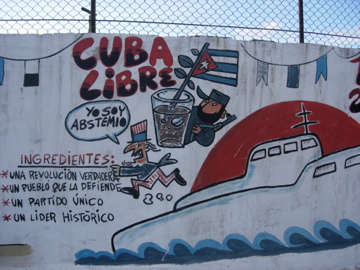
Havana Mural

Hands down, beyond a doubt, Cuba is the most different place I’ve ever traveled to.

Sure, I’ve been to non-Western countries; I’ve trekked through remote jungles studded with indigenous villages and spent a night in a water-world town-on-stilts where the night sky erupted with spontaneous flashes of thunderless lightning. But I’ve never been to another place where capitalism wasn’t a presence, and where the ensuing materialism and infiltration of American culture was so miniscule.

It’s impossible to talk about Cuba without getting into some kind of political discussion. Like everyone else, I’ve got my personal views—seeing as I was raised in a house that had 38 volumes of Lenin on the shelf, I’ll just let you guess what side of the spectrum I fall on.

But I’m not here to talk about that. Not really. What I want to talk about, and what’s of importance to the traveler to Cuba, are the ways in which Cuba is unlike any other country I’ve experienced. These reasons are inextricably linked to the country’s politics, to the revolution and the island’s legacy of struggle.

Yes, I realize I’m walking into a shitstorm. But we either dance delicately around these things, saying the same, tired, noncommittal niceties (Dante had a hell for that), or we get real—sit down, look it in the eye and say what we mean. (I’ll let you guess which option I think has more value.) Besides, I’m back home; I’ve got the toilet paper and functional plumbing to handle barrages of shit.

Oddity #1: Safety

One of the first things I read about Cuba was how safe it was. Touted in guidebooks to be paradise for solo female travelers, where any dark backalley can be delved into any time of day or night, I was willing to accept that Cuba was probably safer than Oakland. Most places are. I was still uneasy about rolling into the country with over a thousand dollars in cash on me, and neither my travel companion nor I could easily shed our well-grained habits of stone-facing strangers and checking our backs like motherfucks. But after a couple days, we loosened up. It was true: Cuba was mellow.

Break between innings

I suppose what strikes one as odd about the lack of violent crime in Cuba is that the country is so terribly poor. In the US, and most other countries in the world, poverty equals danger. From Rio’s famed favelas to Cairo’s ghettos of Sudanese refugees, to deep East Oakland, the relative safety of a neighborhood is most often directly proportionate to the level of wealth, or lack thereof. One look at the crumbling building facades and boys playing baseball with scrap pieces of plywood, and you start to understand just how poor Cuba is. And while, yes, there’s hustlers and pick-pockets, and yes, some laughing 12-year-olds tried to snatch my bag one night, the gravity of the threat of real violence isn’t there. (It would have sucked to have my bag stolen, but it sucks a lot worse to get a gun put under your chin.)

You can chalk Cuba’s safety up to a number of factors, depending on your politics and worldview: The police force is strong and no one wants to risk a lengthy stay in a Cuban prison. Protecting tourists is in the best interest of the island as a whole. Or you can think it’s got something to do with the fact that base needs like housing, education, medical care and some amount of food are all guaranteed by the Communist government, taking the edge of desperation out of the poverty equation.

Whatever the reason, walking around at night and realizing that you have no need to be weary is a strange feeling for an Oakland kid like me. Good thing we didn’t get used to it; less than 48 hours after getting home, my travel buddy was robbed at gunpoint. Welcome home.

Oddity #2: Lack of Homeless People and Drug Addicts

Cienfuegos

Beggars and bleary-eyed glue sniffers are par for the course in the cities of most poor countries. Even in one the wealthiest countries on earth (guess which one), pan-handlers, under-the-freeway encampments, and twitchy characters of all narcotic varieties are everyday fixtures on the streets, even in posh tourist attractions (San Francisco). After a couple of days wandering around Havana, I realized I hadn’t seen any cardboard alley homes and not a single crackhead. Weird.

During my time in Cuba, I got pan-handled maybe half a dozen times, and saw one toothless, staggering old lady that looked like the resident town wino. But when it came to hard-core addicts and homeless people, I didn’t see any.

The lack of homelessness is fairly obvious—the government provides housing. But Cuba is also really strict about the import of drugs. Not wanting to give the US any reason to invade, and perhaps still smarting from its soul-sucking era as a mafia paradise, the Cuban government put the ixnay on drugs, and today they’re really not a presence in Cuba. (Makes you wonder what would happen if the US made such a bold decision—oh wait, wasn’t that what the whole War on Drugs thing was about?)

The night we got home from Cuba, we went to see Neurosis play at the Great American Music Hall in San Francisco. The venue is smack in the middle of the Tenderloin, one of the highest concentrations of human misery on the West Coast. We walked through urine-soaked sidewalks, crunching windshield glass and dodging screaming, contorted derelicts, in a kind of dazed state of shock. After two weeks in Cuba, it seemed inhumane that suffering like that could be tolerated, allowed to exist in such a rich, rich nation. It was the worst culture shock I’ve ever experienced.

Oddity #3: Lack of Advertising and Lots of Government Propaganda

Okay, you’re gonna see a lot of government propaganda. Pro-revolutionary billboards, Vive Fidel banners, smiling pictures of Hugo Chavez: it’s all a little unnerving, I’m not gonna lie. But then you realize why it seems like there’s so damn much of it in Cuba (aside from the fact that there is): there’s no other advertising out there.

You forget how much energy you spend blocking out flashing signs, automated voices, beautifully anorexic, air-brushed girls selling perfume and cell phones and chewing gum. Until you don’t have to do it. I’ve heard really high-end resorts make you feel the same way, like you can let your mental filters down and just relax. Well, until I get a rich sponsor, Cuba’s gonna be the closest I come.

If it’s true that you can learn a lot about a culture through its advertising, then it’s also true you can learn a lot about a culture about its lack of advertising. Cubans are insanely open and friendly, and while there’s plenty of cultural factors contributing, couldn’t one of the reasons be that they’re not constantly fending off the barrage of catchy slogans and glossy images of psychologically invasive advertising? At the same time, the government is an inescapable presence on the island; one is constantly given visual reminders of the pro-government stance everyone’s supposed to take.

It’s a stretch, but maybe. All I know for sure is that my brain got a real vacation in Cuba.

Oddity #4: Havana Has a Chinatown (With Three Chinese People in It)

And it’s actually the oldest Chinatown in the Western Hemisphere.

A then-vegan, I had a mean hankering for some tofu when I was in Havana. I thought my best bet was Chinatown, the touristy relic of Cuba’s once-robust Chinese population, originally brought over in the mid 19th century to work in the sugar fields. I elbowed amid the throngs on foreigners and grabbed a seat under the red awning of a restaurant whose menu listed something I assumed was bean cakes. Ten minutes later, a steaming plate of bean sprouts, and nothing but bean sprouts, was placed before me. My then-boyfriend laughed.

Havana’s Chinatown stands as a reminder that the country has plenty of pre-Castro history, often overshadowed. Most of the Chinese laborers brought over intermarried, infusing the Cuban cocktail with Asian genes; thus, there aren’t a whole lot of fully Chinese looking people left in Chinatown. I saw a couple dudes smoking in the traditional squat, but it was honestly the most un-Chinese Chinatown I’ve ever been to. And the most devoid of tofu.


Oddity #5: The Resilience of Cuban People

It’s kind of a Cuban cliche: some cigar-smoking, deeply wrinkled dude fixing a 30-year-old bicycle with a piece of dental floss and an old Coke can (or something to that extent). Cuban people are renowned as the global experts in reusing everything, wasting nothing, helping each other out and not complaining (partially because of political repression, but still). Cubans are like the one friend you have that can fix anything, who relishes in helping you figure out why your car is making that funny noise and who repairs the holes in their sneakers instead of tossing them to hang over the telephone wires. Yes, part of it is a result of years of rationing and making do, but I think it gets down to a deeper cultural characteristic, one born of imperialism.

Another gem from the Havana mural

The best explanation I read of why Cubans are so resilient and continue to come together and make do is that, by and large, they want the Revolution to succeed. (I’m not talking Miami Cubans now. And this isn’t necessarily my perspective, but a well-informed argument that made a lot of sense.) However deeply flawed and difficult the Revolution is, it’s still the first time in 500 years that the island’s been run by Cubans. From Spanish colonialism to puppet governments to foreign-owned sugar plantations, outsiders had the ultimate power in pre-Castro Cuba. The country was endemically violent and deeply divided down lines of race, class and ethnic origin—divisions that don’t disappear in 50 years, but have improved. Castro’s Revolution is the longest enduring era of Cuban control since the Spanish arrived on the island. That’s a really powerful statement, one that can help you understand why Cubans endure so much and continue to struggle.

Of course, one could easily argue that all this is at risk. The impending end to the US embargo will mean an immediate influx of American culture and goods. And however much outsiders may want Cuba to remain a junkie-free, billboard-less Eden of free health care and high literacy, the end of the embargo will be a damn good thing for Cubans. But I’m glad I got to go pre-post-embargo, and experience some of the strangest things an Oakland girl can.

Marrakesh, You Broke Me Down

DSCN3558It was a long, hard, hot last day in Morocco, in Marrakesh, the pounding heart of the country´s tourism industry.
As I was venturing down the Atlantic Coast, south of Agadir and thoroughly ¨off the beaten path,¨ I was giving some serious thought to ditching out on my flight back into Europe, and spending the rest of my two weeks in Morocco. There was certainly enough to keep me occupied—I didn´t even make it to the Sahara!—and I felt like I´d hit my groove with Morocco. I was getting skilled at traversing the streets, haggling for taxis; I was in love with fresh-squeezed orange juice and mint tea; even my French was improving. We were vibing, Morocco and I, and it seemed a shame to cut out so soon.

But the prospect of Portugal, Western Europe´s ¨forgotten¨ country,  combined with a pre-purchased flight and a chance to wash my blue jeans and ditch that filthy blue scarf won out. I arrived in Marrakesh with just one day to soak in the crowning jewel of Morocco´s imperial cities, and its exotic lure.

I´d heard horror stories—travelers and Moroccans alike warned me that Marrakesh´s touts were the toughest, the street harassment the ugliest. I got off the bus from Tiznit suited up in my thickest armor, ready to do battle with a mean look and a linguistic sword of two words: la shokran, no thank you.

The problem with Marrakesh, or my problem with it, is that people like to touch. I don´t. As my grandma said, I´m ¨a real touch-me-not.¨ The men in Marrakesh really see no problem with poking you, grabbing your arm, pressing their bodies against yours, literally tugging you this way and that. I think it´s largely a cultural difference; Moroccans touch a lot, are extremely affectionate with one another, and I don´t think they view touching as the same kind of violation as Americans do. As in, get-your-fucking-hands-off-me, or touch-me-one-more-time-and-I-swear-to-God-I´ll-drop-your-ass-don´t-even-think-I´m-playing.

Not that I ever said either of those. But I thought it. And I suspect the wild-eyed, shocked look I gave the dudes who put their hands on me communicated well my very visceral reaction to unwanted contact. They, in turn, almost seemed offended that I was offended, got really defensive. It was one of those tough cultural clashes, and I refuse to admit I was in the wrong. Maybe just the different.

But there was, I have to admit, a kind of magic to the city. I always feel lame saying that about a place that´s really hyped up (as in, yes, Paris is all that). I was intermittently in awe of the city, and frustrated beyond belief.

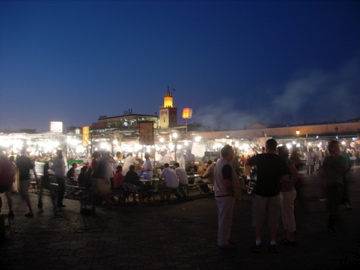
I stayed right near Djemaa el Fna, the open-air market of insanity that really was everything it was cracked up to be. Imagine a county fair. Now add throbbing drums and shrill pipes; snake charmers and witch doctors; wrapped women hunched on plastic stools, ready to ready fortunes and paint henna. Picture billows of meat smoke, the glare of a thousand gas lamps on a thousand white tarps;  see gleaming date stands and pyramided orange juice carts; beggars hands and child shoe-shiners. Hear the zoom and honk of motorbikes; feel the buzz of bodies weaving around one another. Wrap it all in a breeze that comes eastward and touches everything, envelops it in one big ball of electric humanity, shakes it up furiously, like a snow globe—and you´re somewhere close.

I meant to treat myself to a fancy last dinner, but when I got to the white-linen restaurant, it felt sterile. I headed down to Djemaa el Fna, stopping to slurp  snails at a food stall along the way. I dined on a wooden bench under the white tarps of one of the skewer stalls, watching the multi-lingual touts and hustlers do their business, sometimes rudely, but mostly with a charming penache that was hard to refuse. The breeze blew, and I felt in love with the night, the place, the country.

I thought I´d seal the deal with some chocolate ice-cream. I made my way across the square, nimbly traversing the crowds, not responding to the barrage of ¨bonjours,¨eyes on the prize.

I heard a loud voice rumble, ¨Hey sweetie!¨ Though the crowd was thick, I had that prickly back-of-the-neck feeling that the call was directed at me. I didn´t look up, kept walking. ¨Hey sweetcakes!¨ it yelled again. Still, I kept moving. ¨It´s okay,¨ the voice hollered, ¨I like small boobies.¨

I whipped my head around and saw a reddened face laughing, jowls shaking in a grotesque mask of amusement. Other faces were turned to look at me and my shawl-covered chest (I mean, come on, a B-cup is not that small). My cheeks flushed; I muttered ¨piece of shit¨and stormed away, trying to lose myself in the throngs.

The face hadn´t been a teenager´s, but a grown man´s, which angered me more. It had seemed quite pleased that it had humiliated me, that other people had noticed and looked. I felt the blood in my body burning with frustration.

A well-dressed man sidled up next to me, holding a clip-board and a perky straw hat. I looked forward, didn´t acknowledge him.

¨That man,¨ he said to me, ¨you can´t get angry. You have to just accept and—¨ out of the corner of my eye, I saw him make a brushing-off gesture.

I sighed, not entirely sure of this man´s intentions, and not in the mood to risk it. ¨I know,¨ I respond. ¨But sometimes I get tired of accepting, of always being the one to have to accept.¨ I could feel hot tears in the corners of my eyes.

¨Where are you from?¨ the man asked.

I eyed him cautiously, as the question was usually a prelude to some kind of hustle. ¨The US.¨

¨Ah, welcome,¨ he nodded thoughtfully. He leaned forward, said softly, ¨Of all the things you remember, of all the things you take home, don´t take that.¨ He nodded again. ¨I´m sorry.¨ He paused, let the words and the sentiment linger there in the charged air for a moment, turned and was gone, swallowed into the crowd.

It was all a little too much for me, the intensity of extremes—the degradation, the laughing face, the twisted soul-sickness that makes someone humiliate another person—and now, such thoughtful tenderness. All of it from strangers, all of it strange, somehow finding me in the immensity of the crowd. The whole day had felt like that, a tugging between two places, between two sentiments, of both loving and hating a place.

DSCN3551I was exhausted. I decided not to fight it, not to try to be tough anymore. I went back to my hotel room and sobbed, for the overwhelming kindness and cruelness of it all. For being a woman, for being a person, in a place, a world, that is simultaneously horrifying and beautiful.
Let’s Get Ready to Pray

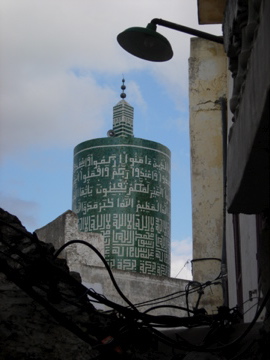
DSCN3343Adhans: you can’t escape them. They’re the echoing voice of omnipresence that follow you, haunt you, thoroughout your Moroccan travels. It doesn’t matter where you go, how far you wander—what town you’re in or how tightly you shut your windows at night; they find you. They punctuate your days of sweaty rambling, your dawns and dusks and inbetweens.
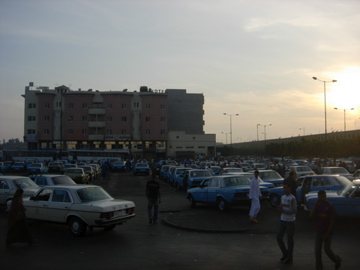
The adhan, the Muslim call to prayer, occurs five times a day, blared from the loudspeakers of every mosque’s minaret. The voice of the muezzin, the guy calling the prayer, is usually a little distorted; I imagine sweaty lips held too close to a scratchy old microphone, behind it all cool darkness and bare feet. If you’re in a big city with lots of mosques, the muezzins’ voices ricochet off the buildings and crumbly streets, off one another like a cat playing with its shadow, making it seem all the more enveloping. You have no idea what’s being said—at least I don’t—but the meaning needs no translation.

It happens like this: the voice erupts with a little squeak and feedback from the sound system. It begins slowly, softly at first, the first few syllables careful and clean; it swiftly gathers speed. The voice rises, grows stronger, accumulates decibels and conviction and heat, like an engine reving, smoke billowing from its spinning wheels. It reaches its final fevered pitch, a wail of passion and fury and God that makes you stop, pause in the street, roll over and groan in the first grey light of day.

The voice holds there, wavering in pitch and power, until at last, exhausted by the all-consuming energy of Allah, it shuts out and is gone. All this occurs in the span of about a minute. It happens at daybreak, noonish, mid-afternoon, sunset and early evening.

It’s a little creepy, to be honest—the omnipotence and disembodiment of it. But I can’t help but feel, whenever I hear it, that it sounds a little too like “Let’s Get Ready to Ruuuumble!” Only, you know, “Let’s Get Ready to Praaaaay!” It kinda gets me going, gets me all reved up and inspired; I kinda wanna kick my shoes off and grab a little carpet and kneel and mutter and bow like the dudes in the shops and alleyways I espy. Not knowing what I was saying or what it meant, just yeilding to the power of it all—lowering my head and kissing at something holy and unseen and buried deep in the fabric, the hand-woven and gently frayed thread of things.

Only, I’m not Muslim. Or any religion. And, coming from a (relatively) secular country, it still strikes me as strange to have religion pumped through the streets, sneaking through open doors and cracks in windows, filling the air and getting all over. But, hey, at least they do it with style.

Vomit Ride Through the Heat-Land: Part II

Grand taxis outside the bus station

Grand taxis outside the bus station

We groaned our way along the highway, rocking and swaying with every dip in the road. The air-conditioning had completely given out; I was grateful to be sitting by one of the few curtains, blocking out the mid-day sun. I shifted around the cheap shawl I had covering my bare arms and realized I was sweating so badly the blue dye was wearing off on my sticky arms.

I devolved into lamaze breathing. Well, no, not really—but I did employ the breathing technique I learned in yoga class to release heat: exhaling with a “hah,” like you’re fogging up a mirror (or a steaming bus window). Burning it up in a power lunge or cramped to hell on a sweat-bomb bus, it really does help. It also took my focus of my increasing nausea, not at all abetted by the chorus of gagging and spitting surrounding me. Despite having passed all those littered landscapes, I felt immensely grateful for plastic bags.

Others around me weren’t so lucky. The poor boy left crouching in the stairwell—some kind soul had supplied him with some newspaper to sit on—had been puking more or less constantly the whole ride, now approaching 3 hours. He’d been provided with an arsenal of plastic bags, a supply he apparently exhausted. That’s right—I saw his desperate face, checks full and eyes searching, then heard the sound of splattering on the stairs. A chorus of shouts erupted; the tout appeared with a fist full of newspaper and women waved robed arms in an effort to fan away the smell. It didn’t help much—in the heat, the vomit pile festered, wafting odiferously through the bus carriage in rank waves.

Any minute now, I told myself, we’ll get to Agadir. It wasn’t my destination, only a little more than half-way along, but a big transfer point. Hopefully the stop would be long enough for someone to hose down the floor.

We careened past a cliffside, a gorgeous view that I could almost enjoy through the misery. We passed construction cranes and cinderblocks outside Agadir, a package holiday town more akin to Miami than Morocco. Traversing a tangle of traffic, we pulled into the bus station. Doors sighed open and people pushed towards the front stairs to disembark.

Most of the passengers weren’t staying on for the rest of the ride, so I took advantage of the time before the next batch of grim faces boarded and got myself a primo seat: closer to the front, on the unsunny side, under the blowingest vent I could find. I smiled to myself, privately pleased that I had endured the trip without vomitting. You’re tougher than you think, I congratulated myself. I felt validated,  rewarded by the best seat on the bus.

We sat for awhile. This didn’t surprise me; most non-first-class buses don’t maintain timetables, just wait until the bus is full—or overly full—before departing. A new round of unsmiling people trickled on, along with the usual tissue, jewelery and snack sellers that enter through the front doors, shout the names of their goods as though you couldn’t see what they were, then exit through the back doors. Additionally, a sullen woman with a dirty scowl distributed those Xeroxed scraps of paper, telling her story of hardship, to each passenger; as per usual, she made her way back down the aisle, recollecting the papers and giving an even dirtier look to anyone who didn’t give her a couple coins. Though the paper was hand-written in jagged Arabic and I could have feigned ignorance, her bullying expression inspired me to give her some change.

No one, I noted, was coming to clean up the back stairs. I sighed, taking solace in my good seat and that fact that the worst heat of the day had passed.

The tout poked his head through the open door and pointed accusingly at me. “Tiznit?” he bellowed. I felt all eyes on me. “Tiznit,” I echoed with a nod, confirming my final destination. He gave one hard nod and disappeared.

He came back a couple minutes later, placed his hand surprisingly softly on my shoulder and launched into a choppy French explaination I couldn’t begin to understand as he ushered me off the bus. “Tiznit?” I asked feebly, pointing at my well-earned seat, fading as I stepped down the bus stairs. “Oui, oui, Tiznit,” he replied as he dug my dirty backpack out of the luggage compartment, hoisted over his shoulder, and walked me over to another, scrawnier bus. He tossed my bag into its luggage compartment, patting his hand firmly against the dented side of the bus. “Tiznit!” he assured me, and then was gone into the scurry of bodies and glint of steel that filled the station lot.

I stepped disheartened onto my new bus. The seats were scattered with a couple forlorn looking faces. They looked like they’d been there awhile; from the number of empty seats, I didn’t anticipate leaving any time soon. I flopped into a sun-baked vinyl seat and scowled. Through the window, I watched my sense of victory lumber away on the previous bus.

It was an hour before we left the station. Night fell pinkly and hazily between the palm trees and pebbles outside the window. Exhausted, I surrendered to a neck-jerking broken sleep; I woke just as a row of lights was growing closer.

Instead of a bus station, I was deposited on the side of a half-deserted road. Some teenagers hooted at me as I hoisted on my backpack; I gave them the finger and crossed the street to the Teleboutique. I had to call my hosts—at last, I had arrived.

Vomit Ride Through the Heat-land: Part I

1009173272_3ef7bfbbe6Yesterday I had the most authentic Moroccan experience of my trip so far. It wasn’t in a medina, it wasn’t at any monument; it wasn’t outside of a mosque or inside of carpet shop. It wasn’t in some exotic spice souq, or even with a witch doctor.

It was knees-to-chest, sweating obscenely, holding my breath and trying not a vomit in a catastrophic cauldron that careened its way through the countryside. That is to say, it was on a bus.

There’s two kinds of buses in Morocco: the first-class and the “other.” My previous two bus rides had been on the plush, first-class CTM company. The guidebook doesn’t just recommend CTM; it virtually doesn’t list the times, prices or destinations of other companies. In most cities, CTM’s buses depart from their own seperate offices, far from the chaos and heat and exhaust-laced smell of rotting ass characteristic to most bus stations, not just in Morocco, but around the world.

CTM accepts credit cards and assigns seats; their desk workers speak English. These are not the buses of screaming children or those checkered mesh bags fraying at the plastic seams from the weight of all some old lady’s worldly possessions. These are the buses of laptops and exquisite scarves, polo shirts and heavy gold rings. And independent travelers with Western standards and a low tolerance for long-distance discomfort. Together, we bound competently down the highways, stretching our legs and basking beneath the gentle blow of air-conditioning vents.

Once on board a CTM bus, you usually make a stop at the big messy main bus station before departing a city. In Tangier, I parted my curtain and peered out at the shouting, scrambling insanity of the real bus station. Jam-packed buses, a jumble of children’s bodies and grim faces pressed against tinted glass, heaved and wheezed and lurched haphazardly through the lot, shouting touts hanging from still-open doors. I have to say, I felt kind of like a chump from my kooshy assigned seat in a half-empty bus. At least once on this trip, I told myself, I’ll ride a real bus.

I intended to fulfill this brazen commitment on some short-distance route—45 minutes, an hour tops. Just, you know, to feel like I’d done it, gotten a taste and promptly gotten out.

The problem is, CTM runs infrequent services to only a few destinations, especially towards the south of the country. In my great haste to flee dishearteningly over-touristed Essaouira, I weighed my options: languish at the bus station and continue to get hassled by hotel and taxi touts for two hours while I wait for the CTM bus, and then have to make a connection mid-way through my journey, or hop on a direct “other” bus leaving in 15 minutes. Comfort flew out the window as I climbed the sticky stairs of the second-class bus.

I found an empty seat towards the back, and observed. This was the bus of acne and deep wrinkles, missing teeth and stern expressions. Children didn’t get seats, were left to swim on the laps of their parents. Upholstery was browned; I could feel the springs through the thinned seat fabric. A tout with a scar on his chin and impossibly stained fingers came off and on the bus, taking money, scribbling crude tickets, counting seats. I was grateful for the wobbling vents that blew a little air down from above my seat.

As the seats filled and the horn honked, people continued to pile on. The tout appeared with a stack of plastic stools; he strained to tug them apart and, after some shouting and coordination, placed them in the narrow aisle. Women were given stool seats first, then men; an adolscent clutching a book and a plastic bag was left standing. As the bus began its lumbering, the tout yelled at him to get down. The boy curved himself into the back stairwell—we slid past the officials at the station gates and were on our way.

The tout continued collecting fares and writing tickets as we lurched through the taxi- and scooter-swarmed streets—not an easy task on an old bus with poor shocks and an aisle full of huddled bodies. To get the job done, he balanced his feet on the edges of seats and literally climbed over people, his crotch in this lady’s face, his elbow in that guy’s chest, his entire torso smashed against my already-sweating body. He clutched a fistfull of bills, carefully folded between each finger, and with each new fare, made an almost tenderly careful note on a worn piece of paper.

We left the city center and began up a steep hill. The bus struggled, slowed to a speed scantly faster than a donkey cart. The effort cut out the faint blow of air-conditioning, and arms raised to fiddle hopefully with vents. The boy next to me unscrewed the top to a pocket-sized perfume bottle, pressed it against his nostril and inhaled. The tout distributed black plastic bags—vomit bags, I suspected. Beside me, the boy tossed a jacket over his head, leaned against the window and was gone.

Less than 15 minutes after departing, the adolscent in the stairwell began politely hurling with a liquidus sound into his plastic bag. I could make out, displayed proudly on the top of the windshield, just the last words of the bus company’s name: “Fadl Allah.” I jokingly translated this to myself as “pray to f%^*ing God.” The boy in the stairwell caught his breath and discreetly tied the handles of his bag together.

We made our first stop, and much shouting and shuffling ensued. The tout had the disembarkers already climbing over the aisle-sitters before the bus was stopped. We paused only momentarily; those getting off were left on the dusty roadside, struggling with heavy bags. Stools were cleared for vacated seats, and a new slew of stern faces took their squatting place on the plastic as we bumbled back on the road.

We fell into a determined quiet, just the struggle of the bus, soft conversations and the gentle gagging of vomiters. The scenery was pebbled and stark, branches bent cryptically; with the vent back a’blowing, I was almost comfortable enough to fall into a ragged sleep.

Bonjour guapa, you want sex?

No way did I flatter those boys with a photo. Here's a busy street in Meknes instead.

No way did I flatter those boys with a photo. Here's a busy street in Meknes instead.

In Fez and Meknes, I finally got a taste of the street harassment all the guidebooks warn of. It was still a lot tamer than anticipated, a multilingual assault of adolescent bravado more than an actual threat. Though the intention spans the confines of language, it’s easiest to brush off these comments when they’re in French or Spanish. It’s a little like having monkeys hurl feces at you; it sticks less when you don’t know the actual words being said.

But those boys are a cunning lot, and have managed to master a few key phrases in English: “massage”, “sex”, “fuck”, and most telling of all, “you like me?” Just to be safe, they like to mix it up, covering all linguistic bases, just to make sure their intention is entirely communicated.

The harassment comes nearly exclusively from one group, teenagers in Western clothing. Adult men are by-and-large very respectful; if anything, they want to sell you something, but I’ve had far more pleasant exchanges with adult Moroccan men than not. The young guys dressed in traditional jellabas tend to just ignore me, which is A-OK; same with the poorer young men, who just want to shine my dirty sneakers or sell me some tissue. It’s the 12-18 year olds in faux Western clothing you’ve gotta watch out for.

They hang in packs, pushing and nudging and teasing one another. They’re a kind of pathetic lot: thin and self-conscious, somehow lost in their t-shirts and blue jeans, short hair over-gelled and haphazardly spiked. They are consumed by this proposterous posturing, seeming at once to resent and idolize Western culture. They desperately strive to emulate it, can’t quite get it right; their cat-calls and gross comments feel like a plea for acknowledgment, validation. They want so much to be taken seriously, to be something other than what they are—and in that way, I suppose they’re not unlike any other ill-at-ease teenager. I can relate to the insecurity, know so well where it springs from, and I almost feel sorry for them when I see them all there, so sadly absurd in their metallic G Star Raw shirts and bedazzled-pockets denim.

And then they say some dumb shit, and I don’t feel so sorry for them anymore.

It’s a pain in the ass, for sure, but it seems to be something that comes with the territory, part of what it means to be born female in this world. It can wear you down—I may or may not have snapped and thrown a banana peel at a man in Venezuela once—but I’m sure as hell not gonna let it stop me from seeing the world, from being in it as fully as I can. I’m just gonna cover myself in thick-ass skin, maybe a tarp or something. You know, so the feces doesn’t stick.

Morocco: First Impressions

DSCN3259As I staggered off the Tarifa ferry, through the desserted port gates and into the quiet Tangier morning, I had a thought I’ve had before. It was the same thought I had as I first stared through a taxi window at the hazy Lima streets, when I first stepped out the Bogota airport, when I walked around big bad cities like Caracas and Mexico City. The thought is, “Oh. This is it?”
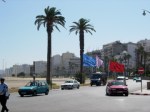
And I don’t mean it in a disappointed, anti-climatic way. The opposite, in fact. After all the hype, all the warnings and precautions, horror stories and wayward looks, my initial reaction to notorious destinations I’ve encountered is, “Hey, this isn’t so bad. Or so scary or different.”

Okay, I admit the squat toilet I used earlier in a restaurant bathroom was a little different. And I didn’t expect that hooded jellabas would look so curiously like clan robes. But, really—the intense cultural shock I’d been prepping for, again, didn’t hit.

My guidebook had prepared me to be inundated with pushy faux guides as soon as I left the port gates, to be lured into medina shops and held captive till I bought something, to be oogled and followed like a celebrity by sex-starved adolescents because I’m a solo Western female. Guess what? None of these things happened.

DSCN3241What did happen: I left the port gates, took a moment getting my orientation, and found the left luggage office. The clerk and I fumbled with mutally poor Spanish, and I left my backpack secure. I headed uphill, largely ignored by every passerby, and parked it at a cafe along the Grand Socco. I lazed, and have been wandering the Medina and Ville Nouvelle ever since. I plan on getting a coffee at the Beat-beloved Cafe Paris before meeting up with my couchsurfing host (only slightly concerned we won’t actually connect).
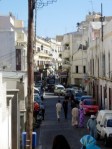
So far, the street harassment I so feared is, well, about what it is at home. Maybe less. A few young men have said hello in whatever white-person language they think I might speak; I’ve been the target of one gross kissing sound, and received one offer to be bought coffee. In short, Latin America still wins the prize for harassment, cat-calling and all-around-demeaning (but what kind of prize would that be?).  Attempts in Tangier have thus far proven half-hearted, generally good-natured and easy to brush off.

DSCN3236I’m also surprised by the dress of the women. I wasn’t expecting burkhas or even necesarily hijabs, but I’ve even seen some short sleeves—on the younger women, that is. I’m tromping around town in long sleeves, but I’ve seen many tourists in spaghetti straps and shorts. I have yet to see visible tattoos (does a knock-off Ed Hardy shirt count?), which I’ll take as a que to keep mine covered.
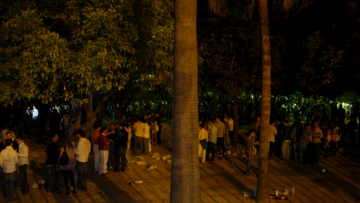
One thing I wasn’t expecting was for half the city to still be shut down for Eid (thus the killing of time in an internet cafe). The attractions I’d starred in my guidebook have all been closed, and I haven’t been able to find any open shops in which to buy better long-sleeve shirts in. I’m hoping for tomorrow.

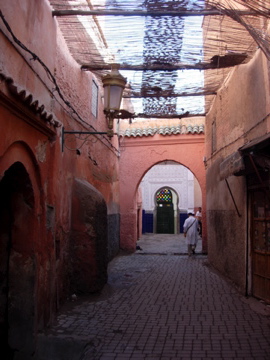
As I wandered around the Medina’s narrow Medieval “streets” (some aren’t as wide as my arms’ reach), I came around a blind corner and narrowly missed walking dead into a hijab-donning middle-aged women. We paused, made eye contact; we both smiled and laughed, then went on our way. I guess this is the oh-so-frightening Morocco, Muslim, African and not all that different.

BYOB Debauchery: Spanish Botellónes

DSCN3177The roar of voices rose from between the trees, out of the darkness and dirt. Scooters swarmed, freshly broken glass glittered in the dim park lights. Young girls teetered in impossibly high heels and boys stumbled, leaned their faces against the sides of walls as they pissed. And every person clutched a plastic cup.
When Spanairds sigh in disapproving despondency about ¨kids today,¨ they´re talking about botellónes. In a culture of late-night fiestas,  these youth-ridden BYOB binges stand out as particularly debaucherous.

Bottelónes take place in public, on the streets and in the parks; teeangers and early 20-somethings gather to drink, flirt, cause trouble, and leave a mountain of trash in their wake. Increasingly the subject of public controversy, Seville´s bottelónes are known to be especially raucous.

We passed one as we trod through Parque Maria Luisa on Friday during a once-a-year festival of museum open houses and cultural performances. (How Spanish is this?: museums are free to the public from 10pm-3am, and completely full the whole time.) September is festival month in Seville, when residents have returned from August vacations and the oppression of the heat has subsided; it´s also the beginning of botellón season. My couchsurfing hosts and I were walking over to Museo Artes y Costumbres Populares, where we saw a killer flamenco show, and the adjacent Museo Arqueológico, where a classical guitarist´s exaggerated facial expressions were more dramatic than an old guitar-playing friend with Tourettes (RIP, friend).

We passed what I was told was a typically trashy Friday night bottelón. It was like a rave minus the pulsing lights and techno music, like a sideshow minus the cars and firearms. Hundreds of kids filled the open space at the park´s entrance. Teenage girls were dressed to the nines to attire revealing even by Spanish standards, while boys puffed their chests and tried to impress each other, even in curiously effeminate clothing. My hosts spoke of the trash, piss and vomit the parties left in their wake, the shards of glass and tell-tale crushed plastic cups that city workers scurry to clean up the mornings after. (The next day, I passed through the carnage of another botellón, down by the river, and had to say, it was pretty gnarly.)

I smiled to myself as we passed by. I couldn´t help but feel that, if you swapped the heels for combat boots, and blush and blow-drying for heavy eyeliner and multi-colored dreads, it wouldn´t have been too unlike the Rocky Horror Picture Show or Gilman Street of my adolescence. Instead of being out in the open, though, we were relegated to the sketchy corners of the city, to alleyways, public restrooms, the stairwells of parking garages. I wondered if having to hide it—the violent pursuit of oblivion—somehow served to make ours worse, more seedy and powder-laced, more self-destructive and apt to end in institutions and death.

From between the park gates, I spotted a girl hoisted up by two friends, her arms drapped over their shoulders. Her head hung at a sharp angel; her heeled feet scuttled, dragged in the dirt lifelessly. Whether it´s a plague to Spanish culture or kids just being kids, I felt mighty glad not to be a teenager anymore.


Lauren Quinn is a writer and traveler currently living in Hanoi. Lonely Girl Travels was a blog of her sola travels and expat living from 2009 to 2012. She resides elsewhere on the internet now.

Join 490 other subscribers

Buy This Sh#t

Categories