You’ve already taken away my peanuts and charged me for a checked bag—think you’re gonna bleed me a little more by cranking the air conditioning to Venezuelan-overnight-bus levels and charging $8 for one of those shitty blue blankets?
Well, I’m not skerd. I’ll make a hobo blanket out of magazines.
You’ve obviously underestimated my industrious frugality and lack of shame. Maybe next I’ll bring a can of beans and a hot plate, and make my own in-flight meal.
The voice was barely discernible, muffled by whizzing traffic and excitement. “I just rode the bus with Epic Beard Man! He was giving out candy bars and autographs, and I got a photo with him!”
My friend’s Friday evening commute home had been spiced up by a sighting of Oakland’s latest internet phenomenon. As the number 53 heaved down Fruitvale Avenue, passengers posed for pictures and chanted “Epic Beard Man,” as the grizzlied old dude distributed candy from his backpack and basked in the adoration of the bus riders.
Regardless of your take on Oakland’s latest internet sensation—racist, vigilante or mentally ill bad-ass—one thing is for sure: Epic Beard Man has reached celebrity status. And while a heated, racialized debate rages in chat rooms and on blogs, the actual riders of AC Transit appear to have risen Epic Beard Man to the revered status of folk hero.
Quick low-down, in case you’re out of the loop: earlier this week, a YouTube video of an AC Transit (Alameda County Transit) altercation between a middle-aged black man and an elderly white man (now dubbed Epic Beard Man) made quite a stir—over a million page views in its first day, and countless comments and ensuing discussions over issues of race and safety in Oakland. The story was picked up by local blogs, news outlets, even the Huffington Post. Know Your Meme offers the most complete run-down of the controversy, featuring video responses that capture some telling Oakland sentiments.
You can go to YouTube and dig through all the remixes, follow-ups and tributes, but here’s the original video. Yes, it’s graphic:
It’s no surprise that the video is so popular. It’s another opportunity for people to glimpse into the dysfunctional “urban” reality of Oakland, and people outside of Oakland never seem to tire of that. Several years ago, the city’s other big internet phenomenon fascinated outsiders with its oh-so Oakland cultural collisions and colorful characters (I was living in East Oakland at the time, and the screeching sound of whistle tips really did echo through the streets at all hours).
While responses to the latest video vary, they largely fall into two camps: Epic Beard Man is a racist, or a hero. He’s either an old redneck who asks a black man to shine his shoes, then beats him, or he’s a tough dude who stands up to a punk-ass thug who’s instigating and harassing him. In general, the first camp seems to be populated by guilty white people and advocates of all things ghetto, while the second camp is composed of kids, bus riders and enthusiasts of drama and smack-downs.
My own response lies somewhere between the two. Both men are unstable, not the kind of people you want to sit next to and exactly the kind of people you meet on East Bay buses. Epic Beard Man is obviously not well, further evidenced by follow-up interviews; turns out he was also the star of another YouTube phenomenon, a video where he gets tased at an A’s game for unruly behavior. He’s a deranged old Vet with a tenuous grasp on reality, prone to violent outbursts. Not someone who should be milling around the streets, trying to take care of themselves, but hey, that’s America (thank you, Ronald Reagan). The other dude should have left it alone, realized Epic Beard Man was not all there and not worth the trouble—but in his bravado, he got pumped full of ego and shit-talking and, well, he got served.
What’s most interesting to me is how the people most closely related to the issues raised in the video reacted—that is, AC Transit riders and people with exhaustive experience dealing with both the tiringly whacked-out and tediously ghetto. Most of the folks I’ve talked to feel that while, yeah, Epic Beard Man is totally deranged, dude got what he deserved.
It reminds me of an issue several years ago when an Oakland resident was both vilified and exalted for standing up to the thug kids that plagued his block, in what became a violent incident. While both parties in this instance were African-American, so the race issue wasn’t raised, responses were similar: he was either a vigilante hero, or a villainous attacker of innocent youth. Throughout the controversy, the man insisted that all he wanted was a safe neighborhood in which to raise his kids—what I’d argue the majority of people in Oakland are looking for. In the end, he did what most of the families I grew up with did—unable to afford a nicer neighborhood in Oakland, he moved to one of the outlying working-class suburbs.
Responses to that issue, as well as this one, tap into some very central Oakland issues. While the man from a few years back was a much more sympathetic (and sane) character, and didn’t want to be a hero, many people regarded him as such. I think it speaks to the extent to which people are sick of all the bullshit. People are tired of dealing with puffed up a-holes who think they can say/do whatever to whoever and get away with it, tired of shit-talkers, instigators and intimidators. So much so that they’re willing to revere violent behavior.
The riders on the 53 last night, majority non-white, were literally cheering for Epic Beard Man. Yes, some of it was surely star-struckedness and a glorification of school-yard theatrics, but I think there was something deeper going on there, something almost beyond race. Most of the video responses I’ve encountered are, in fact, from people of color. Epic Beard Man may be nuts, but the other guy was an ass. There’s no video glorifying him—and I don’t think it’s just cause he was the loser in the altercation. It’s a strange thing: an incident so racialized, that at its core, to the people who deal with this stuff day in and day out, has more to do with harassment and basic respect than race.
That the incident took place on a bus is no coincidence. A San Francisco Chronicle blogger (and fellow gym goer) centered his coverage of the issue on the ridiculousness of AC Transit—for him, it was all evidence for why he doesn’t ride the buses in Oakland.
Word. I grew up riding AC Transit, and it served as a serious education in the world. The first post on this blog was a reflection of how riding the East Bay buses prepared me for world travel, while the very first piece I published, as a teenager in The East Bay Express, was a narrative about my fucked-up experiences on AC Transit (I used a line from the piece as the title for this post). While shit like this doesn’t go down on the vast majority of bus rides, it’s not some sort of exceptional incident—it just happened to be captured on tape. I’m grateful for the schooling AC Transit administered; as a result of vital life skills learned on those blue plastic seats, people generally don’t fuck with me. But I’m even more grateful to have a car now.
The Epic Beard Man hype will surely die down—like everything these days, it’ll be discussed and linked to and tweeted wildly, then fade into the buzzing gray, the next craze taking its place (in the digital age, it seems everyone’s 15 minutes of fame are whittled down to 15 seconds). But for the rest of us, the issues the video captures will continue on: race, safety, the crazies that fill AC Transit. They’ll continue to roam around, screaming and bleeding all over our commutes, and I will carry on with my self-centered, polluting aversion to East Bay mass transit.
But I will say—being on that 53 with my friend last night would have been an experience. If for nothing else than the photo ops.
I have seen the future of air travel. And it’s covered in Telecom ads.
If you haven’t been broke and in Europe in recent years, you may not be familiar with Ryanair. Among the no-frills airlines specializing in short distances and absurdly low prices, Ryanair is the most vile, audacious and offensive. And usually the cheapest.
The idea of an under-$50 flight gets most Americans all hot and bothered. It’s just another way those Europeans have it better than us—universal health care, social welfare systems that work, less violent crime, tougher environmental laws. And cheap flights. I’m talking 5 Euros cheap. I’m not sure why Europe gets to add this to their ever-expanding repertoire of ass-kicking, but my guess would be that the airlines have to compete with competent, efficient train service. Take Amtrak, or God forbid, Greyhound across the country? Down to LA? I think I’ll pay the $125.
When I was figuring out the general itinerary for my last trip, I checked out flight costs for my longest distances on FlyCheapo. I came across Ryanair, and thought there was something wrong. A one-hour flight from Marrakesh to Seville for 5 Euros? Porto to Madrid also for 5? Are you kidding me?
Well, yes and no. The thing with Ryanair is that there’s catches. Enough to warrant a mitt—or the ability to read fine print, follow rules to a tee, and tune out advertising assaults. And you’ll need a pinch of luck. I took 2 flights with Ryanair; here’s some survival tips on what to expect from Europe’s most infamous airline:
The first trick to surviving a Ryanair flight is to read every rule and instruction, and treat it like the gospel. It is. Any attempts to bend the rules promptly results in a hailstorm of fees. Size and weight requirements for both checked and carry-on luggage, for instance, aren’t approximations. Carry-on baggage over 10kg? That’ll be 20 Euros. Forget to print your boarding pass at home? That’ll be 40 Euros. Traveling with an infant, surf board or guitar? Another 20-40 Euros. You’ve gotta pay to check a bag, but if it exceeds 15 kg, there’s an additional per kilo charge. If you’re a non-EU citizen, you have to have your passport checked by immigration control; forget that, and, yes, it’s another 20 Euros.
In preparation for your Ryanair flight, don’t even think about fudging on the details. Check-in closes exactly 40 minutes before the flight departs; arrive even 3 minutes late and you’re SOL. Have your printed boarding pass in hand, and get your passport checked.
Get to the gate early. Don’t sit in the hard plastic chairs—stand as close to the gate as possible. Ryanair doesn’t assign seating, which at first seems counterintuitive—it takes longer for people to board when they’re elbowing and jostling and trying to find their own seats. But, as always, there’s a catch: you can pay 4 Euros for priority boarding. Most of the folks doing this are traveling with small children, or those infants they paid an extra 20 Euros to hold on their laps.
As boarding time approaches, expect to see a steely-faced attendant walking up and down the line of anxious passengers, examining each carry-on item. It must be under 10 kg, and it must be only one bag. That means purses, laptops, water bottles, plastic bags carrying your wilted sandwich from earlier that day—it all counts. This is where they really rake in the extra fees. I only saw one man successfully evade the attendant, putting a jacket on over his fanny pack and untucking his shirt so you couldn’t see the waist strap. Smooth.
When it comes time to board, don’t expect anything fancy like gates or protected corridors. You’ll be scurrying across the tarmac and scampering up stairs (front or back, they open both up for maximized efficiency). Hustle on to the plane while perky young attendants bark at you like PE teachers: keep moving! find a seat! don’t block the isle! move quickly! go!
You’ll discover a couple of unusual things about your Ryanair aircraft. One, there are no tray tables. That safety card with a creepy characters acting out worst-case scenarios will not be a folded card in a pocket, but pasted onto the seat back in front of you. The overhead bins will be covered in Telecom ads, like a bus or metro car.
Once you’ve buckled your seatbelt, you’ve successfully completed the first stage in surviving a Ryanair flight: you’ve negotiated the rules and fees. Now it’s time to sit back and… be marketed at.
It’s ingenious, really, and I’m not sure why other airlines haven’t thought of it yet. Maybe they have, and Ryanair’s just the only one ballsy enough to go through with it. They’ve got a captive audience on an airplane, and Ryanair makes use of this ideal situation. In a 55 minute flight, I counted 4 opportunities to buy things. Jonesing for a cigarette? Buy our Smokeless Cigarettes for only 6 Euros. Make use of Ryanair’s exclusive inflight mobile phone service, and text and chat your heart away for only 2 Euros a minute. Buy Nescafe coffee for only 3 Euros. Get your gambling fix by buying a scratch card for only 3 Euros—and don’t feel guilty because some undisclosed amount of the proceeds goes to charity (here the flight attendant actually walked the aisle saying, “Win 10,000 Euros, save the children”). And let’s not forget duty-free shopping.
All this means that the attendants are basically talking at you the entire flight. Part of the reason is that announcements and sales pitches need to be made in multiple languages, but still. I recommend headphones. A smiley “no thank you” is as effective as a mean scowl, so pick whichever one fits your mood. No charge.
Now, when you’re descending into your destination, you may think the battle’s almost over, but here’s where the luck comes into play. I was fortunate on my 2 flights, because I landed in the airports and cities I thought I’d be landing in. Not so for all Ryanair passengers. I’ve heard horror stories about people landing on some lonesome runway 20 kms from the city they’d booked for. Notice that on your Ryanair itinerary, specific airport names aren’t given, just the names of cities. This allows them to land in the regional area of whatever destination, but not necessarily the main (and more expensive) airport. So, if you’re among the unfortunate, how do you get to where you thought you were going? Ryanair is nice enough to arrange for a bus. Which you can ride for 20 Euros.
Seeing as though I landed where I was supposed to, only had one flight time changed and neurotically followed every rule, my Ryanair travel experience wasn’t so bad. I actually don’t mind being inundated with ads and paying checked bag fees if it means I’m flying for a total of 25 Euros. And judging from the number of filled seats, I’m guessing I’m not alone.
Ryanair certainly hasn’t won any friends with its wily antics (this guy is pissed), and there’s an art to surviving their flights. But until they start charging to use the bathroom (they lost on that one), I’ll still grab a cheap flight with them whenever I’m in Europe. And my guess is that US-based airlines will begin moving more in this direction—hey, they’re already charging for checked bags. Only their flights ain’t no 5 Euros. (Oh, Europe, there you go again…)
We groaned our way along the highway, rocking and swaying with every dip in the road. The air-conditioning had completely given out; I was grateful to be sitting by one of the few curtains, blocking out the mid-day sun. I shifted around the cheap shawl I had covering my bare arms and realized I was sweating so badly the blue dye was wearing off on my sticky arms.
I devolved into lamaze breathing. Well, no, not really—but I did employ the breathing technique I learned in yoga class to release heat: exhaling with a “hah,” like you’re fogging up a mirror (or a steaming bus window). Burning it up in a power lunge or cramped to hell on a sweat-bomb bus, it really does help. It also took my focus of my increasing nausea, not at all abetted by the chorus of gagging and spitting surrounding me. Despite having passed all those littered landscapes, I felt immensely grateful for plastic bags.
Others around me weren’t so lucky. The poor boy left crouching in the stairwell—some kind soul had supplied him with some newspaper to sit on—had been puking more or less constantly the whole ride, now approaching 3 hours. He’d been provided with an arsenal of plastic bags, a supply he apparently exhausted. That’s right—I saw his desperate face, checks full and eyes searching, then heard the sound of splattering on the stairs. A chorus of shouts erupted; the tout appeared with a fist full of newspaper and women waved robed arms in an effort to fan away the smell. It didn’t help much—in the heat, the vomit pile festered, wafting odiferously through the bus carriage in rank waves.
Any minute now, I told myself, we’ll get to Agadir. It wasn’t my destination, only a little more than half-way along, but a big transfer point. Hopefully the stop would be long enough for someone to hose down the floor.
We careened past a cliffside, a gorgeous view that I could almost enjoy through the misery. We passed construction cranes and cinderblocks outside Agadir, a package holiday town more akin to Miami than Morocco. Traversing a tangle of traffic, we pulled into the bus station. Doors sighed open and people pushed towards the front stairs to disembark.
Most of the passengers weren’t staying on for the rest of the ride, so I took advantage of the time before the next batch of grim faces boarded and got myself a primo seat: closer to the front, on the unsunny side, under the blowingest vent I could find. I smiled to myself, privately pleased that I had endured the trip without vomitting. You’re tougher than you think, I congratulated myself. I felt validated, rewarded by the best seat on the bus.
We sat for awhile. This didn’t surprise me; most non-first-class buses don’t maintain timetables, just wait until the bus is full—or overly full—before departing. A new round of unsmiling people trickled on, along with the usual tissue, jewelery and snack sellers that enter through the front doors, shout the names of their goods as though you couldn’t see what they were, then exit through the back doors. Additionally, a sullen woman with a dirty scowl distributed those Xeroxed scraps of paper, telling her story of hardship, to each passenger; as per usual, she made her way back down the aisle, recollecting the papers and giving an even dirtier look to anyone who didn’t give her a couple coins. Though the paper was hand-written in jagged Arabic and I could have feigned ignorance, her bullying expression inspired me to give her some change.
No one, I noted, was coming to clean up the back stairs. I sighed, taking solace in my good seat and that fact that the worst heat of the day had passed.
The tout poked his head through the open door and pointed accusingly at me. “Tiznit?” he bellowed. I felt all eyes on me. “Tiznit,” I echoed with a nod, confirming my final destination. He gave one hard nod and disappeared.
He came back a couple minutes later, placed his hand surprisingly softly on my shoulder and launched into a choppy French explaination I couldn’t begin to understand as he ushered me off the bus. “Tiznit?” I asked feebly, pointing at my well-earned seat, fading as I stepped down the bus stairs. “Oui, oui, Tiznit,” he replied as he dug my dirty backpack out of the luggage compartment, hoisted over his shoulder, and walked me over to another, scrawnier bus. He tossed my bag into its luggage compartment, patting his hand firmly against the dented side of the bus. “Tiznit!” he assured me, and then was gone into the scurry of bodies and glint of steel that filled the station lot.
I stepped disheartened onto my new bus. The seats were scattered with a couple forlorn looking faces. They looked like they’d been there awhile; from the number of empty seats, I didn’t anticipate leaving any time soon. I flopped into a sun-baked vinyl seat and scowled. Through the window, I watched my sense of victory lumber away on the previous bus.
It was an hour before we left the station. Night fell pinkly and hazily between the palm trees and pebbles outside the window. Exhausted, I surrendered to a neck-jerking broken sleep; I woke just as a row of lights was growing closer.
Instead of a bus station, I was deposited on the side of a half-deserted road. Some teenagers hooted at me as I hoisted on my backpack; I gave them the finger and crossed the street to the Teleboutique. I had to call my hosts—at last, I had arrived.
Yesterday I had the most authentic Moroccan experience of my trip so far. It wasn’t in a medina, it wasn’t at any monument; it wasn’t outside of a mosque or inside of carpet shop. It wasn’t in some exotic spice souq, or even with a witch doctor.
It was knees-to-chest, sweating obscenely, holding my breath and trying not a vomit in a catastrophic cauldron that careened its way through the countryside. That is to say, it was on a bus.
There’s two kinds of buses in Morocco: the first-class and the “other.” My previous two bus rides had been on the plush, first-class CTM company. The guidebook doesn’t just recommend CTM; it virtually doesn’t list the times, prices or destinations of other companies. In most cities, CTM’s buses depart from their own seperate offices, far from the chaos and heat and exhaust-laced smell of rotting ass characteristic to most bus stations, not just in Morocco, but around the world.
CTM accepts credit cards and assigns seats; their desk workers speak English. These are not the buses of screaming children or those checkered mesh bags fraying at the plastic seams from the weight of all some old lady’s worldly possessions. These are the buses of laptops and exquisite scarves, polo shirts and heavy gold rings. And independent travelers with Western standards and a low tolerance for long-distance discomfort. Together, we bound competently down the highways, stretching our legs and basking beneath the gentle blow of air-conditioning vents.
Once on board a CTM bus, you usually make a stop at the big messy main bus station before departing a city. In Tangier, I parted my curtain and peered out at the shouting, scrambling insanity of the real bus station. Jam-packed buses, a jumble of children’s bodies and grim faces pressed against tinted glass, heaved and wheezed and lurched haphazardly through the lot, shouting touts hanging from still-open doors. I have to say, I felt kind of like a chump from my kooshy assigned seat in a half-empty bus. At least once on this trip, I told myself, I’ll ride a real bus.
I intended to fulfill this brazen commitment on some short-distance route—45 minutes, an hour tops. Just, you know, to feel like I’d done it, gotten a taste and promptly gotten out.
The problem is, CTM runs infrequent services to only a few destinations, especially towards the south of the country. In my great haste to flee dishearteningly over-touristed Essaouira, I weighed my options: languish at the bus station and continue to get hassled by hotel and taxi touts for two hours while I wait for the CTM bus, and then have to make a connection mid-way through my journey, or hop on a direct “other” bus leaving in 15 minutes. Comfort flew out the window as I climbed the sticky stairs of the second-class bus.
I found an empty seat towards the back, and observed. This was the bus of acne and deep wrinkles, missing teeth and stern expressions. Children didn’t get seats, were left to swim on the laps of their parents. Upholstery was browned; I could feel the springs through the thinned seat fabric. A tout with a scar on his chin and impossibly stained fingers came off and on the bus, taking money, scribbling crude tickets, counting seats. I was grateful for the wobbling vents that blew a little air down from above my seat.
As the seats filled and the horn honked, people continued to pile on. The tout appeared with a stack of plastic stools; he strained to tug them apart and, after some shouting and coordination, placed them in the narrow aisle. Women were given stool seats first, then men; an adolscent clutching a book and a plastic bag was left standing. As the bus began its lumbering, the tout yelled at him to get down. The boy curved himself into the back stairwell—we slid past the officials at the station gates and were on our way.
The tout continued collecting fares and writing tickets as we lurched through the taxi- and scooter-swarmed streets—not an easy task on an old bus with poor shocks and an aisle full of huddled bodies. To get the job done, he balanced his feet on the edges of seats and literally climbed over people, his crotch in this lady’s face, his elbow in that guy’s chest, his entire torso smashed against my already-sweating body. He clutched a fistfull of bills, carefully folded between each finger, and with each new fare, made an almost tenderly careful note on a worn piece of paper.
We left the city center and began up a steep hill. The bus struggled, slowed to a speed scantly faster than a donkey cart. The effort cut out the faint blow of air-conditioning, and arms raised to fiddle hopefully with vents. The boy next to me unscrewed the top to a pocket-sized perfume bottle, pressed it against his nostril and inhaled. The tout distributed black plastic bags—vomit bags, I suspected. Beside me, the boy tossed a jacket over his head, leaned against the window and was gone.
Less than 15 minutes after departing, the adolscent in the stairwell began politely hurling with a liquidus sound into his plastic bag. I could make out, displayed proudly on the top of the windshield, just the last words of the bus company’s name: “Fadl Allah.” I jokingly translated this to myself as “pray to f%^*ing God.” The boy in the stairwell caught his breath and discreetly tied the handles of his bag together.
We made our first stop, and much shouting and shuffling ensued. The tout had the disembarkers already climbing over the aisle-sitters before the bus was stopped. We paused only momentarily; those getting off were left on the dusty roadside, struggling with heavy bags. Stools were cleared for vacated seats, and a new slew of stern faces took their squatting place on the plastic as we bumbled back on the road.
We fell into a determined quiet, just the struggle of the bus, soft conversations and the gentle gagging of vomiters. The scenery was pebbled and stark, branches bent cryptically; with the vent back a’blowing, I was almost comfortable enough to fall into a ragged sleep.
Which isn’t true–I didn’t leave the country until I was 22, and all travels leading up to that were pretty much of the camping and visiting-the-relatives-in-Milwaukee variety. I was a working class kid; international travel was the exotic, unattainable luxury of the privileged, or else something you only did a couple times in your life: your honeymoon, a cruise at retirement, maybe to visit your parents’ hometown in Vietnam. It was completely outside of the realm of what anyone I knew did, an opportunity I never expected and didn’t know I wanted.
But something that happened at 15 that I inextricably link to travel, to the little sparks flashing in that otherwise-dormant part of the mind you use when vagabonding and adventuring around unknown, foreign places–I started riding the bus.
It wasn’t a short ride. I landed a spot in a decent public high school a couple towns away from my house; my mom could drop me off in the mornings, but after school, I had to make the 10-some-mile trek by myself. It took about an hour and a half on at least 2 different buses.
My laminated, cheesy-graphic-ed youth bus pass was my ticket to freedom. My parents had been deservedly hesitant to let me ride the buses alone when I was younger–a skinny white girl, the mean streets of Oakland’s flatlands–they weren’t being unreasonable. But when necessity arose at 15, I was old enough and aware enough to be let loose.
And I loved it.
I listened to my Walkman, stared out the window. Everywhere I went, I noticed the bus stops, took note of the numbers, figured out what lines connected, the most efficient routes. My friends were scattered at high schools all over the East Bay; I got myself to neighborhoods and parts of town I only vaguely knew, learned the streets, how all the places fit together. I only used the overpriced, plush BART system to get across the Bay, choosing instead to rely on the unreliable, infrequently running tangle of AC Transit buses. I started dating a boy in San Francisco, and got to know the heaving electric buses and rattling streetcars of MUNI. I could get myself just about anywhere “worth going” in the inner Bay Area–Gilman, the Cocodrie, Mission Records, Ocean Beach bonfires, a constant sprinkling of house parties. I even transited to an all-night beach party in the North Bay’s Bolinas. I felt unstoppable.
But the cheif benefit about all that transiting wasn’t the freedom; it was learning how to be in the world. I learned, yes, that I could figure logistical things out, but also that I could handle myself. I knew exactly how to respond to cat calls, comments, advances from much-older and very-gross men, a fine line between acknowledging and not encouraging them. I learned what to do when the guy next to you is jerking off through his pants, or when the lady across from you nods out so hard to bashes her head into the pole. I learned how to laugh off the Oakland Tech kids asking me if I was in a cult because I wore all black. I learned what to do when a fight broke out (get out of the way). I grew comfortable with my ability to take care of myself, to just be myself.
I was also forced to slow down, to sit. I noticed little things I’d never seen before, the time the clock had frozen to outside a shut-down storefront (4:20, and I was convinced that it was a front for a weed operation). I discovered little shops and corner stores. I got the experience of watching a neighborhood gentrify, slowly, day-by-day, standing on the same corner waiting for my transfer–a sort of time-lapse photography of incoming punks, then yuppies, then stroller-pushing nannies. I wrote poetry in my head, silently recited my favorite works by my favorite poets. I got time–a lot of time–to just be with myself.
Why does this feel like the beginning of my traveling? In the most practical sense of the term, it is–the getting from point A to point B, the journey involved. But it’s more. It’s way I was thrown into the unknown, the unfamiliar. I get that same sort of tingle when I travel, when I stare at a map or figure out a metro system in a foreign city or try to decipher signs in other languages–this back part of the brain that gets ignited when you’re outside of familiar settings, your everyday life–that grows fat and numb as you drive to work, to the grocery store, the gym. It’s how riding the buses afforded me the time to sit and listen to music and think, about nothing in particular, an almost meditative chunk of time where I had nothing to do but just wait, just slow down. It’s the way I noticed the little things in the world again, instead of letting it be a big blurred rush of color and sound behind me, beside me, but always outside of me.
Lauren Quinn is a writer and traveler currently living in Hanoi. Lonely Girl Travels was a blog of her sola travels and expat living from 2009 to 2012. She resides elsewhere on the internet now.
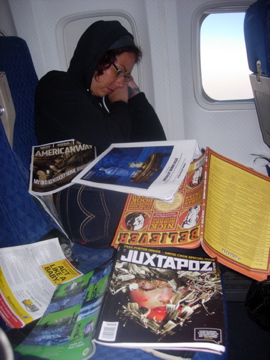 Oh yeah, American Airlines? You wanna play dirty?
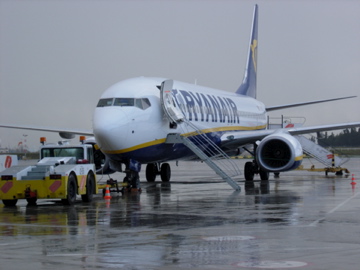 I have seen the future of air travel. And it’s covered in Telecom ads.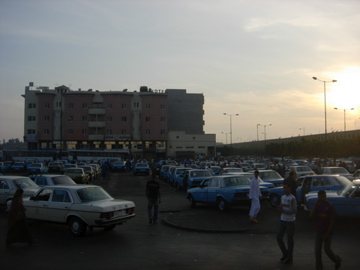
 Yesterday I had the most authentic Moroccan experience of my trip so far. It wasn’t in a medina, it wasn’t at any monument; it wasn’t outside of a mosque or inside of carpet shop. It wasn’t in some exotic spice souq, or even with a witch doctor.


 Lonely Girl Travels
Recent Comments