Archive for the 'Dirty Tricks' Category


Would You Like Travel With That?: Why Being a Waitress is a Killer Job for a Traveler

As I’m planning my California road trip, buying plane tickets to Hawaii and Texas, and feverishly saving for a three-month galavant through Southeast Asia, I’m sometimes asked a question about work. Someone that doesn’t know me that well will wistfully gasp, “Your job lets you take that much time off?”

It’s at times like those that I realize how good I’ve got it. As a waitress.

That’s right—a waitress. It’s an inglorious job that people outside of the restaurant industry tend to look down on. It doesn’t exactly scream “motivation,” and at its worst, it screams “uneducated” or “Hooters girls.” Sigh. But the more I dig into the travel writing world, the more I’ve come to appreciate my “day” job. And despite the lack of benefits and security, it couldn’t be a better gig for me right now.

I didn’t plan it this way. But I majored in Creative Writing, and it’s not like there’s full-time gigs writing poetry. I hosted and served (and managed a local swimming pool) to get through college. I left the country for the first time after graduation, fell in love with traveling, and decided to stick around restaurants, if for nothing else than the time off (and getting to sleep in).

I’ve never worked a 9-5, never worked in an office, and never felt stifled or constrained by my job. I forget about the corporate trap of 40+ hour work weeks, because I’ve never lived it. I come across blogs with lengthy “About” descriptions detailing the karate-chop someone gave to the confines of corporate life (“I quit a job with XYZ company, sold everything and took to the road”), and I think, “Huh. That’s a life experience I totally can’t relate to.” I’ve certainly felt claustrophobic and stuck in my own life, but never because of my work.

There are trade-offs for the freedoms that come along with being a waitress—big ones. I work holidays and weekends, have never had a paid day off in my life, and the idea of a retirement plan or dental insurance is for me as exotic a fantasy as, say, traveling around the world is for some. But I swap all these securities for the one thing I can’t live, or travel, without: the ability to pick up and leave, yes, but also to not feel trapped.

And while I sometimes stress about the fact that it’s been nearly 10 years since I graduated high school and I’m “still a waitress,” I can’t help but feel I’m exactly where I’m supposed to be right now. Here’s why:

Time Off

Earlier in my “career,” I nervously asked my manager for an additional 4 days off during a month when I was already out of town for 2 weeks. He laughed. “Of course you can have the time off. That’s why you’re a server and not working for an insurance company.”

The number one plus of restaurant work for a traveler is the ability to take time off. It’s just a part of the culture—and why the cliche of a struggling artist or musician working as a server is so prevalent. The idea of being constricted to 2-3 weeks of vacation a year—paid or otherwise—scares the crap out of me. No wonder people quit their jobs to travel the world.
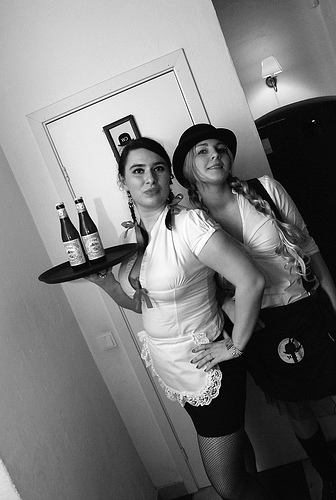
Flexibility

Allowing for time off is rooted in a deeper aspect of restaurant culture: flexibility. At most places it’s totally acceptable to switch shifts and in-times in order to accommodate whatever else is going on your life. Which is great for me now.

Short Hours

Shifts in most restaurants aren’t the grueling 8+ hour affairs they are in offices. My shifts currently average 5-6 hours, and are sometimes as short as 3 hours. This means that, even on days I work, I have time to write, and take care of all the tedious tasks/errands that come with being alive.

Internationalism

Because restaurant work is tough and doesn’t require traditional education, it’s chock full of immigrants. Mexicans and Central Americans fill the restaurants of California—which means you’re constantly immersed in Spanish. It’s impossible not to pick up a little Spanish in California restaurants. I’ve given myself pre-trip crash courses when I declare that no one should speak to me in English (this doesn’t really go as well as planned). As of late, I’ve been pretty lazy on the language tip; even still, I hear Spanish all the time and understand a fair amount (“Oh, Lorena, tienes un novio?”). I’m even picking up some random Mayan words (“pibil” means “baked”).

Being Active and Talking to People

Last year, I interned for several months at a rad travel website. Everyone was super nice and I enjoyed all the writing work I was doing, but the work environment felt totally alien: everyone sitting at desk, quietly clicking away on their keyboards. I was not used to the quiet, the immobility, the comfort and niceness of it all.

Restaurant work is visceral, and I like that. I tromp up and down stairs for hours, carrying trays of drinks and stacks of plates up my arms. I sweat. I spill salsas and half-eaten food down my apron. I sometimes have to pee for an hour, but am too busy to go. On a busy night, I’ll wait on over 100 people—interacting, reading them, talking and joking, making sure they have a good time. It’s intense and draining and I kind of love it.

But before you swap that comfy gig at the stifling job you say you hate, check out the other side of the scale: the restaurant work bummers.

When waitressing sucks your soul out...

No benefits

And I don’t just mean health benefits. These days, most restaurants in the Bay Area offer some kind of health insurance (albeit chintzy and hard to qualify for). What I mean are all the other “kushy” benefits (benefits that are automatics for all workers in some other countries—but that’s another post…).

I can take all the time I want off, but none of it is paid. That extends to paid holidays and sick days. If you’ve got the flu, tough. Maybe your landlord will accept a doctor’s note. Even those legally required 10 minute breaks are the stuff of waitress fantasy. Maybe someday we’ll unionize. Until then, we pop DayQuil and work sick.

No security

It’s not just the lack of unions; the lack of security in the restaurant world again goes down to the very nature of the job. When times are hard, as they are now, one of the first things people cut is eating out. Or worse, tipping. And there’s no safety net under the waitressing tightrope.

In most restaurants, you earn minimum wage (in some states, they can pay you under minimum wage; I knew a server in NYC who made $3.12 an hour!), which is usually just enough to cover taxes. So essentially all the money you’re making is from tips. If you have a slow night, get a string of 10% tippers, or, oh say, the economy totally falls into the shitter, you’re quickly screwed. There’s no guaranteed income to fall back on. By the same token, though, you can make insane amounts of money when times are good. But if you don’t know how to budget, it can devolve into a feast-or-famine lifestyle.

Hard on the body

The restaurant industry is great when you’re young and energetic and can’t stand the thought of sitting in a chair all day. But it’s not an industry to grow old in. Long hours on your feet, carrying trays and plates, seriously wears you down. By 23, I already had chronic lower back pain and an interstate roadmap of varicose veins criss-crossing my legs.

But these are the markings of someone who works for a living, like the calluses of my dad’s hands, the unwashable black under my brother’s nails: work you wear, that wears you. Whether I planned it this way or not, waitressing as become a part of me. And until I scramble my way to the top of travel writing heap (wink, wink), it’s not a bad way to earn my rent, fund my travels—and get the hell out of town.
It Itches!: Feeling the Burn of Wanderlust

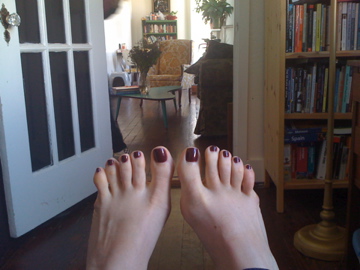
Itchy itchy...

“I’ve been home for nearly 4 months. My feet are so itchy, it feels like I got athlete’s foot.”

Okay, it was a bad joke. But that’s what Twitter’s for, right?

It’s not that I’m counting the days (not really). It’s not that I’m unhappy in my life at home or looking for escape. It’s just that I have this “incurable wanderlust” (what @cultoftravel speculated was worse than swine flu), and the more I read about travel, write about travel, tweet about travel, and am generally immersed in a virtual sea of travel, the worse it gets. I don’t have any problem going to a bar and not drinking, but reading travel blogs and knowing I won’t be doing any serious adventuring for a few more months—well, that’s tough. Ever since my first trip, I’ve gotten antsy when I’ve stayed at home too long. This whole travel writing business is adding a little more heat to the ring of fire.

I may be chomping at the bit, but it’s all good stuff that’s keeping me home. I have a niece on the way, my dad is retiring, and I have four friends getting married in the early half of the summer. All totally happy, exciting things that I’m grateful to be a part of. Plus it gives me a chance to save up for my next long trip, a three-monther around Southeast Asia.

In the mean time, I’m plotting a little solo California roadtrip for next month. Partly to visit an old friend, partly to see the swallows of San Juan Capistrano. Partly because I haven’t driven down Highway 1 since I was a kid, and partly because I’m curious what kind of conversations you get into with yourself after days of driving solo. Partly to debunk my own stereotypes of Southern California as a cultural wasteland of SUVs, strip malls and Kardashians, and partly to practice toting my laptop on the road with me. But, honestly, the trip is largely a keep-me-sane tide-me-over until the funds and circumstances—aka The Travel Gods—see fit to unleash me on the world again.

So as my feet are itching, my fingers twitching and my plans to high-tail it down the highway taking shape, I uncovered an old poem about restlessness, impulsivity and the physical road that hit the spot.

MacArthur Maze

Let’s drive this thing

into the blood burning sky.

/

Let’s take this road

potholed and hissing

past the pitched roofs

and pigeon wings,

past electrical wires

and blown-out streetlamps,

brown hills

where the grass cackles

and waits

to be lit.

/

Let’s curve

into the black, under

the overpass, past

the vacated bodies,

curled in and sighing—

/

Let’s take this thing

where it leads,

if it leads,

or stampedes

/

us into a sunburnt sky

the color of our own

sunburnt skin.

Now get me on the road!

Ass Whoopin on the AC Transit: Epic Beard Man, and Why I Don’t Ride the Bus Anymore

Celebrity sighting on the 53

The voice was barely discernible, muffled by whizzing traffic and excitement. “I just rode the bus with Epic Beard Man! He was giving out candy bars and autographs, and I got a photo with him!”

My friend’s Friday evening commute home had been spiced up by a sighting of Oakland’s latest internet phenomenon. As the number 53 heaved down Fruitvale Avenue, passengers posed for pictures and chanted “Epic Beard Man,” as the grizzlied old dude distributed candy from his backpack and basked in the adoration of the bus riders.

Regardless of your take on Oakland’s latest internet sensation—racist, vigilante or mentally ill bad-ass—one thing is for sure: Epic Beard Man has reached celebrity status. And while a heated, racialized debate rages in chat rooms and on blogs, the actual riders of AC Transit appear to have risen Epic Beard Man to the revered status of folk hero.

Quick low-down, in case you’re out of the loop: earlier this week, a YouTube video of an AC Transit (Alameda County Transit) altercation between a middle-aged black man and an elderly white man (now dubbed Epic Beard Man) made quite a stir—over a million page views in its first day, and countless comments and ensuing discussions over issues of race and safety in Oakland. The story was picked up by local blogs, news outlets, even the Huffington PostKnow Your Meme offers the most complete run-down of the controversy, featuring video responses that capture some telling Oakland sentiments.

You can go to YouTube and dig through all the remixes, follow-ups and tributes, but here’s the original video. Yes, it’s graphic:

It’s no surprise that the video is so popular. It’s another opportunity for people to glimpse into the dysfunctional “urban” reality of Oakland, and people outside of Oakland never seem to tire of that. Several years ago, the city’s other big internet phenomenon fascinated outsiders with its oh-so Oakland cultural collisions and colorful characters (I was living in East Oakland at the time, and the screeching sound of whistle tips really did echo through the streets at all hours).

While responses to the latest video vary, they largely fall into two camps: Epic Beard Man is a racist, or a hero. He’s either an old redneck who asks a black man to shine his shoes, then beats him, or he’s a tough dude who stands up to a punk-ass thug who’s instigating and harassing him. In general, the first camp seems to be populated by guilty white people and advocates of all things ghetto, while the second camp is composed of kids, bus riders and enthusiasts of drama and smack-downs.

My own response lies somewhere between the two. Both men are unstable, not the kind of people you want to sit next to and exactly the kind of people you meet on East Bay buses. Epic Beard Man is obviously not well, further evidenced by follow-up interviews; turns out he was also the star of another YouTube phenomenon, a video where he gets tased at an A’s game for unruly behavior. He’s a deranged old Vet with a tenuous grasp on reality, prone to violent outbursts. Not someone who should be milling around the streets, trying to take care of themselves, but hey, that’s America (thank you, Ronald Reagan). The other dude should have left it alone, realized Epic Beard Man was not all there and not worth the trouble—but in his bravado, he got pumped full of ego and shit-talking and, well, he got served.

What’s most interesting to me is how the people most closely related to the issues raised in the video reacted—that is, AC Transit riders and people with exhaustive experience dealing with both the tiringly whacked-out and tediously ghetto. Most of the folks I’ve talked to feel that while, yeah, Epic Beard Man is totally deranged, dude got what he deserved.

It reminds me of an issue several years ago when an Oakland resident was both vilified and exalted for standing up to the thug kids that plagued his block, in what became a violent incident. While both parties in this instance were African-American, so the race issue wasn’t raised, responses were similar: he was either a vigilante hero, or a villainous attacker of innocent youth. Throughout the controversy, the man insisted that all he wanted was a safe neighborhood in which to raise his kids—what I’d argue the majority of people in Oakland are looking for. In the end, he did what most of the families I grew up with did—unable to afford a nicer neighborhood in Oakland, he moved to one of the outlying working-class suburbs.

Responses to that issue, as well as this one, tap into some very central Oakland issues. While the man from a few years back was a much more sympathetic (and sane) character, and didn’t want to be a hero, many people regarded him as such. I think it speaks to the extent to which people are sick of all the bullshit. People are tired of dealing with puffed up a-holes who think they can say/do whatever to whoever and get away with it, tired of shit-talkers, instigators and intimidators. So much so that they’re willing to revere violent behavior.

The riders on the 53 last night, majority non-white, were literally cheering for Epic Beard Man. Yes, some of it was surely star-struckedness and a glorification of school-yard theatrics, but I think there was something deeper going on there, something almost beyond race. Most of the video responses I’ve encountered are, in fact, from people of color. Epic Beard Man may be nuts, but the other guy was an ass. There’s no video glorifying him—and I don’t think it’s just cause he was the loser in the altercation. It’s a strange thing: an incident so racialized, that at its core, to the people who deal with this stuff day in and day out, has more to do with harassment and basic respect than race.

That the incident took place on a bus is no coincidence. A San Francisco Chronicle blogger (and fellow gym goer) centered his coverage of the issue on the ridiculousness of AC Transit—for him, it was all evidence for why he doesn’t ride the buses in Oakland.

Word. I grew up riding AC Transit, and it served as a serious education in the world. The first post on this blog was a reflection of how riding the East Bay buses prepared me for world travel, while the very first piece I published, as a teenager in The East Bay Express, was a narrative about my fucked-up experiences on AC Transit (I used a line from the piece as the title for this post). While shit like this doesn’t go down on the vast majority of bus rides, it’s not some sort of exceptional incident—it just happened to be captured on tape. I’m grateful for the schooling AC Transit administered; as a result of vital life skills learned on those blue plastic seats, people generally don’t fuck with me. But I’m even more grateful to have a car now.

The Epic Beard Man hype will surely die down—like everything these days, it’ll be discussed and linked to and tweeted wildly, then fade into the buzzing gray, the next craze taking its place (in the digital age, it seems everyone’s 15 minutes of fame are whittled down to 15 seconds). But for the rest of us, the issues the video captures will continue on: race, safety, the crazies that fill AC Transit. They’ll continue to roam around, screaming and bleeding all over our commutes, and I will carry on with my self-centered, polluting aversion to East Bay mass transit.

But I will say—being on that 53 with my friend last night would have been an experience. If for nothing else than the photo ops.

Where Do Dirtbags Go for Valentine’s?

One of Aly's photos from the Burlington Hotel

It happened like this:

Making the rounds last Friday at the Art Murmur, I came across the photos of a friend of mine, Aly Su Borst. They were pretty bad-ass: a series of self-portraits set in some run-down opulence that got my spooky/awesome sensors spiked. I took some photos on my phone. At home the next day, I showed my roommate, “Hey, Luke, check out Aly’s photos.”

“Oh, rad, Port Costa.”

“Where’s that?”

That’s how I found out about the overnight destination all the local dirtbags have apparently been partying it up in for decades. And like most things, I’ve found out just in the nick of time: the reputedly haunted, ramshackle old bordello/hotel that serves as the heart of the 250-person town of Port Costa (that despite being 30 miles from my house, I’d never heard of) has plans to spiffy itself up, and recently received coverage by the San Francisco Chronicle. I knew no time could be wasted—I booked a room for this Saturday night. It’ll be a Valentine’s weekend overnight the way I like it: full of bats, bedbugs, dive bar denizens and rock n roll.

The Chronicle‘s article made the Burlington Hotel sound like the very definition of “hidden gem”—not in the Tuscan villa sense of the word, but in the gritty, visceral sense—which is to say, the sense I dig the most. Whether it was in fact an old whorehouse, and whether it is indeed haunted by the ghosts of prostitutes and shipyard workers, one thing seems for sure: the Burlington Hotel is a relic of the Old West California, the one Jack Black captured in the book You Can’t Win—the one that’s all but gone amid the Botox and SUVs of Southern California, and the Blue Priuses and Tibetan prayer flags of Northern California. Which is why I want in.

It won’t be a relaxing, rejuvenating or romantic getaway. Its Yelp reviews reveal as much: “dirty,” “bad-ass,” “like a horror movie,” “whore-tel.” One person laments that it’s no longer the all-night rager spot it had been in previous years (frequented by the likes of none other than the East Bay Rats—nuff said). A raucous bar next door constitutes much of the clientele, including “bikers, transients, nazi crack addicts, and drifters. maybe tourists are in there somewhere, too.” (Really, there’s some effing gems on the Yelp page, read through that shit.)

Already pretty convinced, I came home from work the next night and found Liz and Melissa on the couch. “You guys ever heard of the Burlington Hotel?” They turned their heads slowly towards me. “Oh. Dude.”

They swapped debaucherous stories from their hard-partying youth—Liz being haunted in Room K, Melissa’s heshen friends getting permanently 86-ed (which apparently is saying a whole lot). “Make sure,” Liz advised, “that you bring your own sheets. Bedbug city, yo.”

I called to make a reservation, which wasn’t quite as difficult as the Chronicle article made it out to be. After a long succession of rings, someone picked up; muffled and scratchy, he told me they weren’t quite open yet, but to call back in a half-hour, and they’d be ready to “rock n roll.” I did, and they were. Butt rock blared in the background. All the rooms I’d been advised were the best were, of course, full, but I did get in on the “special” (Valentine’s Day special? probably not): the room and 2 surf-and-turf dinners for $99 total. Now that’s my kind of overnight.

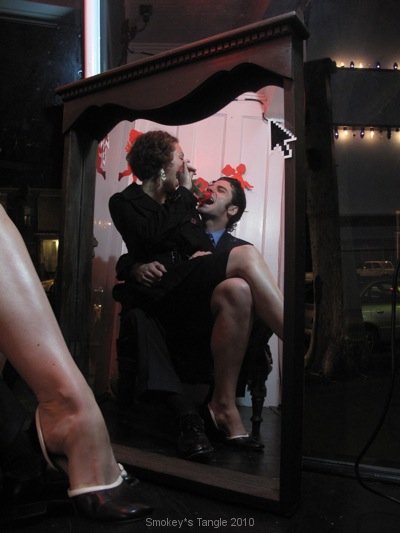
Ridiculous photo from the Smokey's Tangle V-Day Photo Booth, February's Art Murmur

So sadly, since the Chronicle recently did a piece on the hotel, I’m gonna have to dig a little deeper to a) out-do their article, and b) find the right publication for it. The good news is that my partner in crime is bringing along his fancy camera, so the photos, well, they’re going to kill. Hopefully not literally.

Knuckle Bumps and Stomach Punches: VICE Under Fire

“Negligent.” “Contemptuous.” “Appalling substandard.” “Morally bankrupt.” “A modern version of a colonial diary.”

Ouch. It’s some harsh criticism that isn’t undeserved. The VICE Guide to Liberia, which I did a post about a few weeks ago, has ignited a cauldron of contempt on the blogosphere. Big-time media attention from CNN and the Huffington Post led to impassioned and eloquent arguments against the documentary, and some frighteningly truck-rally-esque endorsements. It’s got me thinking a lot about the travel series I’d formerly enjoyed and endorsed, despite its arrogance, and wondering: did VICE go too far?

Well, the answer is yes. Clearly. As I dug into the dozen or so blog posts, and the scores of ensuing comments, I learned more about the current situation in Liberia. VICE didn’t portray it fairly, or even close to fairly, and fell woefully short of providing the kind of context one would need to draw any kind of informed conclusions about the country. But I don’t think the series was entirely without merit, entirely evil and shallow. And buried beneath smirks and bro language (“heavy vibe” is used a lot), there’s still an emotional depth to the documentary that keeps it, for me, from being too simple of a case: black and white, Western and African, exploiter and exploited.

Most of the voices crying out against VICE are from people personally invested in the country—they’ve lived there, traveled there, done development work there. If I were emotionally linked to the country, I’d be pretty pissed too. Penelope MC’s post post relates stories and experiences of positive progress in Liberia, while Kate Thomas’ post shares some of the tourist-friendly spots. On The Faster Times, Adam Karlin delivers the most seething and meticulous critique of VICE I came across, picking apart the faulty journalistic practices employed. On the other end of the spectrum are the positive comments that fill the VBS website, which basically amount to a Beavis & Butthead “Whoa.” I found only one blog from someone with experience in Liberia that lauded the series, and the rationale there was a little odd. Christine Scott Cheng offered a more nuanced review, as does Ethan Zuckerman, arriving at the point that the series, however flawed, deserves to be watched. I agree.

A different view

The VICE Guide to Liberia paints a bleak picture—so much so that I was surprised, only a week after its release, to come across a New York Times article about the country’s burgeoning surf scene. I began to suspect VICE hadn’t captured the entirety of the situation in Liberia.

Indeed, one of the main qualms people have with the series is that it only shows the most fucked-up parts of Liberia, largely within the capital Monrovia. While it’s true that “this is just what VICE does,” I think that reasoning is a cop out. VICE hypes the situation: the first episode makes it seem like the war is still going on (though I’d argued subsequent episodes firmly depict the war as over), and the UN is claimed to be leaving the country, an incendiary claim that isn’t exactly true.

I don’t have any experience in Liberia, so I did what I always do in this situation: related it to Oakland. Someone could certainly go in to the worst neighborhoods of Oakland and do a series that made the whole city look like a dangerous, drug-riddled hellhole. And that would have pissed me off, for the exact same reason it did people invested in Liberia—the 80s are past, crime is down in Oakland, and a lot of people and organizations are working hard to enrich their communities. That being said, I don’t think going into those places, documenting and interviewing and excavating stories, would be entirely without value. They are hard, painful stories to hear, images to see, but they are true and deserve to be heard. More context certainly should have been provided—something like: “we went to the worst slums and interviewed former warlords”—so that the series didn’t appear to be a blanket of this-is-what-Liberia-is-like. But just because the stories featured weren’t representative of the whole doesn’t mean they shouldn’t be heard.

Ambassador setting up a Girls Empowerment Center

Other arguments against the series include sensationalism, stereotype indulgence and bad-assedness. People argue that host Shane Smith is exaggerating the situation so that he can look tough, and the series more daring, and that in the process he dehumanizes his subjects, treating them like animals in a zoo. There’s a lot of validity to these arguments. The war is over-hyped, and less discerning viewers could certainly draw erroneous conclusions. Shane Smith, to me, looks scared and freaked out in most of the footage; rather than a bad-ass, as many of the site’s commenters lauded him as, he seems wholly untough to me. Not saying that I’d react any better, just that the series didn’t make him seem cool to me.

But the argument I’ve been grappling the most with is the stereotyping and dehumanizing one. Africa is again portrayed as a hellhole, Africans as savage cannibals. I can agree with this statement, but my experience with the series was completely different.

Granted, I’m coming from a pretty left-wing perspective, but to me, the series didn’t evoke an Us Vs. Them reaction. To me, it served as an exploration of how generations of war, poverty and exploitation create dire situations not easily remedied. It’s not an African issue, but a human one. What happens to former warlords and child soldiers? Do they try to reform and make amends for their actions, like Joshua Blahyi, or stay whacked and ready for combat, like former General Rambo? What about the kids growing up in all that, the women and all those folks just trying to live life as they best they can?

The most interesting part of the series to me wasn’t the shocking wartime footage or discussions of cannibalism—it was the visits to the boys school of former soldiers, to the brothels and heroin dens. Not because it was shocking, because it wasn’t, but because of the eyes of the people shown, the pain-beyond-pain. For me, it was incredible humanizing, touched on that part of me that makes me feel like we’re all connected, together in this often fucked-up world. I can see how that wouldn’t evoke the same reaction in a lot of viewers, and maybe the emotional depth wasn’t in the coverage at all, but in my own reaction to it.

At the end of his review, Adam Karlin touched on what the real shortcoming of the VICE series is, to me: “Bad travel is about going somewhere and reconfirming everything you thought you knew before you left, and this is exactly what Vice does in Liberia.” I don’t feel like anything was learned by the people making the documentary—they were shocked, sure, but their ideas and opinions about what was going on appear to have remained unchanged. I’ve never been on a trip like that, where something in my understanding didn’t change. And I hope that I can retain enough open-mindedness and humility not to ever.

Whatever the conclusions, one thing’s for sure: the VICE Guide to Liberia garnered a lot of attention for the country. And for VICE. It got people talking, even if they didn’t want to, and got people like me, who had a hazy understanding of the present-day situation, spending hours online to dig deeper and learn more. It won’t be easily written off, which means there’s more to it than mere caricature and hip packaging. And it might mean that VICE does a more thorough, honest job next time. Cause God knows they certainly have the resources to.

Relatives and Revelations: What My Brother’s Wedding Taught Me about Travel

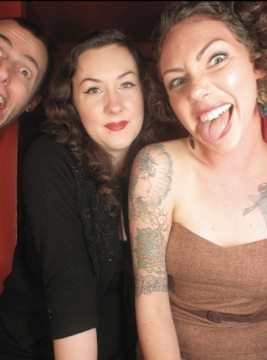
Photo booth fun

“What can I say? When you’re children get married, it’s one of the happiest days of your life.”

That was my dad, toasting at my brother’s wedding two weeks ago. Simple, but true: celebrating my brother’s marriage to a rad lady will definitely go down as one of my happiest days. Aside from the awesomeness of why we were all there, it was a gorgeous event at the Julia Morgan Ballroom in Downtown San Francisco, complete with caviar and a five-tier chocolate fondue fountain (that’s right, you heard me). I was surrounded with life-long friends and far-away family, flown in from the Midwest and East Coast.

Of course, as a travel person, my antennaes were perked by all the out-of-towners. Watching them all come in—arrive at the hotel, rent cars, hang wrapped dress clothes in closets—I realized I only travel a very specific way, and it’s lent a very limited perspective.

I’d argue that most Americans travel the way my family did two weeks ago: domestically, in hotels, either shelling out for a rental car or attempting to traverse poorly funded mass transit systems. It’s pretty far-off from the international ramblings I do on second-class buses and cheap pensions/hostels/couchsurfing. The weekend resulted a series of travel revelations—“light bulb moments,” as I’d once heard them described on Oprah.

Before the guests arrived

What shocked me most was the sheer expense of it all. Even at an off-season rate, further discounted for the wedding party, staying in Downtown San Francisco is not cheap. Renting a car is not cheap. Eating at the restaurants and cafes Downtown is also not cheap. No wonder people ask me “But how can you afford to travel so much?” I used to feel that travel within the US was kinda a rip-off. I don’t take it that far now, but I will say you get a lot more bang for your buck elsewhere. (That being said, I have done New York City on $40 a day, so maybe I’m just a cheapskate.)

The night of the wedding, my parents decided to not add battling the Bay Bridge to the day’s ledger, and booked a room, which I piggy-backed on. Which brings me to the next travel revelation I had: looking good on the road is a major hassle.

As far as hassles go, mine were pretty minimal: the morning of the wedding, I dropped my shoes, dress and fancy jacket off at my parents’ house in Oakland before taking BART out to the city to get my hair and make-up done. I toted with me my overnight bag, in which I carried more make-up and hair products, as well as jewelry, nail polish, etc. My parents brought my dress clothes; I met them at the hotel and changed. The next day they took my dress clothes back to the East Bay while I hung out with my cousins. Not bad at all, considering I didn’t even have to negotiate riding the train with a hanger of dress clothes.

Classy as shit

But considering the way I normally travel, this jaunt across the Bay was complicated exponentially by the need to wear something other than jeans and sneakers. When I travel, all bets are off: I bring my most utilitarian clothes, no makeup, a dabble of hair gel and loads of sunscreen. I look like a total ragamuffin—handy, since it tends to decrease the amount I’m hit on. Wanting to look not just presentable, but my drop-dead best, is tricky enough; doing it out of a bag was even harder. I garnered a new appreciation for business travelers, beauty pageant contestants and all other non-backpacker/dirtbags travelers.

Here’s another thing I learned: logistics are tough. Organizing big groups of people, getting them here and there when they don’t know where they are, is really hard. No wonder tour companies charter buses. And no wonder people trundle on them happily.

I’m the kind of traveler that loves transit. I grew up riding buses and trains, and I get a kick out of figuring out new metro systems: where train lines connect, what lines run where, the fastest and easiest way to get from Point A to Point B. There’s a skill to transit, and I’ve honed a kind of sixth sense for the rhythm and order of it. So when my dad started to fret over how we’d get everyone from the Downtown hotel to a Sunday night pizza dinner at my brother’s house on 27th and Dolores, I responded, “We’ll have them take the J-Church.” Easy, right?

Well, it was easier than shuttling loads of people back and forth in the couple of rental cars, but not as easy as you’d suspect. I played transit tour guide, leading everyone to the Montgomery Station, through the turnstiles, down to the platform, on to the train (luckily, we all got seats). I alerted everyone to our stop, got us all out of the back doors (although almost lost my grandfather in the process), and down the two blocks to my brother’s house.

There’s not a lot of hand-holding or coddling on MUNI, and I like it that way. MUNI’s not most intuitive system—you can only pay station turnstiles in coins, have to retain a transfer ticket, and all lines eventually come aboveground, where stops are unmarked. But it’s still cheaper and more comprehensive than BART, long-distance commuter trains that double as mass transit for the Greater Bay Area, with a pathetic number of inner-city stations and a whopping $7 round trip fare from my neighborhood in Oakland to Downtown SF. In my mind, this makes BART infinitely inferior to MUNI. Who needs plush seats and timetables anyway? I’ll take hard plastic and a vague urine smell over a $7 fare any day.

iPhones have no flash, but you can still kinda make out five tiers of fondue.

But riding the train with my relatives, I realized that transit can be damn stressful. If you’re not already in the groove of it, or don’t share my nerdy obsession with maps and routes, it’s really just a pain in the ass. The potential to get lost is huge: you could get on the wrong train, get off at the wrong stop, end up god-only-knows-where. It’s confusing, station agents are exasperated, locals impatient. My relatives that rented cars were hit with overnight parking fees and having to traverse a maze of one-way streets, but when they got lost, they were warm and dry, and could easily turn back around. I realized why, despite the costs, so many travelers opt to rent cars over riding transit. Guiding everyone through the process, I also realized why tour guides carry those little colored umbrellas.

In the end, everyone got to and fro and everywhere inbetween safely. We gussied up, boogied down and had a killer time. And that’s what weddings are all about, right?

Elephant Seals, Artichoke Bread and a Lighthouse: Cheap Kicks on the California Coast

The wind had something to say. Howling, moaning, rattling through the fog-swelled rafters, it talked to us all night. The next morning, it fingered our hair, pinkened our noses, and carried the cries of birth and battles, sea gulls and elephant seals…

I think I’ll start the article something like that, depending on how highfalutin I wanna get. It’s not as ridiculous as it sounds; the drama of the California coast during a winter storm evokes that kind of mulling, moody language. The main character, if you will, of my mini-trip down the San Francisco peninsula was the wind, urgent and unrelenting. But the supporting cast was pretty rad too.

I’m trying not to get too claustrophobic in my own life, and trying to keep the travel writing material a’coming. So despite a heavy-duty week-long storm, my friend Liz and I hopped into my beat-up little car and headed out for a little Northern California overnighting action in Pescadero.

Aside from being super accessible from the inner Bay Area, a trip down to Pescadero is also one of cheapest getaways around. We hiked around redwoods, espied an elephant seal colony, ate “world famous” artichoke bread and local goat milk cheese, and lazed in a cliffside hot tub—all for under $90 each.

Pescadero is an old-school fishing town down the peninsula between San Francisco and Santa Cruz. Aside from some seriously killer breads from Arcangeli Grocery, its main claims to fame are its surroundings: the Pigeon Point Lighthouse Hostel, and Ano Nuevo State Park. Pigeon Point is a pretty basic hostel—except for its dramatic perch literally on the edge of the continent, its historic lighthouse, and its cliffside hot tub (yes, really). Ano Nuevo is a sandy stretch of shoreline best known as the winter home of migrating elephant seals, where they birth and wean and fuss and fight.

"Look, nature!"

The drive from Oakland was about an hour long, Highway 92 delving us down the spine of the peninsula into Half Moon Bay, a quintessentially quirky Northern California beach town. Then we headed down the 1, California’s most famously beautiful highway. It winds you past pastoral fields, green hills, a sprinkling of cove beaches and family farms, and a crashing, crumbling coastline. Everything was grey and heavy and wet. It was perfect Lucero-listening weather.

Huddled on a cliff next to an run-down, chained-off old lighthouse, Pigeon Point Lighthouse Hostel smells like salt, and the ocean winds rattle the humble buildings endlessly. The hostel is divided into three houses, each with its own kitchen and common room. There was only one other couple in the house, fellow overnighters from the East Bay. It was $25 for a dorm bunk; we had a whole room to ourselves.

Pigeon Point Lighthouse

The main draw of the Pigeon Point Lighthouse Hostel isn’t the ocean views or its precipitous perch; it’s the hot tub. I don’t know how a youth hostel came to have a feature like a hot tub, but it’s about the raddest thing you can imagine. A trip to the hot tub cost $7 per person; you sign up for a half-hour slot when you check-in.

We stumbled in the dark to the hot tub, shuffling in our sneakers and shivering in our towels. We kicked it in the hot tub, listening to the sound of wind and waves. It was a dark, cloudy night; there were no stars, just the white froth of water on rocks, and the lonesome beam of the lighthouse.

The next morning, we drove 10 minutes down to Ano Nuevo. Celebrities may have Miami; elephant seals winter in Ano Nuevo. They arrive from Alaska in mid-December; moms birth pups, wean them, and they hang around confused and blubberous until about late March. Mid-January is the best time to check out the seals; on our tour, we saw a birth, a fight, plenty of sulking and lots of squealing.

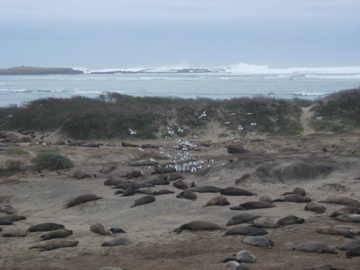
Hella seals

The seal tour is pretty popular, especially as a field trip for Bay Area schools. You have to take a guided tour, and it’s best to book ahead, but here’s the good news: the tour is an hour and a half long, and only $7. (Parking in the lot, though, costs a $10; there’s not any other viable parking around.)

Our naturalist docent guide was a cool old dude that solidified my opinion that being a park volunteer after you retire is about the most bad-ass thing you can do with your time. Our group of 13 people, mostly all Californians on day trips, headed out into the sand dunes, a mile traipse from the parking lot.

First we passed “Losers’ Alley,” where male seals that have lost the fight for prestige pout and sulk in solitude for the remainder of the season. We got pretty close to one; he arched his back up, his nose/trunk hanging like an absurd, uncircumcised phallus. A guttural, grunting nose erupted, bursting out of his mouth in a gust of white breath; it sounded like a stopped-up toilet. It was his get-the-hell-back cry, and we obliged.

We climbed up a dune that overlooked the colony, and spent about an hour watching them flop around in the sand, squealing and moaning and rumbling their enormous selves around. The pups were adorable, too fat to do much of anything but wiggle their fins around and cry for milk. The moms flipped sand over their backs, rolled over to let pups nurse, and grumbled. The men did what men do: fight.

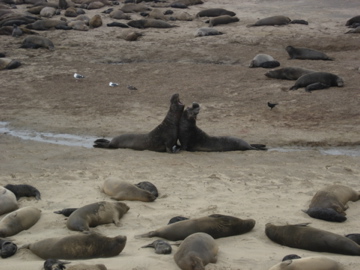
Bashing chests...

We caught a pretty good fight, full of plenty of screaming, biting and butting. It broke out amid the crowd, dominoed its way through the colony, pups wiggling to get out of the way; it rumbled all the way down to the shore, where the loser got 86ed. “It’s just like a bar fight,” Liz surmised.

Going mad for the placenta

We also got to see a birth. Well, not really. It was too far away to see, but we were alerted by the swooping, squawking riot of sea gulls. Sea gulls, apparently, love to eat placenta, so you can always tell when a birth is going down when the gulls start going crazy, a frenzy of white wings and diving beaks.

Muddy and wind-tossed, we tramped back to the car, cranked up the heat, and headed home. It was invigorating to get out of town, even if it was just for a night. Aside from gathering info for an article (not yet sold, if there’s any takers out there), I needed to clear my mind. It’s so easy to get tunnel-vision, to get caught up in the everydayness of my own life. It’s a good life, but there should be more to it than errands and work and my computer. I really am happiest when I’m traveling, and my mini-trip confirmed that. And reminded me how much killer stuff there is within an hour of where I live. And that it doesn’t need to cost any more than a new pair of pants.

Forget the Guidebook, This is the VICE Guide to Travel

Dolores Park: "You would think VICE Magazine threw up there."---SF Comedian Ali Wong

At the risk of sounding like a gold-lame-wearing, ironic-mullet-sporting Dolores Park denizen, I’m gonna say it: I like VICE Magazine. And I fucking love the VICE Guide to Travel.

Quick run-down, in case you don’t know: VICE grew from a Montreal zine into global empire of youth counterculture, serving as a kind of hipster voice of a generation in what some could argue was the next CREEM magazine. By 1999, VICE had exploded on to the hip-slick-and-cool scene. A free, glossy magazine peppered with American Apparel ads, you’d find issues at trendy clothing stores and serving as coasters on your friends’ coffee tables, or stacked beside the toilet for inspirational reading material. Having reached new heights of hipness, VICE was nearly immediately deemed as have “been better” in previous years, in the perennial way that everything was better before it got big. But here’s a little secret about VICE: it’s got some killer articles. Some are better than others, for sure, and many breach a little too far into the snarky, too-cool-for-school realm. But I’d argue a good half of the magazine is usually filled with quality journalism, covering super interesting international cultural phenomena.

Which leads to the VICE Guide to Travel. It’s not Rick Steve’s, or even Lonely Planet. VICE goes to some of the most fucked locations on earth, “the kinds of places that nobody else wants to visit”; digs up shocking and bizarre stories; sends sweaty dudes in v-neck t-shirts to interview warlords/cannibals/other locals; films it all, and sets it to a soundtrack of doom, gloom and rock. It’s “edgy,” it’s “off-the-beaten-path” (to say the least), and it’s some of the most bad-ass travel journalism out there.

First, some clarifications on the meaning of “bad-ass.” Empty, self-serving sensationalism with no emotional depth or historical perspective is not bad-ass. And there’s plenty of that out there in the travel world.

A couple months ago, I complained about this kind of trying-to-be-bad-ass-edness in a post blog and subsequent Matador article. Later, I came across an article titled “5 Totally Bad-Ass Travel Experiences” that made me want to vomit. The article listed 5 “daring” travel experiences, two of which capitalized on some of the most heinous aspects of a country’s history. The perspective reeked of a privileged disconnect with the suffering caused by events like genocide and drug wars:

Home to one of the biggest genocides and mass killings in modern history, Cambodia is awash in guns and weaponry. It’s a pretty peaceful place these days but there are still opportunities to get a taste of the weapons of war.

Oh, well, bummer the murdering is over, but at least there’s still cool guns to shoot off. I wanted to reach through the computer and punch the writer. Granted, the article struck a personal nerve; I guess when you know people who escaped the Khmer Rouge, but who’s families all died in the killing fields, well, that takes the thrill out of shooting war weaponry in Cambodia.

What separates the VICE Guide to Travel from lame travel “journalism” like this is skill (they hire professionals)—but more importantly, approach. Traveling to some of the most depraved and damaged places in the world, VICE toes the line, certainly runs the risk of lapsing into one-dimensional exhibitionism and aren’t-I-cool pats on the back. Some in the series are stronger than others, but I’d argue that all stay true to the basic purpose of bringing obscure, untold stories from the gnarliest corners of the world to a Western audience. The liner notes of the original 2006 DVD explains:

The news is all bad. Sitting in our Western comfort, it’s easy to forget that most of the world is hell. War, disease, famine, genocide, and poverty dot the globe like big chunks of cancer. Basically, humans are fucked.

We thought we already knew something about current international events, but we didn’t really know shit until we set out and started doing some serious traveling. These aren’t vacations to Disney World, Paris or even some Outward Bound safari. These are trips to the places that you see once in a while on TV and think, ‘No way in hell am I ever going there.’

Well, we went so that you never, ever have to go for yourself as long as you live. We went, and we’re glad we did. Here are the stories to prove it…

What the VICE Guide to Travel offers is what some of my most difficult, but ultimately most illuminating, travels have: a new perspective on this crazy-ass world we live in. It’s tough to watch—the visit to the shell of a high school in the episode in Chernobyl made me tear up—but I think it’s some of the most interesting and important stuff out there in the travel world.

Which brings us to the new series, the VICE Guide to Liberia. The 8-part series is being released on their website; currently, the first 4 installments are up. Prepare yourself: this is some severely brutal material.

While I don’t think I’ll be going to Liberia any time soon, I’m glad that these guys did, and that the stories they found are getting told. In a world of SEO, Twittered trends and Top-10 lists, the VICE Guide to Travel gets down to the unmarketable, inconvenient bone of what travel (for me) is all about: seeing how other people live, and glimpsing into the strange stories that compose this world.

(Okay, so, it may or may not be a secret fantasy of mine to one day tag along on one of these installments. But for now, the website’ll due.)

Bolsa Blues: Adventures in Cuban Plumbing

This is half of a narrative written about my raucous New Year’s in Havana. The first, less-gnarly half is being considered for publication (fingers crossed and breath held), but I’ve decided that this side of the story is far too raunchy to get accepted anywhere. So, I’ll inflicted you all with it…

Bolsa Blues or The Other Reason You Should Always Carry a Plastic Bag in Cuba

I waken to a pale face in half-light. It looks down at me, desperate and pleading-eyed, washed in a light sweat and slashed by the stripe of sun that invades through the crack in the wooden shutters.

“Dude,” I croak. “What the—“

A tight-throat urgency cuts me off. “The toilet’s busted,” my boyfriend declares. “And I gotta crap.”

It’s New Year’s Day, and we’re stark naked in our tiny casa particular room, somewhere near the crumbling heart of Havana. The cigars, Rumba and rum of the previous night rumbles in our stomachs.

It’s the cardinal rule of Latin American traveling: never flush the toilet paper. A continent-and-a-half held together by a rattling grid of rusty old pipes, the Western traveler is beseeched by earnest signs Scotch-taped to the walls of restrooms: “Dear Mr. Customer, Please to not put paper in the toilet.”

It’s a hard-to-break habit of ours, this depositing of smeared bundles into the toilet bowl; it takes a couple days to train the hand to shift, move, not drop the paper straight down but into a wastebasket beside the toilet. It was only our third day; we had a couple slips. But surely, I assured Adam the night before, nothing extreme enough to reek pipe-wrecking havoc.

But the plumbing gods were watching, laughing, and struck swiftly with their reprisal. And my boyfriend, beset with hangover bowels, is paying the price.

I leap from the tangled sheets, hair sticking straight up and nude. I peer in at the toilet from the doorway. “There’s no way,” Adam answers before I can ask.

He’s right—the mess inside has disintegrated into a thick, gurgling stew at the bottom of the bowl, streaks running down the sides. I glance back at Adam, hunched over and leaning against the wall. “It’s bad,” he tells me.

“Let’s get dressed and go somewhere.”

“Yeah, but where?”

Attempting to smoke a cigar, the previous night

He’s right again—all shops and restaurants in walking distance have less-than passable, if any, facilities. I suggest taking a cab to the fancy hotels in Centro and using their lobby bathrooms, a tactic we employed earlier during our outings. Adam shakes his head, “I don’t think I can make it. I’ve been holding it all night.”

I suggest trying to use the casa owners’ bathroom. I then consider the vocabulary necessary to construct a plausible explanation, and nix the idea. “You could go in the trash can,” I laugh. He chuckles, grimacing slightly. “Or in a plastic bag.” We laugh harder.

Our laugh gives way to silence. We look each other in the eye and nod. “Lemme see if we have one.”

I begin rummaging through our piles of clothes, books, snacks, while Adam sits on the rim of the tub, mentally preparing. “Got it!” I exclaim, waving like a flag the small plastic bag that carried the crackers we’d bought during our layover in Mexico. I hand it to him with a reassuring smile.

“Okay.”

“Okay.”

I shut the door behind me. I intend to go wait politely on the edge of the bed, but the camera appears in my hands. I creep towards the door, inch it open. He’s squatting in the middle of the room, veins bulged in concentration, with the black bag clutched under him. I get him in the frame; the camera clicks.

“Oh, come on! What the fuck!” he shouts. I giggle and slam the door.

“Really, Lauren,” he says from the other side. “Is that necessary?”

“Yes.” I laugh hysterically as I examine the view finder. “Yes, it is.”

He emerges from the bathroom a couple minutes later, eyes down. “Well?” I ask. He looks at me, nods. I peer in the bathroom; he’s neatly tied the handles of the bag and set the bundle on the edge of the tub.

“What do we do with it now?”

It seems wrong to leave it there, in plain view, when the poor owners will have deal with the mess in the toilet already. I picture us sneaking into the kitchen and throwing it in the trash, but that doesn’t seem right either. Nor does our sheepishly handing them the bag and running out of the apartment. “We could hide it in a drawer and flush it when the toilet’s working again,” I offer half-assedly.

“Do you have any idea how awful it’ll smell in here when a bag of shit’s been festering all day?” Adam, always the practical one, retorts.

“We could smuggle out in my bag.” It seems like a viable option.

Adam gets off the bed, moving towards the window. “I wonder if we could open these shutters.” He runs his hands down the solid wood covering the windows.

“You wouldn’t really throw it out of the window, would you?”

“You wanna carry my shit in your bag?”

We pry the latch open and groan the hinges open. Daylight blasts into the room; our pupils wince.

Adam stands on a chair, craning his neck to see as far out the window as the wrought-iron bars will allow. “What’s out there?”

He steps off the chair, defeated. “It’s one of those air shafts. People have all their laundry hanging up. And someone’s got a garden down at the bottom.” I refrain from a bad joke about fertilizer.

We collapse on the bed and stare at the ceiling. “Well,” I venture, “we could just put it in the bathroom trash can. I mean, it’s already got our used toilet paper in it, so I doubt they’d really look.”

“I guess you’re right.”

We get dressed quickly. I gingerly bury the plastic bag beneath the top layer of used toilet paper in the wastebasket. I put the lid down on the toilet before we leave the room.

“Bueno dia,” our casa owner greets us warmly, looking up from the newspaper.

“Bueno dia,” we mumble (we’ve learned to drop our “s”s, just not our toilet paper).

“Quieren desayuno?” his amicable, aproned wife asks.

“Um, no, no gracia.” We stand there for a moment, awkwardly. I take a step towards the owner. “Um, pardon, senor.” I fidget, look down. “Hay un problema en el bano.” He nods earnestly at me. “Lo siento.”

Maybe it’s a situation he’s encountered before—poor plumbing meets the foreigner’s paper-flushing habit, topped off with a rocking drinker’s shit. We exchange helpless smiles, and Adam and I scuttle out the front door as fast as we can.

Down on the street, we feel relieved. Neither one of us can stop laughing.

“I think,” Adam declares, “that you’re the best person to be in a bad poo situation with.”

“Really?” I beam at the compliment.

Malecon

“Well, yeah. I mean, anyone can be practical. That’s not really what you need in a bad poo situation. What you need is someone who will find it absolutely hilarious.”

I take his hand. “I’m honored.”

We continue down the street, holding hands under the half-clouded Cuban sky, towards the Malecon, and a new year.

There’s No Crackheads in Cuba, and Other Things that Strike the American Traveler as Strange

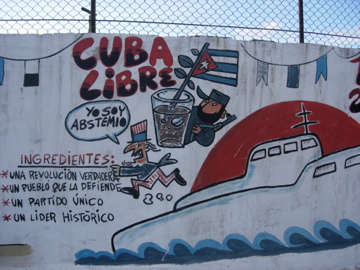
Havana Mural

Hands down, beyond a doubt, Cuba is the most different place I’ve ever traveled to.

Sure, I’ve been to non-Western countries; I’ve trekked through remote jungles studded with indigenous villages and spent a night in a water-world town-on-stilts where the night sky erupted with spontaneous flashes of thunderless lightning. But I’ve never been to another place where capitalism wasn’t a presence, and where the ensuing materialism and infiltration of American culture was so miniscule.

It’s impossible to talk about Cuba without getting into some kind of political discussion. Like everyone else, I’ve got my personal views—seeing as I was raised in a house that had 38 volumes of Lenin on the shelf, I’ll just let you guess what side of the spectrum I fall on.

But I’m not here to talk about that. Not really. What I want to talk about, and what’s of importance to the traveler to Cuba, are the ways in which Cuba is unlike any other country I’ve experienced. These reasons are inextricably linked to the country’s politics, to the revolution and the island’s legacy of struggle.

Yes, I realize I’m walking into a shitstorm. But we either dance delicately around these things, saying the same, tired, noncommittal niceties (Dante had a hell for that), or we get real—sit down, look it in the eye and say what we mean. (I’ll let you guess which option I think has more value.) Besides, I’m back home; I’ve got the toilet paper and functional plumbing to handle barrages of shit.

Oddity #1: Safety

One of the first things I read about Cuba was how safe it was. Touted in guidebooks to be paradise for solo female travelers, where any dark backalley can be delved into any time of day or night, I was willing to accept that Cuba was probably safer than Oakland. Most places are. I was still uneasy about rolling into the country with over a thousand dollars in cash on me, and neither my travel companion nor I could easily shed our well-grained habits of stone-facing strangers and checking our backs like motherfucks. But after a couple days, we loosened up. It was true: Cuba was mellow.

Break between innings

I suppose what strikes one as odd about the lack of violent crime in Cuba is that the country is so terribly poor. In the US, and most other countries in the world, poverty equals danger. From Rio’s famed favelas to Cairo’s ghettos of Sudanese refugees, to deep East Oakland, the relative safety of a neighborhood is most often directly proportionate to the level of wealth, or lack thereof. One look at the crumbling building facades and boys playing baseball with scrap pieces of plywood, and you start to understand just how poor Cuba is. And while, yes, there’s hustlers and pick-pockets, and yes, some laughing 12-year-olds tried to snatch my bag one night, the gravity of the threat of real violence isn’t there. (It would have sucked to have my bag stolen, but it sucks a lot worse to get a gun put under your chin.)

You can chalk Cuba’s safety up to a number of factors, depending on your politics and worldview: The police force is strong and no one wants to risk a lengthy stay in a Cuban prison. Protecting tourists is in the best interest of the island as a whole. Or you can think it’s got something to do with the fact that base needs like housing, education, medical care and some amount of food are all guaranteed by the Communist government, taking the edge of desperation out of the poverty equation.

Whatever the reason, walking around at night and realizing that you have no need to be weary is a strange feeling for an Oakland kid like me. Good thing we didn’t get used to it; less than 48 hours after getting home, my travel buddy was robbed at gunpoint. Welcome home.

Oddity #2: Lack of Homeless People and Drug Addicts

Cienfuegos

Beggars and bleary-eyed glue sniffers are par for the course in the cities of most poor countries. Even in one the wealthiest countries on earth (guess which one), pan-handlers, under-the-freeway encampments, and twitchy characters of all narcotic varieties are everyday fixtures on the streets, even in posh tourist attractions (San Francisco). After a couple of days wandering around Havana, I realized I hadn’t seen any cardboard alley homes and not a single crackhead. Weird.

During my time in Cuba, I got pan-handled maybe half a dozen times, and saw one toothless, staggering old lady that looked like the resident town wino. But when it came to hard-core addicts and homeless people, I didn’t see any.

The lack of homelessness is fairly obvious—the government provides housing. But Cuba is also really strict about the import of drugs. Not wanting to give the US any reason to invade, and perhaps still smarting from its soul-sucking era as a mafia paradise, the Cuban government put the ixnay on drugs, and today they’re really not a presence in Cuba. (Makes you wonder what would happen if the US made such a bold decision—oh wait, wasn’t that what the whole War on Drugs thing was about?)

The night we got home from Cuba, we went to see Neurosis play at the Great American Music Hall in San Francisco. The venue is smack in the middle of the Tenderloin, one of the highest concentrations of human misery on the West Coast. We walked through urine-soaked sidewalks, crunching windshield glass and dodging screaming, contorted derelicts, in a kind of dazed state of shock. After two weeks in Cuba, it seemed inhumane that suffering like that could be tolerated, allowed to exist in such a rich, rich nation. It was the worst culture shock I’ve ever experienced.

Oddity #3: Lack of Advertising and Lots of Government Propaganda

Okay, you’re gonna see a lot of government propaganda. Pro-revolutionary billboards, Vive Fidel banners, smiling pictures of Hugo Chavez: it’s all a little unnerving, I’m not gonna lie. But then you realize why it seems like there’s so damn much of it in Cuba (aside from the fact that there is): there’s no other advertising out there.

You forget how much energy you spend blocking out flashing signs, automated voices, beautifully anorexic, air-brushed girls selling perfume and cell phones and chewing gum. Until you don’t have to do it. I’ve heard really high-end resorts make you feel the same way, like you can let your mental filters down and just relax. Well, until I get a rich sponsor, Cuba’s gonna be the closest I come.

If it’s true that you can learn a lot about a culture through its advertising, then it’s also true you can learn a lot about a culture about its lack of advertising. Cubans are insanely open and friendly, and while there’s plenty of cultural factors contributing, couldn’t one of the reasons be that they’re not constantly fending off the barrage of catchy slogans and glossy images of psychologically invasive advertising? At the same time, the government is an inescapable presence on the island; one is constantly given visual reminders of the pro-government stance everyone’s supposed to take.

It’s a stretch, but maybe. All I know for sure is that my brain got a real vacation in Cuba.

Oddity #4: Havana Has a Chinatown (With Three Chinese People in It)

And it’s actually the oldest Chinatown in the Western Hemisphere.

A then-vegan, I had a mean hankering for some tofu when I was in Havana. I thought my best bet was Chinatown, the touristy relic of Cuba’s once-robust Chinese population, originally brought over in the mid 19th century to work in the sugar fields. I elbowed amid the throngs on foreigners and grabbed a seat under the red awning of a restaurant whose menu listed something I assumed was bean cakes. Ten minutes later, a steaming plate of bean sprouts, and nothing but bean sprouts, was placed before me. My then-boyfriend laughed.

Havana’s Chinatown stands as a reminder that the country has plenty of pre-Castro history, often overshadowed. Most of the Chinese laborers brought over intermarried, infusing the Cuban cocktail with Asian genes; thus, there aren’t a whole lot of fully Chinese looking people left in Chinatown. I saw a couple dudes smoking in the traditional squat, but it was honestly the most un-Chinese Chinatown I’ve ever been to. And the most devoid of tofu.


Oddity #5: The Resilience of Cuban People

It’s kind of a Cuban cliche: some cigar-smoking, deeply wrinkled dude fixing a 30-year-old bicycle with a piece of dental floss and an old Coke can (or something to that extent). Cuban people are renowned as the global experts in reusing everything, wasting nothing, helping each other out and not complaining (partially because of political repression, but still). Cubans are like the one friend you have that can fix anything, who relishes in helping you figure out why your car is making that funny noise and who repairs the holes in their sneakers instead of tossing them to hang over the telephone wires. Yes, part of it is a result of years of rationing and making do, but I think it gets down to a deeper cultural characteristic, one born of imperialism.

Another gem from the Havana mural

The best explanation I read of why Cubans are so resilient and continue to come together and make do is that, by and large, they want the Revolution to succeed. (I’m not talking Miami Cubans now. And this isn’t necessarily my perspective, but a well-informed argument that made a lot of sense.) However deeply flawed and difficult the Revolution is, it’s still the first time in 500 years that the island’s been run by Cubans. From Spanish colonialism to puppet governments to foreign-owned sugar plantations, outsiders had the ultimate power in pre-Castro Cuba. The country was endemically violent and deeply divided down lines of race, class and ethnic origin—divisions that don’t disappear in 50 years, but have improved. Castro’s Revolution is the longest enduring era of Cuban control since the Spanish arrived on the island. That’s a really powerful statement, one that can help you understand why Cubans endure so much and continue to struggle.

Of course, one could easily argue that all this is at risk. The impending end to the US embargo will mean an immediate influx of American culture and goods. And however much outsiders may want Cuba to remain a junkie-free, billboard-less Eden of free health care and high literacy, the end of the embargo will be a damn good thing for Cubans. But I’m glad I got to go pre-post-embargo, and experience some of the strangest things an Oakland girl can.


Lauren Quinn is a writer and traveler currently living in Hanoi. Lonely Girl Travels was a blog of her sola travels and expat living from 2009 to 2012. She resides elsewhere on the internet now.

Join 490 other subscribers

Buy This Sh#t

Categories