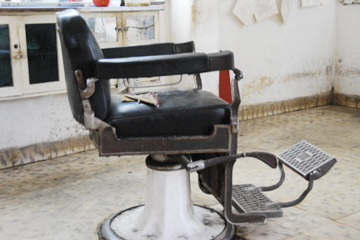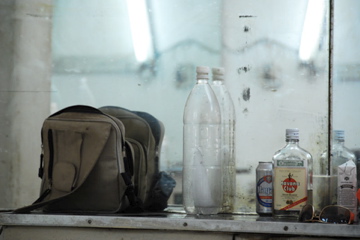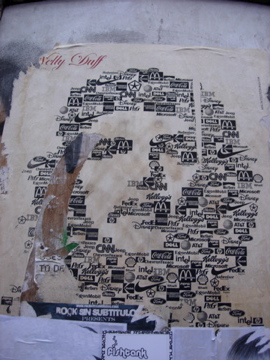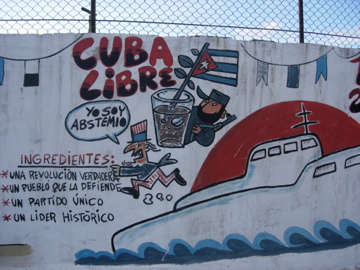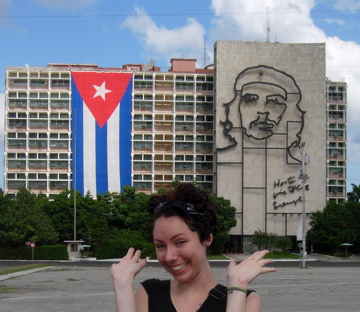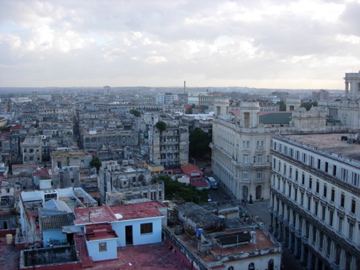
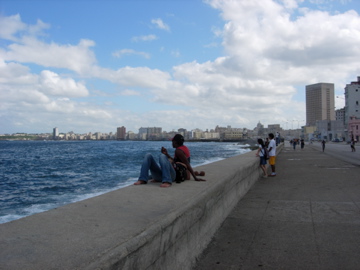
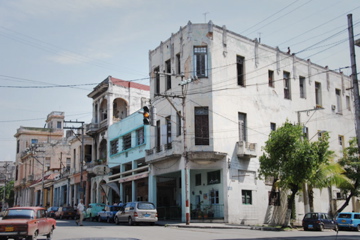
To end my series of Cuba posts, I’m bringing you photos from my brother’s trip to the forbidden island. Aside from being a far better photographer than me, my brother traveled with a Cuban-American friend and his family, so he had even cooler adventures (cooler than wrecking plumbing? I know, it’s hard for me to believe too). All photos are from Havana. Enjoy, and thanks for all the comments and feedback throughout the series.
Archive Page 26
Havana in Pictures
Published January 19, 2010 Cuba , Family , Lonely Girl Loves , Photography , Places , Subculture 6 CommentsTags: blogsherpa, Cuba
Bolsa Blues: Adventures in Cuban Plumbing
Published January 16, 2010 Blunders , Cuba , Culture Shock , Offbeat , Places 9 CommentsTags: Blunders, Cuba, offbeat
This is half of a narrative written about my raucous New Year’s in Havana. The first, less-gnarly half is being considered for publication (fingers crossed and breath held), but I’ve decided that this side of the story is far too raunchy to get accepted anywhere. So, I’ll inflicted you all with it…
Bolsa Blues or The Other Reason You Should Always Carry a Plastic Bag in Cuba
I waken to a pale face in half-light. It looks down at me, desperate and pleading-eyed, washed in a light sweat and slashed by the stripe of sun that invades through the crack in the wooden shutters.
“Dude,” I croak. “What the—“
A tight-throat urgency cuts me off. “The toilet’s busted,” my boyfriend declares. “And I gotta crap.”
It’s New Year’s Day, and we’re stark naked in our tiny casa particular room, somewhere near the crumbling heart of Havana. The cigars, Rumba and rum of the previous night rumbles in our stomachs.
It’s the cardinal rule of Latin American traveling: never flush the toilet paper. A continent-and-a-half held together by a rattling grid of rusty old pipes, the Western traveler is beseeched by earnest signs Scotch-taped to the walls of restrooms: “Dear Mr. Customer, Please to not put paper in the toilet.”
It’s a hard-to-break habit of ours, this depositing of smeared bundles into the toilet bowl; it takes a couple days to train the hand to shift, move, not drop the paper straight down but into a wastebasket beside the toilet. It was only our third day; we had a couple slips. But surely, I assured Adam the night before, nothing extreme enough to reek pipe-wrecking havoc.
But the plumbing gods were watching, laughing, and struck swiftly with their reprisal. And my boyfriend, beset with hangover bowels, is paying the price.
I leap from the tangled sheets, hair sticking straight up and nude. I peer in at the toilet from the doorway. “There’s no way,” Adam answers before I can ask.
He’s right—the mess inside has disintegrated into a thick, gurgling stew at the bottom of the bowl, streaks running down the sides. I glance back at Adam, hunched over and leaning against the wall. “It’s bad,” he tells me.
“Let’s get dressed and go somewhere.”
“Yeah, but where?”
He’s right again—all shops and restaurants in walking distance have less-than passable, if any, facilities. I suggest taking a cab to the fancy hotels in Centro and using their lobby bathrooms, a tactic we employed earlier during our outings. Adam shakes his head, “I don’t think I can make it. I’ve been holding it all night.”
I suggest trying to use the casa owners’ bathroom. I then consider the vocabulary necessary to construct a plausible explanation, and nix the idea. “You could go in the trash can,” I laugh. He chuckles, grimacing slightly. “Or in a plastic bag.” We laugh harder.
Our laugh gives way to silence. We look each other in the eye and nod. “Lemme see if we have one.”
I begin rummaging through our piles of clothes, books, snacks, while Adam sits on the rim of the tub, mentally preparing. “Got it!” I exclaim, waving like a flag the small plastic bag that carried the crackers we’d bought during our layover in Mexico. I hand it to him with a reassuring smile.
“Okay.”
“Okay.”
I shut the door behind me. I intend to go wait politely on the edge of the bed, but the camera appears in my hands. I creep towards the door, inch it open. He’s squatting in the middle of the room, veins bulged in concentration, with the black bag clutched under him. I get him in the frame; the camera clicks.
“Oh, come on! What the fuck!” he shouts. I giggle and slam the door.
“Really, Lauren,” he says from the other side. “Is that necessary?”
“Yes.” I laugh hysterically as I examine the view finder. “Yes, it is.”
He emerges from the bathroom a couple minutes later, eyes down. “Well?” I ask. He looks at me, nods. I peer in the bathroom; he’s neatly tied the handles of the bag and set the bundle on the edge of the tub.
“What do we do with it now?”
It seems wrong to leave it there, in plain view, when the poor owners will have deal with the mess in the toilet already. I picture us sneaking into the kitchen and throwing it in the trash, but that doesn’t seem right either. Nor does our sheepishly handing them the bag and running out of the apartment. “We could hide it in a drawer and flush it when the toilet’s working again,” I offer half-assedly.
“Do you have any idea how awful it’ll smell in here when a bag of shit’s been festering all day?” Adam, always the practical one, retorts.
“We could smuggle out in my bag.” It seems like a viable option.
Adam gets off the bed, moving towards the window. “I wonder if we could open these shutters.” He runs his hands down the solid wood covering the windows.
“You wouldn’t really throw it out of the window, would you?”
“You wanna carry my shit in your bag?”
We pry the latch open and groan the hinges open. Daylight blasts into the room; our pupils wince.
Adam stands on a chair, craning his neck to see as far out the window as the wrought-iron bars will allow. “What’s out there?”
He steps off the chair, defeated. “It’s one of those air shafts. People have all their laundry hanging up. And someone’s got a garden down at the bottom.” I refrain from a bad joke about fertilizer.
We collapse on the bed and stare at the ceiling. “Well,” I venture, “we could just put it in the bathroom trash can. I mean, it’s already got our used toilet paper in it, so I doubt they’d really look.”
“I guess you’re right.”
We get dressed quickly. I gingerly bury the plastic bag beneath the top layer of used toilet paper in the wastebasket. I put the lid down on the toilet before we leave the room.
“Bueno dia,” our casa owner greets us warmly, looking up from the newspaper.
“Bueno dia,” we mumble (we’ve learned to drop our “s”s, just not our toilet paper).
“Quieren desayuno?” his amicable, aproned wife asks.
“Um, no, no gracia.” We stand there for a moment, awkwardly. I take a step towards the owner. “Um, pardon, senor.” I fidget, look down. “Hay un problema en el bano.” He nods earnestly at me. “Lo siento.”
Maybe it’s a situation he’s encountered before—poor plumbing meets the foreigner’s paper-flushing habit, topped off with a rocking drinker’s shit. We exchange helpless smiles, and Adam and I scuttle out the front door as fast as we can.
Down on the street, we feel relieved. Neither one of us can stop laughing.
“I think,” Adam declares, “that you’re the best person to be in a bad poo situation with.”
“Really?” I beam at the compliment.
“Well, yeah. I mean, anyone can be practical. That’s not really what you need in a bad poo situation. What you need is someone who will find it absolutely hilarious.”
I take his hand. “I’m honored.”
We continue down the street, holding hands under the half-clouded Cuban sky, towards the Malecon, and a new year.
Che Marti-ni: The Cuban Cocktail of National Heroes
Published January 11, 2010 Cuba , Inspiration , Lonely Girl Loves , Offbeat , Places , Poetry , Subculture 1 CommentTags: Cuba, offbeat, poetry
Oh, the sweet taste of revolution. And martyr worship.
There’s no escaping Cuba’s two biggest icons. Revered, quoted and placed on pedestals/t-shirts, these tragical heroes loom large in the national psyche. They give impassioned words and a photogenic face to the struggle for independence that has characterized the country for centuries. One, you’ve heard of; actually, you’ve had him shoved down your throat by starry-eyed ultra-lefties. The other lurks in the dusty corners of used bookstores, in the syllabi of Latin American Studies courses; you’ve heard his words, but never his name. Until you land in Havana.
Okay, okay, I’ll tell you. One is Che Guevara, the Argentine renegade who’s become synonymous with Cuba, guerilla warfare and revolutionary politics. He’s arguably the country’s biggest cultural export, and a ubiquitous presence within Cuba (hey, an atheist country’s gotta worship something). This is relatively unsurprising as a visitor; what’s more surprising is this fetish they’ve got for Jose Marti. You could call him the OG—he advocated and fought for Cuban liberation from Spain, calling on the same ideas of Latin American unity and anti-imperialism that Che later did. But when you actually start to read his essays and poems, you wonder why in hell you haven’t been inundated with Marti your whole life too (one answer: he shoulda swapped the funny moustache for a guerilla beard—far more flattering). Even more intriguing is what lies at the intersection of these two figures, and what they reveal about the country that adores them.
Jose Marti and Che Guevara share more than just a saintly status in the heart of a nation. The die-hard revolutionaries were both privileged boys of good education, who gave voice and garnered fame for the struggles of Cuba. Both were seasoned travelers; both had a vision of a unified Latin America free of imperialism; both died fighting battle for their cause, the cause of “the people.” Both pumped out enough good quotes to rival Mao, and both are exalted in the streets of Cuba. And both were, at the risk of sounding ridiculous, guided by feelings of love.
Jose Marti was a 19th-century Cuban-born revolutionary, poet, writer, thinker and traveler. His writings about the Cuban struggle for independence captured the culture in a way no one previously had, and his words served as the voice of a people. So much so that the first lines from his famed poems “Versos Sencillos” were adapted as the lyrics of Cuba’s most famous song and de facto anthem, “Guantanamera.” But what’s most interesting about Marti is how his writing has endured, and the ways it’s remained relevant.
Already a national hero, Marti’s anti-colonial, pro-America (Latin America, that is) ethos was invoked during Castro’s revolution. Castro framed his revolution as an extension of the one Marti fought and died for, and depending on your politics, it’s pretty easy to agree. What fueled all Marti’s work was a fierce defense of justice inspired by a complex and tender understanding of human nature. I won’t play lecturer and drag you through tedious citations, as the Marti Wikiquote page serves as evidence enough. But the famous poem “I Grow A White Rose” captures the Marti sentiment pretty well:
I grow a white rose
In July just as in January
For the sincere friend
Who gives me his frank hand.
And for the cruel man who pulls out of me
the heart with which I live,
I grow neither nettles nor thorns:
I grow a white rose.
And then there’s Che. Aside from being charismatic and hot as hell (yeah, I said it), Che’s enduring legacy, I’d argue, comes from his compassion. Not necessarily for his enemies, but for the people, the struggle. Sure, he had the bad-ass lines like, “I would rather die standing than live life on my knees,” but he also came out with quotes like, “One must harden without ever losing tenderness.” It’s not just rebel girls that swoon at lines like these; a whole nation does. And that says a lot about them, wouldn’t you say?
You definitely get beaten over the head with the two in Cuba, a combo that will flatten you faster than a Cube Libre (not really). Che’s legacy does retain a little more depth here than in the rest of the world, where the commodification of Che is more depressing than consumerist Hot Topic punk. And to be fair, the elevation and exaltation of national poets isn’t purely a Cuban phenomenon, but a Latin American trait; Gabriela Mistral is also pictured on the currency of her native country, Chile. (Imagine paying for groceries with a Walt Whitman note.) Call it the Latin flair for passion, but it’s enough to make a US Creative Writing major weep.
Together, Che and Marti conspire to create a revealing picture of the Cuban culture and psyche: revolutionary, lyrical, learned, passionate, martyred. Both figures have been reduced, their lives and work co-opted for the purposes of others, commercial or otherwise. And while the world is oversaturated in Che juices, Marti remains little-known, a recluse of national monuments and smelly old bookstores. But the true picture, I think, lies somewhere between the two—between national fame and international obscurity, the commodification and the worship, the intrigue of an outsider and the love of a people.
I’ll end with a Marti poem I worked hard to bring you. I once owned a Marti collection; who knows who I lent it to or what move it got lost in. I remembered a poem that captured the intricate relationship between colonizer and colonized, and decided to find it. Google gave me nothing, so today I missioned to 3 book stores and 1 library. In a dim, 4th-floor corner of an independent bookstore, I finally found the poem, in the lone Marti book stuffed amid the over-packed shelves. I slyly photographed the pages with my phone, and transcribed them. As far as I know, this is the only available translation of “Little Prince” on the web. Enjoy. And keep fighting.
Little Prince
This party is for
A little prince.
He has long hair,
Soft blond hair
That hangs over
His white shoulders.
His eyes appear
To be black stars
That move like the wind,
Shine, quiver and give off sparks.
He is my crown,
My pillow and my spur.
My hand, that bridles
Horses and hyenas,
Goes where e’er he takes it.
When he frowns, I tremble.
If he complains,
My face, like a woman’s,
Turns white as snow,
Then red, as blood
Pours through my veins.
His pleasure causes
My blood to ebb and flow.
This party is for
A little prince.
/
Come, my gentleman;
Come this way.
Come, my tyrant,
Into this cave.
When he appears
Within my sight,
It seems a pale star
Casts its opal
Brilliance o’er all
In a dark cavern.
/
When he goes by
The shade acquires textures
Like the sun,
That wounds the blackest clouds.
Behold me, at arms,
In the struggle.
The prince wants me to fight again.
He is my crown,
My pillow and my spur.
And, just as the sun,
Breaking up the black clouds,
Turns shadows
into bands of colors,
When he touches the thick wave,
He embroiders
My red and violet
Battle colors there.
So, my master wants
To return to life?
Come, my gentleman;
Come this way.
Come, my tyrant,
Into this cave.
Let me offer life
To him, to him.
This party is for
A little prince.
There’s No Crackheads in Cuba, and Other Things that Strike the American Traveler as Strange
Published January 7, 2010 Being American , Cuba , Culture Shock , Independent , Offbeat , Places , Safety 10 CommentsTags: blogsherpa, Cuba, first impressions
Hands down, beyond a doubt, Cuba is the most different place I’ve ever traveled to.
Sure, I’ve been to non-Western countries; I’ve trekked through remote jungles studded with indigenous villages and spent a night in a water-world town-on-stilts where the night sky erupted with spontaneous flashes of thunderless lightning. But I’ve never been to another place where capitalism wasn’t a presence, and where the ensuing materialism and infiltration of American culture was so miniscule.
It’s impossible to talk about Cuba without getting into some kind of political discussion. Like everyone else, I’ve got my personal views—seeing as I was raised in a house that had 38 volumes of Lenin on the shelf, I’ll just let you guess what side of the spectrum I fall on.
But I’m not here to talk about that. Not really. What I want to talk about, and what’s of importance to the traveler to Cuba, are the ways in which Cuba is unlike any other country I’ve experienced. These reasons are inextricably linked to the country’s politics, to the revolution and the island’s legacy of struggle.
Yes, I realize I’m walking into a shitstorm. But we either dance delicately around these things, saying the same, tired, noncommittal niceties (Dante had a hell for that), or we get real—sit down, look it in the eye and say what we mean. (I’ll let you guess which option I think has more value.) Besides, I’m back home; I’ve got the toilet paper and functional plumbing to handle barrages of shit.
Oddity #1: Safety
One of the first things I read about Cuba was how safe it was. Touted in guidebooks to be paradise for solo female travelers, where any dark backalley can be delved into any time of day or night, I was willing to accept that Cuba was probably safer than Oakland. Most places are. I was still uneasy about rolling into the country with over a thousand dollars in cash on me, and neither my travel companion nor I could easily shed our well-grained habits of stone-facing strangers and checking our backs like motherfucks. But after a couple days, we loosened up. It was true: Cuba was mellow.
I suppose what strikes one as odd about the lack of violent crime in Cuba is that the country is so terribly poor. In the US, and most other countries in the world, poverty equals danger. From Rio’s famed favelas to Cairo’s ghettos of Sudanese refugees, to deep East Oakland, the relative safety of a neighborhood is most often directly proportionate to the level of wealth, or lack thereof. One look at the crumbling building facades and boys playing baseball with scrap pieces of plywood, and you start to understand just how poor Cuba is. And while, yes, there’s hustlers and pick-pockets, and yes, some laughing 12-year-olds tried to snatch my bag one night, the gravity of the threat of real violence isn’t there. (It would have sucked to have my bag stolen, but it sucks a lot worse to get a gun put under your chin.)
You can chalk Cuba’s safety up to a number of factors, depending on your politics and worldview: The police force is strong and no one wants to risk a lengthy stay in a Cuban prison. Protecting tourists is in the best interest of the island as a whole. Or you can think it’s got something to do with the fact that base needs like housing, education, medical care and some amount of food are all guaranteed by the Communist government, taking the edge of desperation out of the poverty equation.
Whatever the reason, walking around at night and realizing that you have no need to be weary is a strange feeling for an Oakland kid like me. Good thing we didn’t get used to it; less than 48 hours after getting home, my travel buddy was robbed at gunpoint. Welcome home.
Oddity #2: Lack of Homeless People and Drug Addicts
Beggars and bleary-eyed glue sniffers are par for the course in the cities of most poor countries. Even in one the wealthiest countries on earth (guess which one), pan-handlers, under-the-freeway encampments, and twitchy characters of all narcotic varieties are everyday fixtures on the streets, even in posh tourist attractions (San Francisco). After a couple of days wandering around Havana, I realized I hadn’t seen any cardboard alley homes and not a single crackhead. Weird.
During my time in Cuba, I got pan-handled maybe half a dozen times, and saw one toothless, staggering old lady that looked like the resident town wino. But when it came to hard-core addicts and homeless people, I didn’t see any.
The lack of homelessness is fairly obvious—the government provides housing. But Cuba is also really strict about the import of drugs. Not wanting to give the US any reason to invade, and perhaps still smarting from its soul-sucking era as a mafia paradise, the Cuban government put the ixnay on drugs, and today they’re really not a presence in Cuba. (Makes you wonder what would happen if the US made such a bold decision—oh wait, wasn’t that what the whole War on Drugs thing was about?)
The night we got home from Cuba, we went to see Neurosis play at the Great American Music Hall in San Francisco. The venue is smack in the middle of the Tenderloin, one of the highest concentrations of human misery on the West Coast. We walked through urine-soaked sidewalks, crunching windshield glass and dodging screaming, contorted derelicts, in a kind of dazed state of shock. After two weeks in Cuba, it seemed inhumane that suffering like that could be tolerated, allowed to exist in such a rich, rich nation. It was the worst culture shock I’ve ever experienced.
Oddity #3: Lack of Advertising and Lots of Government Propaganda
Okay, you’re gonna see a lot of government propaganda. Pro-revolutionary billboards, Vive Fidel banners, smiling pictures of Hugo Chavez: it’s all a little unnerving, I’m not gonna lie. But then you realize why it seems like there’s so damn much of it in Cuba (aside from the fact that there is): there’s no other advertising out there.
You forget how much energy you spend blocking out flashing signs, automated voices, beautifully anorexic, air-brushed girls selling perfume and cell phones and chewing gum. Until you don’t have to do it. I’ve heard really high-end resorts make you feel the same way, like you can let your mental filters down and just relax. Well, until I get a rich sponsor, Cuba’s gonna be the closest I come.
If it’s true that you can learn a lot about a culture through its advertising, then it’s also true you can learn a lot about a culture about its lack of advertising. Cubans are insanely open and friendly, and while there’s plenty of cultural factors contributing, couldn’t one of the reasons be that they’re not constantly fending off the barrage of catchy slogans and glossy images of psychologically invasive advertising? At the same time, the government is an inescapable presence on the island; one is constantly given visual reminders of the pro-government stance everyone’s supposed to take.
It’s a stretch, but maybe. All I know for sure is that my brain got a real vacation in Cuba.
Oddity #4: Havana Has a Chinatown (With Three Chinese People in It)
And it’s actually the oldest Chinatown in the Western Hemisphere.
A then-vegan, I had a mean hankering for some tofu when I was in Havana. I thought my best bet was Chinatown, the touristy relic of Cuba’s once-robust Chinese population, originally brought over in the mid 19th century to work in the sugar fields. I elbowed amid the throngs on foreigners and grabbed a seat under the red awning of a restaurant whose menu listed something I assumed was bean cakes. Ten minutes later, a steaming plate of bean sprouts, and nothing but bean sprouts, was placed before me. My then-boyfriend laughed.
Havana’s Chinatown stands as a reminder that the country has plenty of pre-Castro history, often overshadowed. Most of the Chinese laborers brought over intermarried, infusing the Cuban cocktail with Asian genes; thus, there aren’t a whole lot of fully Chinese looking people left in Chinatown. I saw a couple dudes smoking in the traditional squat, but it was honestly the most un-Chinese Chinatown I’ve ever been to. And the most devoid of tofu.
Oddity #5: The Resilience of Cuban People
It’s kind of a Cuban cliche: some cigar-smoking, deeply wrinkled dude fixing a 30-year-old bicycle with a piece of dental floss and an old Coke can (or something to that extent). Cuban people are renowned as the global experts in reusing everything, wasting nothing, helping each other out and not complaining (partially because of political repression, but still). Cubans are like the one friend you have that can fix anything, who relishes in helping you figure out why your car is making that funny noise and who repairs the holes in their sneakers instead of tossing them to hang over the telephone wires. Yes, part of it is a result of years of rationing and making do, but I think it gets down to a deeper cultural characteristic, one born of imperialism.
The best explanation I read of why Cubans are so resilient and continue to come together and make do is that, by and large, they want the Revolution to succeed. (I’m not talking Miami Cubans now. And this isn’t necessarily my perspective, but a well-informed argument that made a lot of sense.) However deeply flawed and difficult the Revolution is, it’s still the first time in 500 years that the island’s been run by Cubans. From Spanish colonialism to puppet governments to foreign-owned sugar plantations, outsiders had the ultimate power in pre-Castro Cuba. The country was endemically violent and deeply divided down lines of race, class and ethnic origin—divisions that don’t disappear in 50 years, but have improved. Castro’s Revolution is the longest enduring era of Cuban control since the Spanish arrived on the island. That’s a really powerful statement, one that can help you understand why Cubans endure so much and continue to struggle.
Of course, one could easily argue that all this is at risk. The impending end to the US embargo will mean an immediate influx of American culture and goods. And however much outsiders may want Cuba to remain a junkie-free, billboard-less Eden of free health care and high literacy, the end of the embargo will be a damn good thing for Cubans. But I’m glad I got to go pre-post-embargo, and experience some of the strangest things an Oakland girl can.
Livin on a CUC: Independent, Budget Travel in Cuba
Published January 3, 2010 Budget , Cuba , Independent , Offbeat , Places , Tips 20 CommentsTags: blogsherpa, Budget, Cuba, independent travel, travel tips
Backpackers, lefties and dirty hippies beware: Cuba is not cheap. And despite any romantic revolutionary visions, it’s got tourist traps, just like everywhere else. They’re just filled with Che shirts instead of fanny packs.
Several factors might lead one to logically assume Cuba to be a budget-friendly, independent travelers’ paradise: it’s a dirt-poor Latin American country, enamored in the hearts of liberals, intellectuals and military-cap-wearing undergrads. So when you hear that your low-to-mid-range daily budget for Cuba should be around $100/day, it comes as a bit of a shock.
Here’s the deal: after the sugar industry collapsed in Cuba, there wasn’t much left to keep the island afloat. Keen eyes turned towards tourism. Not only does Cuba’s larger-than-life lore hold particular allure for the left-leaning, it’s got an undeniable romanticism—old cars, crumbling buildings, rum and Rumba. Couple that white people’s insatiable lust for balmy Caribbean getaways, and they had the perfect cocktail on their hands—muddled with Euros instead of mint sprigs. Tourism today is “the most dynamic sector of the Cuban economy.”
If you’ve traveled to other places where tourism is a mainstay of the economy, you’ll know what this means: high prices and potential hassle. From Moroccan medina touts to San Francisco’s 14% hotel tax, economies that rely on tourism milk it. In San Francisco, the hotel tax goes to fund all sorts of cool arts endeavors and social programming that other US cities don’t have; you could argue (depending on your politics) that Cuba’s dual currencies are an extension of that. And in Cuba you don’t really have to worry about hustlers and pick-pockets (though they do still exist); tour companies take care of that.
You wouldn’t initially think it, but Cuba’s got a resort, package tourism industry up to snuff with any Caribbean destination. A Hungarian friend won a Cuban vacation as an incentive prize at work; all he saw of Cuba outside of his resort was through a tour bus window. Combine the package factor with the absence of youth hostels and backpacking networks, and the prospects can seem pretty dismal for DIY cheapstakes like me.
But independent, budget travel in Cuba can and does happen. There’s just some special tricks you have to be hip to. My travel companion and I managed to squeak by on $75/day, well under the Lonely Planet budget (but then again, we were both surviving at home on less than $2000/month, so cheap living wasn’t anything new). Here’s what we learned and how we did it.
Resources
My two biggest resources for independent, budget travel to Cuba were Lonely Planet’s Thorn Tree Forum, and Cuba Junky, a comprehensive, Cuban/Dutch-run website for travelers (with endearingly odd translations and misspellings). At these two sites, you can find info all sorts of great information, and on the forum you can trouble-shoot and get advice (and suffer through the occasional political debate).
Money
Cuba operates on two currencies: the Cuban peso (CUP), the money of the people, and the Cuban Convertible Peso (CUC), the money of tourists.
Why? As tourism grew, American dollars began to wiggle their way into the country—hotels and tourist restaurants charged foreigners in dollars, while charging locals in pesos. (Considering the average monthly salary for a Cuban doctor is about what I make in thirty minutes, it’s more fair than it seems.) In addition, “dollar-only” shops emerged, where scarce and coveted items like dental floss could be had for a a high price. The influx of money was good, but the presence of American dollars was kind of slap-in-the-face to the government, wouldn’t you say? The government thus created the CUC to keep US dollars out; they did, though, base the exchange rate on the US dollar. Tourists pay for things in CUCs, while locals pay in pesos.
Whenever you exchange money, you’ll be given CUCs, and the majority of places you spend money will accept only CUCs. Invariably, however, you’ll get your hands on some pesos. It’ll probably happen like this: you get seduced by the wafting smell of cooking meats, and buy some street food. You hand the guy your CUC note. He digs around his pockets, shouts over at some other vendors; no one has the proper CUC change. He shrugs and gives your change in pesos. You’ve now got a pocket full of notes and coins, and can pay for small items like coffee and ice-cream with pesos—dropping the price from a couple bucks to a couple cents (literally).
There are of course more nefarious ways to get your hands on pesos, but you wouldn’t do that, now would you? Tourists aren’t really supposed to use pesos, and I have to say, I felt pretty guilty paying the equivalent of 5 cents to someone who makes $10/month—even if I am just a waitress living in a run-down North Oakland Victorian. I don’t recommend trying to use pesos as a way of cutting corners and stretching your budget, but it’s something that will happen at some point.
Casa Particulares
The single biggest way to save money in Cuba is by staying in casa particulares. State-licensed rooms for rent in private homes, casa particulares will also be one of your best glimpses into Cuban life.
Here’s how it works: individuals apply for a license, which is expensive; they must pay a monthly tax whether or not they have guests. The government approves them, and they can rent rooms to foreigners.
Expect to pay 15-30 CUCs per night (as opposed to 50-100 Euros and upwards on a hotel). Plus, as everyone knows, homestays are a great way to experience the everyday life and culture of a country; we stayed with hosts in Vinales whose teenage son showed us plenty of hip Cuban dance moves (which we were incapable of replicating). Hosts will usually offer to cook you meals, for an additional 5-15 CUCs. This may not be cheaper than eating at a budget restaurant or food stall, but they’ll stuff you silly.
The Cuba Junky site has gotten much more spiffy since I went to Cuba, and you can now book a casa particular room via the website. I did it a semi-old-fashioned way: I got ahold of Potato’s email address on the Thorn Tree forum, sent him an email, and he booked a room for us. He gave us his address; once we landed in Havana, we went to his apartment, enjoyed a cup of tea and chatted (he’s a really cool dude), and he walked us a couple blocks over to a lovely elderly couple who we stayed with for four days (and whose toilet we later busted—more on that later).
I like to have my accommodation arranged for my first couple nights when I arrive somewhere new, but the rest of the casa particulares we stayed in on our trip we booked ourselves. Most people will display their license logo prominently, so you can just knock on their door and ask if they have room (really, Cubans are insanely friendly and won’t turn you away). If the one you go to is full, they’ll for sure have a dozen friends with licensed rooms, and will help you find one. It sounds like a hassle, more for them than us, but I swear it works: a cab driver drove us all around Vinales while neighbors tracked down an empty room.
Bring Every Last Toiletry You May Possibly Need
Basic medical supplies are both costly and in short supply, or nonexistent, in Cuba. Pack all the sunscreen, aspirin, contact lens solution and insect repellent you might need—or risk shelling out painful amounts of money in a poorly stocked dollar-store. Even an extra roll of toilet paper isn’t a bad idea—unless you like wiping your ass with day-old news.
Tours and Entertainment
Cuba has a fairly well-beaten path, and if you stick to the neighborhoods and activities tourists are routinely funneled into, you’ll bleed CUCs faster than you can say “revolucion.” But get a little intrepid and a little chatty, and you’ll stretch your budget big-time.
Everyone knows that Cubans party, and party well, so you can be pretty sure that any club charging a hefty entrance fee is geared towards tourists. And as cool as a Hemingway tour or trip to the Tropicana might sound right now, you’ll quickly realize that they’re the Fisherman’s Wharf of Havana. Get friendly and ask your casa hosts (or random folks on the street) for tips on where to go and what to do. Less tacky companies like San Cristobal Agencia de Viajes are a good bet for more offbeat tours.
Food, Transport, and the Likes
There’s no real trick here: just do what you do in other countries.
Dinners at tourist-geared restaurants will set you back much further than paladares (mom-and-pops) and street food stands. Snack foods can actually be pretty hard to come by, so bringing along some biscuits, nuts or, for the homesick Yankee, peanut butter isn’t a bad idea. You can skimp on transit, but be prepared to pay the price: low-cost buses break down and hitch-hiking isn’t fun anywhere (in my opinion). Walk and take local buses within big cities, as opposed to cabs, and of course, the less you move, the less you spend on bus tickets, trains, etc. Cut down on souvenirs (really, how any Che hats do you need?), and do free stuff like strolling and lazing on the beach.
So, as with the last post, any seasoned Cuban travelers or recent returnees wanna share their experiences? We’re all ears…
Yankee in a Che Shirt: How To Travel to Cuba Independently and Illegally as an American
Published December 30, 2009 Being American , Budget , Cuba , Independent , Offbeat , Places , Safety , Tips , Transit 38 CommentsTags: Americanness, blogsherpa, Budget, Cuba, independent travel
Si, se puede!
Three years ago, I traveled to Cuba. I didn’t get a visa, didn’t book a tour, didn’t go with a dance troupe or salsa band (though that would have been killer). I did it the way I do everything, independently.
Fear mongers, nay sayers and foreign travel agencies would lead you to believe that independent travel to Cuba is dangerous and impossible. They’re the same people that make full and complete stops at every stop sign, and are too scared to ride the subway in NYC. Or else they’re trying to sell you something—the hustling taxi driver outside of the airport. They clamor cowardly behind the embargo.
Here’s the legality deal: as an American, you’re technically not banned from traveling to Cuba; you’re prohibited from spending money there. Whatever. If you didn’t obey your parents’ curfew as a teenager, are you really gonna start heeding authority now?
The fun thing about traveling to Cuba as an American is that it requires more effort, more digging. You can’t buy your plane tickets online; most worthwhile advice won’t come from guidebooks but fellow travelers, via forums like Thorn Tree. Basically, you have to work a little harder. But the reward is getting to go to one of the most un-Americanized countries in the world—remarkably only 90 miles from Florida.
I’m pretty sure it’s technically illegal to give Cuban travel advice to Americans. But eff that too. Here’s how I did it, how it worked and the gems of wisdom I smuggled back (along with the cigars):
Before You Go: Money and Packing
Your most important pre-travel preparation as an American is money. Your ATM and credit cards won’t work in Cuba, meaning you’ve pretty much got to bring everything you plan on spending with you. Travelers checks are a pain in the ass and have a hefty commission tacked on—which means you’ll be bringing cash. Lots and lots of cash.
If you’re like me, you’re not too thrilled at the idea of walking around with $1300 on your person. But keep in mind Cuba’s remarkably low crime rate, the absence of desperate drug addicts and your own street sense—you’re gonna be fine.
Another consideration is which type of currency to bring in. The greenback gets an extra 10% penalty fee on top of the standard 8% exchange commission, so most travelers opt to bring in Canadian dollars or Euros. It pays to do the math on conversions and figure out how much you’ll be hit by commissions and fees for dual exchange (changing from dollars into Euros into CUCs).
Another pre-trip consideration is what to bring, and what not to bring. This is for everyone, not just Americans. Charitable donations like medical supplies and clothes are greatly needed and appreciated, but check out regulations on what and how much to bring. Cuban Customs has some unusual regulations regarding the import of electronics and pornography, and is super strict about narcotics. Of particular concern to Americans is the prohibition of anti-revolutionary literature—make sure you don’t have any crazy right-wing, Miami ex-pat ramblings with you. Not that you would anyway.
Getting In: Booking a Flight
The easiest, most popular and often cheapest way for an American to get into Cuba is through Mexico, namely Cancun. Of course, Cancun is the #1 most suspicious transfer point, and word around the chat rooms is that you’re singled out by US Customs most often when arriving from Cancun. But it’s also an insanely popular destination, and I think the Mexican- to Cuban-vacationer ratio still works in your favor.
American travel agencies and airlines are prohibited from booking flights or giving any kind of assistance to Cuban travelers. But foreign airlines and agencies aren’t. So instead of shelling out big bucks to some Canadian company that’ll orchestrate the whole thing (for a mere 300% mark-up), do what I did: call a foreign airline at one of their international offices. I called Mexicana in Mexico City (52 55 2881 0000), requested to speak to an agent that spoke English (not a bad idea when purchasing something as expensive as plane tickets), and bought tickets from Mexico to Havana. Not as easy as Orbitz, but pretty damn close.
The way the flight times worked out, we ended up bookending our Cuban travels with overnight stays in Mexico. I thought I’d be smart and fly through Merida, whose Sunday night dance parties sounded infinitely preferable to Cancun’s binge-drinking co-eds. Turns out that you can’t fly directly from Merida to Havana, so we had to transfer in Cancun anyway. Ah well, better than a spending a night in Cancun.
Arriving: Surviving Customs
Passing through Cuban Customs is the most intimidating border crossing I’ve ever done. But, as I reminded my then-boyfriend and travel companion, Cuba wants to let you in. They need tourists’ money. They just wanna make sure you’re not there on an anti-revolution espionage mission. Fair enough.
Expect to stand in an impossibly long line. You’ll be instructed to approach the Customs booth by yourself. They’ll scowl at you, tell you to take off your glasses and look into the camera. They’ll photograph you, record you, enter every last bit of info on your passport into their computer. They’ll then stamp your tourist card, your golden ticket. Cuba doesn’t stamp passports, but $20 purchased tourist cards. Mexicana provided mine, but it’s a good idea to check your airline or prepurchase your card at a Cuban Embassy, as getting ahold of one at the airport sucks. And hang on to that baby—losing it is an expensive, bureaucratic hassle.
Once your passport is handed back to you, you’ll get directed through the floor-to-ceiling solid door that the travelers before you disappeared behind. It may seem like you’re being funneled into an interrogation room, but most likely, you’ll be headed off for a quick frisking and x-raying of your baggage. Drug sniffing dogs will accompany female agents in ridiculously short skin-tight mini-skirts—the most amusing part of your Customs experience.
While You’re There
Once you’re in Cuba, there’s not a lot in your day-to-day travels that’ll set you apart as American. You’ll have to deal with the money issue, but the good news is that everyone will guess you’re from somewhere other than the US. It’s a nice change of pace from the Frenchman breaking into sudden English with, “And where in the States are you from?”
Getting Out: Playing Dumb and Looking Innocent
The trickiest and most anxiety-inducing part of any American’s trip to Cuba is coming home. I’ve heard of Americans getting hassled by Cuban customs agents, but it’s pretty rare. The folks you have to worry about are the good ole’ boys (and girls) back home.
But first you have to worry about a double-entry stamp back in Mexico. This means that you’ll have a stamp for arriving in Mexico, no stamps for Cuba, but then another entry stamp for your return to Mexico; there’s a void in there, signaling nefarious activity.
You can handle this one of two ways: bribing the Mexican Customs agent to not stamp your passport (trickier at Cancun, where they’re more vigilant, but still possible), or by hoping for the best with a doubly stamped passport. We opted to bribe the Mexican Customs agent. We tucked a sizable peso note into our passports and softly asked not to be stamped. The agent grunted and handed us back our passports, unstamped. If you’ve got a heavily stamped passport to begin with, it might be worth saving the money and relying on the slim odds that the US Customs agent will bother to inspect your passport closely. I’ve never had an agent more than glance at my stamps.
Aside from the extensive, albeit poorly edited, advice by eco-hippies International Bike Fund (I mean that in a good way), any American who’s ever traveled to Cuba will be eager to give you plenty of tips and first-hand accounts on how to elude US Customs—whether you want to hear it or not. So here’s my two centavos:
Reports vary, but up to 100,000 Americans are claimed to have visited Cuba last year. Most of them breeze through US Customs without a problem. There’s nothing that should single you out as particularly suspicious. Be respectful; don’t roll up to the counter smoking a cigar and wearing a Che hat. But don’t sweat it too much. Customs agents are doing their job, and you’re doing yours. They really don’t want to write out lengthy reports anyway. I truly regarded my traveling to Cuba as not too dissimilar from jay-walking—not supposed to really do it, but no big deal. Folks’ll tell you not to bring anything incriminating and obviously Cuban back with you, but eff that—I brought cigars and stolen street posters.
We arrived at SFO disheveled and tired with a horde of sunburnt vacationers. I of course did not write on my Immigration Card that I’d traveled to Cuba, nor did I list the goods I was smuggling back (why you gonna rat yourself out?). I smiled nicely at the agent, told her yes, I’d had a great time in Mexico, picked up my bags, passed em through the x-ray machine without incident, and headed home.
But enough out of me. Any Americans out there wanna share their Cuban travel experiences?
Get Ready for Cuba
Published December 28, 2009 Cuba , Places , Poetry , Subculture 9 CommentsTags: Cuba, poetry
Cuba’s been on the mind lately. A series of conversations, events and rejections have stirred up the sleeping memories of my ’07 trip to the infamous island, and I’ve realized that I actually have something to say about it all. And that it might be of use to someone.
It started about a month ago, when I replied to a post on A Little Adrift in which Shannon mulled over whether to go to Cuba or not. I commented that she should eff the nay-sayers and high-tail it down there. We took the conversation off the blog, and I sent her a breakdown of my first-hand tips for sneaking in and out, and traveling around, the only country Americans are banned from. I’d forgotten there were still folks out there who didn’t know how to negotiate the embargo, and were intimidated by the red-tape and chorus of American voices saying it was too difficult and dangerous. It felt good to send along accounts of my positive experience, as well as some tangible tips.
Next I exchanged blog comments and emails with T-Roy from Fogg Odyssey on his post discussing the presence of government propaganda in Cuba (I argued that part of the reason it feels so overbearing is that there’s no advertising to counterbalance it—all the billboards are for the revolution, not cell phones and perfume). I read more of T-Roy’s Cuba posts, and they got me all itchy for the Caribbean country free of consumerism and crackheads.
Add into that the reassurances given to a friend who’s currently making the trip, and a lonely unpublished narrative about my New Year’s Eve in Havana (complete with moonshine rum, a broken toilet and Rick James), and recent twitterings over the end of the embargo, and the need for a series of Cuba posts was obvious.
Here’s what to expect: a post of general travel tips, especially as related to independent budget travel (often deemed “impossible” in Cuba); a post devoted to American travelers and the how-tos of Customs evasion; the aforementioned raunchy narrative; and a photo essay composed of shots by my very talented brother, who traipsed off the the forbidden island on his own trip a couple years back. Excited?
So, to dim the lights and get everyone in the mood, here’s a poem I wrote that attempts to capture the ambiance and lingering images of Havana:
Plaza Vieja
Suddenly
in slow motion
the stretch of grey crumbling,
edifices revealing their insides
tenderly, like virgins
with weathered skin.
/
Suddenly heat and crashing
waves on the sidewalk,
chrome and fins,
engines
rumbling like stomachs.
/
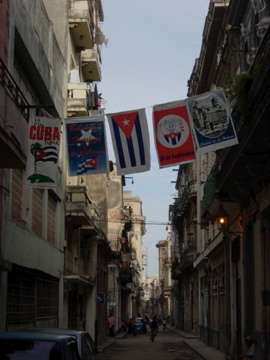
In front of a faded hotel,
a procession of flags
limply waves
to the ghosts of gone,
brown legs of schoolgirls
disappear up darkened stairwells.
/
Suddenly a square,
a plaza
whose dreams creep
through the stone cracks,
catch in the branches
of tired trees,
in balcony bars
and bench slats,
swell in the ankles ankles
of the women sitting—
the past
like a pulse
growing fainter.
We Wish You a Merry Solstice, and a Non-Denominational New Year: A Muir Woods Solstice
Published December 23, 2009 Bay Area , Budget , California , Offbeat , Places , USA 5 CommentsTags: blogsherpa, Budget, california, marin county, offbeat, san francisco bay area, USA
Nature lover, pagan, hippie, cheapskate—call me what you will, but the Muir Woods Solstice Event ruled. And not just in a Wicker Man kind of way.
The free, annual event honoring the longest night of the year is uber North-Bay: wholesome, granola-y, non-denominational family fun, set amid old-growth redwoods and adorned with weedy handmade garlands. Luminaria-lit paths fill with white-breathed revelers, whose flashlights make the falling rain look like snow, or that scene from Edward Scissorheads. Puppet shows, antler-clashing Germanic dances and de-Christianized caroling ensue in an event that makes even a cynical 20-something (me) smile.
The promise of free entry and free hot cider lured me out on a moody Monday afternoon, to brave the bridges and highways of a Bay Area rush hour. On a slow Saturday, I’d gotten to chatting with some regulars at work, who gushed to me about the event. Traipsing around the damp dark of one of the Bay Area’s most impressive natural attractions had sounded like a damn good way to
spend the longest night of the year. I grabbed a crappy flashlight and a hooded puff coat, roped a friend into riding shotgun and playing DJ, and we set out, sliding along the green curves of Marin, through afternoon sun that shone through the clouds like light into a church.
A ranger with plastic encasing her hat ushered us past the forever-full parking lot; we joined the assembly of cars lined up along the soft shoulder. We walked a muddy, pleasant 15 minutes to the park entrance. Slicker-clod kids tromped puddles as their parents juggled umbrellas and thermoses.
We arrived just as the crowd was thickening. A bearded ranger that looked like a nervous cross between a bluegrass singer and a surfer handed us a booklet of Solsticized/Muirized Christmas carols, complete with lines and titles such as “Deck the woods with luminaria,” “I’m Dreaming of a Green Solstice,” “O Redwood Tree,” and “Come All Ye People.” My personal favorite was “On the first day of Solstice / A Ranger showed to me / A spotted owl in a redwood tree.” The adapted songs captured the progressive eco-politics and non-religious spirituality of Marin better than an Anne Lamott novel. You know that stir a couple years back when right-wing Christians got their knickers in a twist over “Happy Holidays” replacing “Merry Christmas”? Well, these were the folks they were pissed at.
It was, as you might guess, a mellow crowd of nature-y families and local weirdos (a simplification that I suppose puts me into the latter category). We grabbed some cups of cider and strolled around in the intermittent rain, soggy sneakers and cold noses. The creek was full from the recent storm, the stumps mossy; everything felt wet and alive.
We joined the huddle of firepits and hunched shoulders encircling a small, makeshift stage. It was time for some wholesome, non-offensive entertainment. The crowd sang a couple carols, and was then held rapt by a story-telling performance featuring exuberantly portrayed animal characters that I’m sure have inspired several voice-over school rejections. We agreed that the confused shadow puppet show was most definitely the improved result of a flash of marijuana-fueled brilliance. We took it as our cue to stroll the now-dark trails.
Candles in white paper bags lined the trails, making it feel almost like we were walking through an altar. Raindrops held heavy on the tree branches as little kids ran past in a bobble of flashlight beams. Other than that, it was all sound. It reminded me of an interview I’d read with a travel writer (Don George?) who’d wanted to write about something other than the cathedral-ish quality of light in Muir Woods. He’d blindfolded himself and walked around, experiencing the famous woods with mostly just his sense of sound, and written the article from that perspective. It was true that it was a totally different Muir Woods without the light and the sight of redwoods—all rambling water and the solid, rooted presence of those trees, the way you feel a stranger in a dark room.
We got back to the caroling crowd just in time to catch the most bad-ass and spooky performance of the night, a Germanic Solstice dance by the Christmas Rebels (which sounds kind of punk rock). Composed of members of the German fraternal society California Rebels, the group did a slow, hypnotic folk dance that included antler-clashing and creepy flute playing. A bearded dude with a crazy eye hushedly explained the pre-Christian roots of the dance, which got back to the potent mix of fear and worship that fuels most religions, not just Paganism. Under the illuminated, snow-like mist, the clanks of the antlers and the wet clomp of the determined feet felt like a ritual not from long ago, but rather some deranged allegorical movie. Which is to say it was rad.
Toes numb and bellies hungry, we trekked back to the car under the dim halo of my flashlight. A half-grin of moon cut through the heavy clouds, and the earth rustled, sighed, pulled a blanket of darkness up to its chin and settled in for the longest sleep of the year. And Marin celebrated, the way Marin knows how: amid the trees.
Subtle Like T-Rex: My Obscure Top 10 Travel Songs
Published December 18, 2009 Inspiration , Lonely Girl Loves , Music , Punk , Subculture 9 CommentsTags: music, offbeat, punk
Just in case there’s someone who hasn’t got enough of the Top 10 list, get ready for another nail in coffin.
When it comes to songs about travel, there’s plenty looming giants that drown out the subtler stars. Now, I love “Route 66” and “On the Road Again” as much as the next red-blooded American. And I’ve got a well-bred affection for “Graceland,” “Booby McGee” and “I’ve Been Everywhere.” But when it comes to the songs that really get my feet itching and fingers a’packing, it’s all about the lesser-known jams.
Call it the forever-to-the-contrary, anti-mainstream, cranky old punk in me, but I think these songs kill the more widely embraced classics (though, baby I was born to run too). I’ve listed them vaguely in order of ranking, but more in terms of a flow fit best for you’re listening pleasure.
In the spirit of old mix tape, my early Christmas present to you:
[clearspring_widget title=”Grooveshark Widget: Chameleon” wid=”48f3ef6c29317865″ pid=”4b3c0826d2cf749c” width=”400″ height=”300″ domain=”widgets.clearspring.com”]
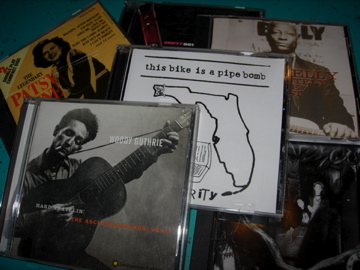
1. Hard Travelin’, Woody Guthrie
Whenever a bus is delayed or flight canceled, I wanna bust out a harmonica (that I don’t own and can’t play) and break into a freestyle rendition of “Hard Travelin'”. I may have been born three generations too late to live the train-hopping, vagabonding hobo dream, but Woody’s keeping it alive for me.
Best Line: “That mean old judge done said to me / It’s 90 days for vagrancy / And I’ve been hittin’ some hard travelin’, Lord”
2. Ramblin’ Man, Hank Williams III and Melvins
Not the Allman Brothers. With the heart, soul and twang of the original in his DNA, Hank Williams III buddied up with, that’s right, Melvins, and well, they killed it.
Best line: “I can settle down and be doin’ just fine / Till I hear those freights rollin’ down the line / Then I hurry straight home and pack / And if I didn’t go, I believe I’d blow stack” Amen.
3. Ready for More, Murder City Devils
AKA, the best show you went to in 2001 (really, no one lights their drums on fire anymore). The boys that made the trucker hat cool wrote this one about the exhaustion of hard-partying touring/traveling that only copious amounts of cocaine can fuel you through. I may have missed the boat (or tour bus) on that one, but I can get down with the angsty howlings of Spencer Moody any day.
Best line: “And I’m subtle, subtle like a T-Rex / And I haven’t even started yet / One week on the road / One week, and I’m already wrecked”
4. I’m Moving Along, Patsy Cline
With the guts and growl that can only belong to one woman, “I’m Moving Along” is an anthem for anyone that’s split town to heal a heartbreak. The way Patsy belts out that last line always make me wanna grab a suitcase and slam the door on whatever’s bumming me out at home.
Best line: “I’m moving along, I gotta be free”
5. Gone Till November, Wyclef Jean
He may be pretentious at times, but god damn, it’s a pretty song. If you’ve ever had to reconcile the traveling lifestyle with leaving loved ones at home, this is the jam for you.
Best line: “See you must understand, I can’t work a 9-5”
6. Sloop John B, Beach Boys
Not every trip is awesome. And even in the best of em, there comes that moment when, say, you’ve had diarrhea for two weeks and are really over the whole squat toilet thing. For moments like these, “Sloop John B” ‘s refraining “I wanna go home, Let me go home” hits the swollen and tender spot.
Best Line: “This is the worst trip I’ve ever been on” (though, with Charles Manson running around the sandbox, we can’t be totally sure what kind of trip they mean…)
7. Board of Tourism, This Bike Is A Pipe Bomb
The touring-est band I’ve ever known wrote this cheeky tribute to the “attractions” their hometown Pensacola, Florida. It perfectly captures the two-bit claims-to-fame that small cities grasp at. And it’s adorable.
Best Line: Tie between the refrain, “We got a drive-thru funeral home” and “You know they even filmed a movie there one time / They had James Brown and gave away hot dogs”
8. Rock Island Line, Leadbelly
This song is the definition of bad-ass, by the guy that created the word cool. Nuff said.
Best Line: “If you wants to ride, you got to ride it like you find it”
9. Unknown Passage, Dead Moon
By another band that spent half their lives on the road, the hypnotic riffs of “Unknown Passage” hauntingly capture those road-tripping 3ams full of dark highways and strange landscapes. (And if you wanna know how to build a house, raise a family, travel the country six months a year, and rock and roll like it’s going out of style on less than $20,000 a year, check out the Dead Moon documentary by the same name.) Just don’t put this on if you’re trying to stay awake while driving.
Best Line: “There’s a red light on the hill / And a bridge out going down / There’s a city limits marker / Of an unfamiliar town”
10. So International, B-Legit Featuring Too $hort
Nothing like a little local love to round it out. Hometown boy Too $hort teams up with B-Legit and flows about, well, mostly having sex around the globe and flying first class. Can’t relate, but the hook is catchy as shit.
Best Line: “Yea, we fly first class, touch down like pimps / What’s the next event, tell me what town it’s in”
Sola: A Fetal Manifesto and Healing Tattoo
Published December 14, 2009 Inspiration , Lonely Girl Loves , Punk , Sola , Subculture , Tattoos 13 CommentsTags: Female Travel, sola, solo, tattoos
Swollen and bruised and freshly tattooed, I’ve decided that there’s more to this “lonely girl” thing than a catchy title and purchasable domain name. It’s got to do with an approach towards travel, and maybe even an approach towards life, that’s developing inside me, embryonically. And at the center, the tiny heart between the budding limbs, is solitude, going at it sola.
There’s plenty of articles and blogs out there lauding the benefits of solo travel. Solo Friendly and Solo Traveler are devoted entirely to solo travel, with service-oriented tips and how-tos, while Women on the Road focuses exclusively on encouraging women to backpack. Independent-traveler sites BootsnAll and Matador have featured articles discussing pros and cons, and urging readers to take the solo plunge. The benefits promoted are fairly obvious—the freedom to do what you want when you want—as are the chief drawbacks discussed: safety and loneliness. Nearly every article and site on solo travel I’ve encountered has urged all travelers to go at it alone at least once.
I could write something similar, talk about how traveling solo forces me to be more social, to interact more with my surroundings; how it teaches me self-reliance and thus self-confidence; how I relish in the freedom of it; how none of my friends that can afford to travel are able to take the time off to accompany me anyway. But underneath and inside all those benefits is something harder to explain but ultimately more appealing, a kind of central gravity that all the other pluses of solo traveling orbit around: solitude.
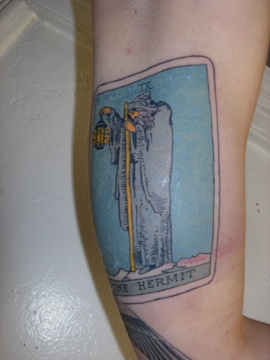
It’s both positive and negative, both the exalted glory of Rilke and the insanity-inducing agony of solitary confinement. It’s a gnarled old wizard dude with a staff and a lantern, setting out into the craggy blue of the Hermit tarot card, now etched into the tender flesh on the inside of my arm, swollen amid the lymph nodes and brachial veins that hold me together.
On my last trip, I met many incredulous, widened eyes that asked, “You’re alone?” Then, declaratively, both impressed and horrified, “I could never do that”—in the way I’d respond to someone who’d climbed Mount Everest: good-for-you, thanks-but-no-thanks. People told me I was brave, fool-hardy, a feminist.
The truth is, I never really considered the fact that I was traveling alone; it rarely factors into my trip-planning, doesn’t strike me as odd or especially intrepid. It is what it is. Of course I’ll be alone. Who else am I gonna drag off around the planet?
But things like that, core characteristics and fundamental truths, rarely strike us as odd. Or even occur to us at all. They’re so central to who we are and how we live in the world that we aren’t aware of them. They strike us suddenly, in strange moments of lucidity—the porcelain-clutching “moment of clarity” in which one finally realizes she’s an alcoholic, or my mom’s recent epiphany that “we were the crazy white family in the neighborhood.” Or when someone else points it out to us, in the dingy back of dingy taxi, when you tell them you’re traveling alone.
For me, it goes back to my travel roots, which aren’t travel roots at all. It’s where I first learned to be alone in the world—the raggedy-ass East Bay buses. During my hour-and-a-half commute home from a far-away high school, I learned all the things international solo travel would later confirm and deepen—self-reliance, self-confidence, how to handle dicey situations and dodgy characters. It was especially important as a female. Honing my street smarts and learning how to carry myself and not take shit have been invaluable. And not something not every girl learns. The lessons taught on the hard plastic of AC Transit buses equipped me to travel sola everywhere from Colombia to Morocco.
But there’s something more inside that, something deeper and more fundamental than knowing how to watch your back and tell someone off with your eyes. More than even the confidence of knowing I’ll be able to figure out and make it through whatever crazy-ass situation I end up in. What is comes down to is a kind of comfort and security in who I am, and the way in which I never feel more like myself, the who-I-am underneath whatever’s happening in my life at the time, than when I’m alone, out in the world. It’s not the same sitting here in my bedroom typing; it’s gotta be out there, walking the streets and riding the buses of this world.
I think everyone should travel solo once in the same way I think everyone should be forced to wait tables once: it’d be nice, but not gonna happen. I don’t think solo travel is for everyone, but it’s become a defining part of how I experience the world, how I exist in it. I simultaneously delve deeper into myself (“the teacher within,” as they say in yoga) and my surroundings. I experience the world from a more intuitive, back-of-the-brain place, where I’m okay with it not making sense, where I find a way to somehow swim through the chaos and insanity and all-too-often heartbreaking cruelty of it, and tap, however lightly, on the beautiful something at the center of it all. I’m more able to trust that I’ve got a place somewhere amid it all.
During my four-hour detainment by the Venezuelan police a few years back, the female officer kept looking at my passport, me and back again, and asking, “Y estas sola?” She couldn’t believe I’d venture off in some other country by myself. However much of an evil, child-abusing American I might have been (it’s a long story), my being sola amazed her. And may have had something to do with me weaseling out of the situation.
I suppose it would have been more accurate to get a feminized Hermit card tattooed, but the beard was too Zeppelin-y to forfeit. And I feel cheesy having an uber-symbolic tattoo, to finally have some kind of answer for the middle-aged customers that look up over their reading glasses at me and ask what my tattoos mean. Most likely, I shrug and continue to say, “I just thought they looked cool.” At least until this approach, this fetal manifesto, is a little more gestated.


Recent Comments